Desk essay
Pioneers on Visionary Leadership: 6 Quotes from Speeches and Memoirs
The architects of the future rarely focus on quarterly metrics, choosing instead to articulate realities that do not yet exist.
By Morgan Ellis
Morgan Ellis

If we could sit down with history's architects today, the conversation would inevitably drift away from quarterly metrics. The language of foresight often sounds abstract until someone makes it real. My uncle explained this to me while fixing a tractor engine in rural Michigan in 1982, pointing out that you cannot steer a heavy machine if you are only staring downward at the pedals. That mechanical truth applies perfectly to human organizations. We often wonder how young students grasp authority, but the actual test is how adults maintain their forward gaze under pressure. Let us hear from the pioneers.
On Imagining the Horizon
When asked about the origin of true innovation, George Bernard Shaw might point out that standard observation is never enough.
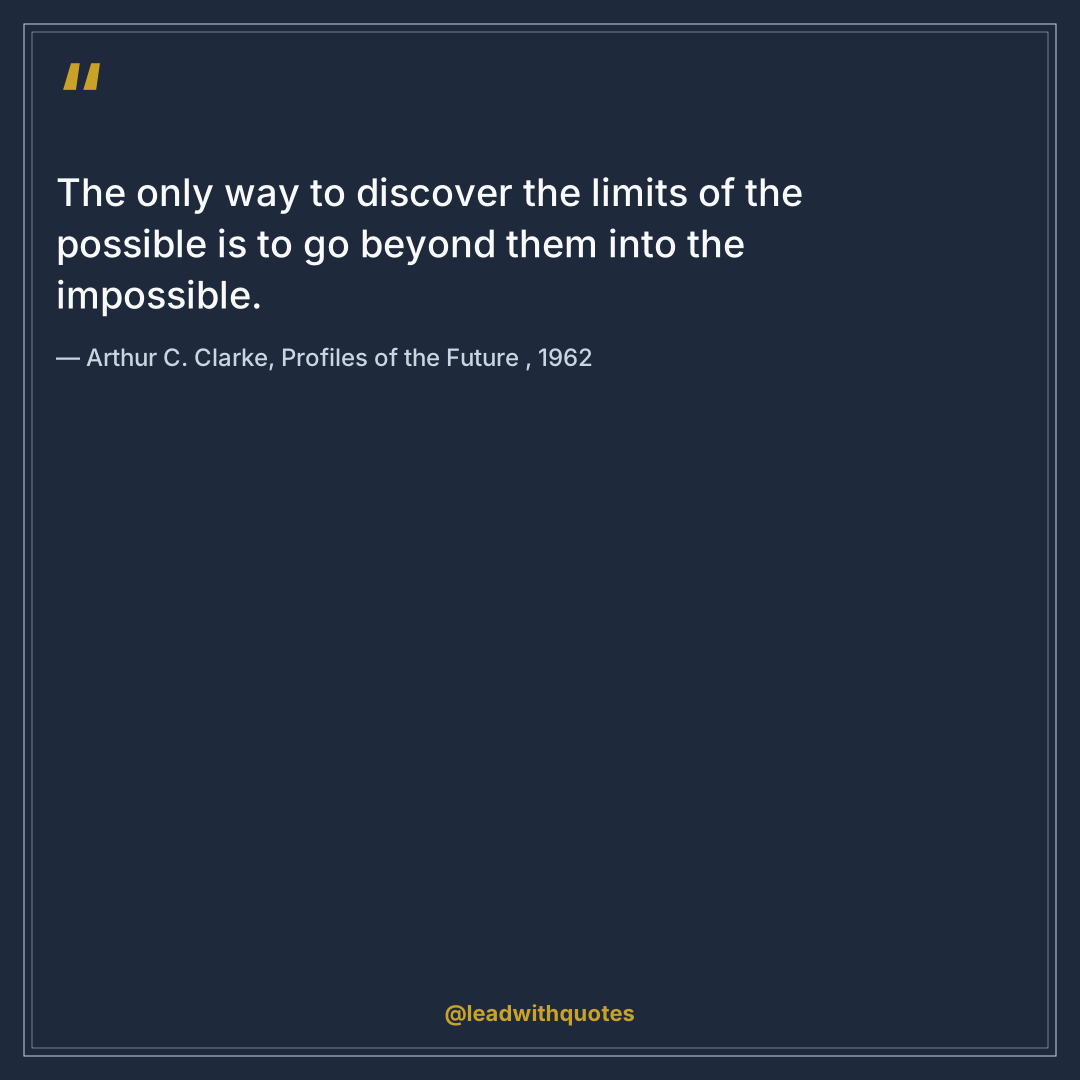
"You see things; and you say, 'Why?' But I dream things that never were; and I say, 'Why not?'" — George Bernard Shaw, Back to Methuselah, 1921
This simple inversion of logic remains the bedrock of inspirational leadership methods across modern industries.
Arthur C. Clarke would likely follow up by emphasizing the necessity of pushing technical boundaries.
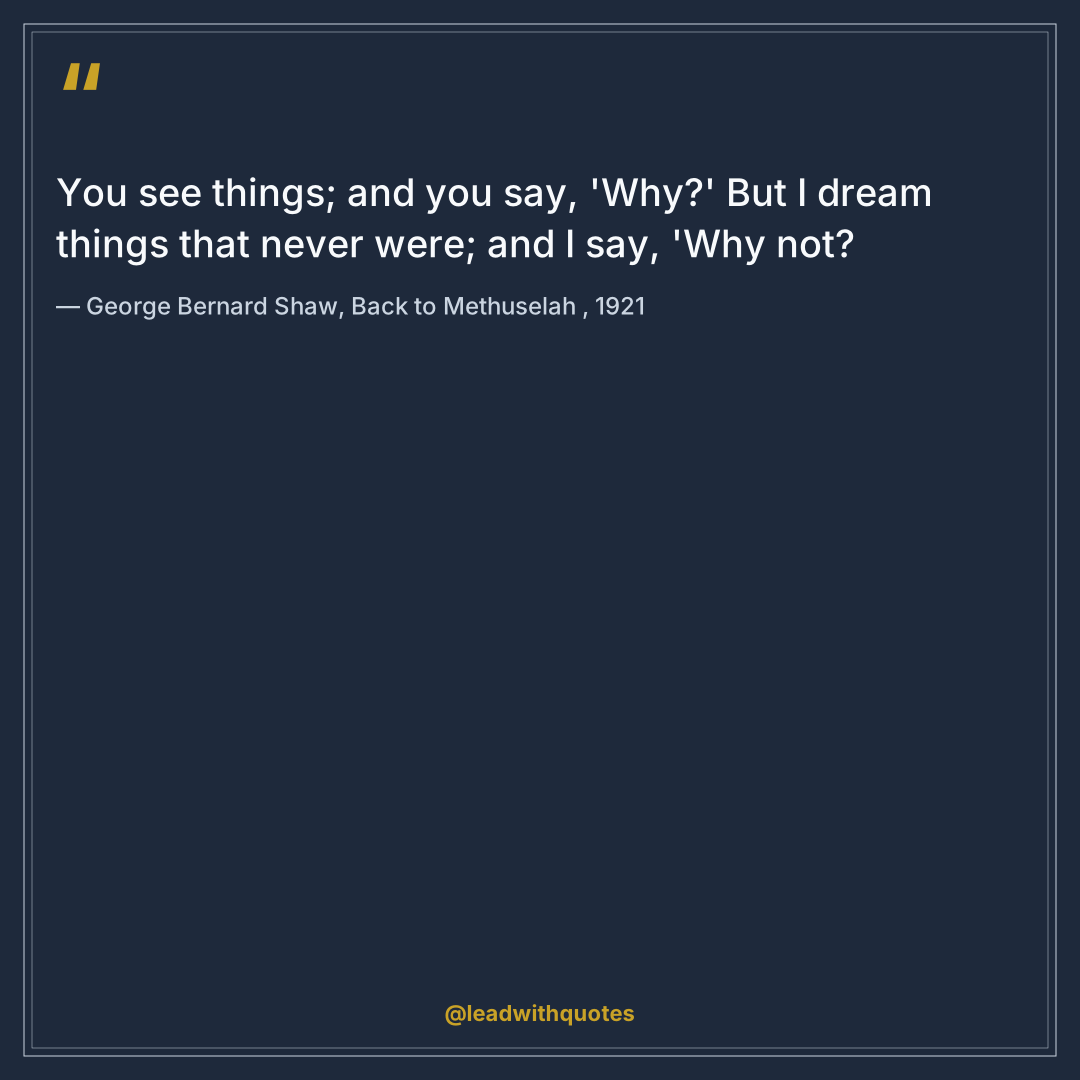
"The only way to discover the limits of the possible is to go beyond them into the impossible." — Arthur C. Clarke, Profiles of the Future, 1962
Clarke understood that a visionary must risk sounding foolish before proving themselves correct in the historical record.
On the Mechanism of Progress
Turning to the practical matter of mobilizing a workforce, Antoine de Saint-Exupéry offers a sharp corrective to traditional management.
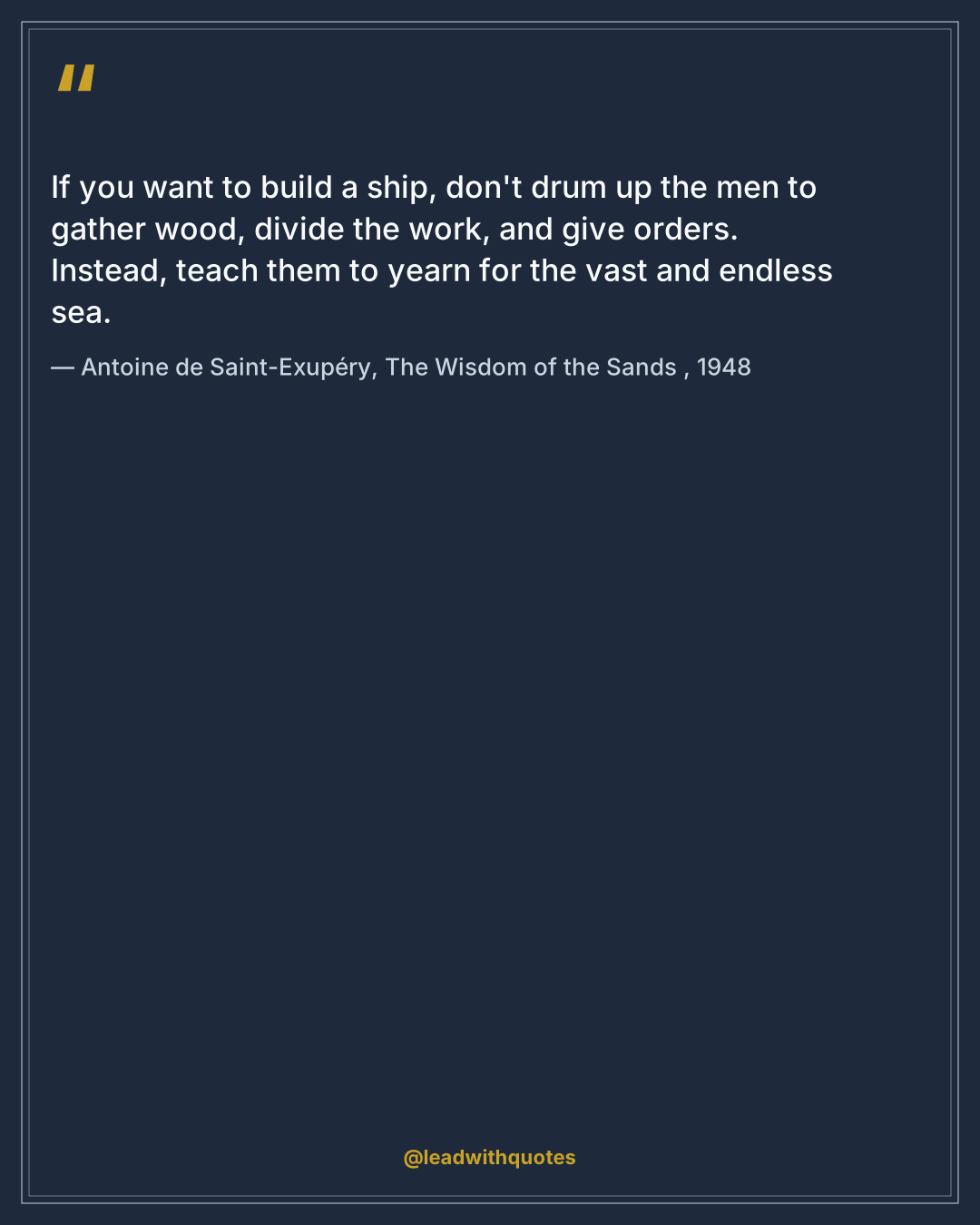
"If you want to build a ship, don't drum up the men to gather wood, divide the work, and give orders. Instead, teach them to yearn for the vast and endless sea." — Antoine de Saint-Exupéry, The Wisdom of the Sands, 1948
This insight becomes especially vital when daily communication fails and teams lose their shared sense of purpose.
Winston Churchill, drawing from wartime strategy, frames the future as a cognitive battleground rather than a purely physical one.
"The empires of the future are the empires of the mind." — Winston Churchill, Harvard University Address, 1943
He delivered this line to an academic crowd, fully aware that building deeply resilient teams requires intellectual ambition.
On Defining Reality
When the discussion shifts to transforming raw materials into legacy, Saint-Exupéry returns with a precise architectural metaphor.
"A rock pile ceases to be a rock pile the moment a single man contemplates it, bearing within him the image of a cathedral." — Antoine de Saint-Exupéry, Flight to Arras, 1942
Looking at what unconventional voices teach us, true vision requires seeing the finished product hidden inside the rubble.
Finally, William Faulkner reminds the table that leaving the familiar behind carries a severe psychological cost.
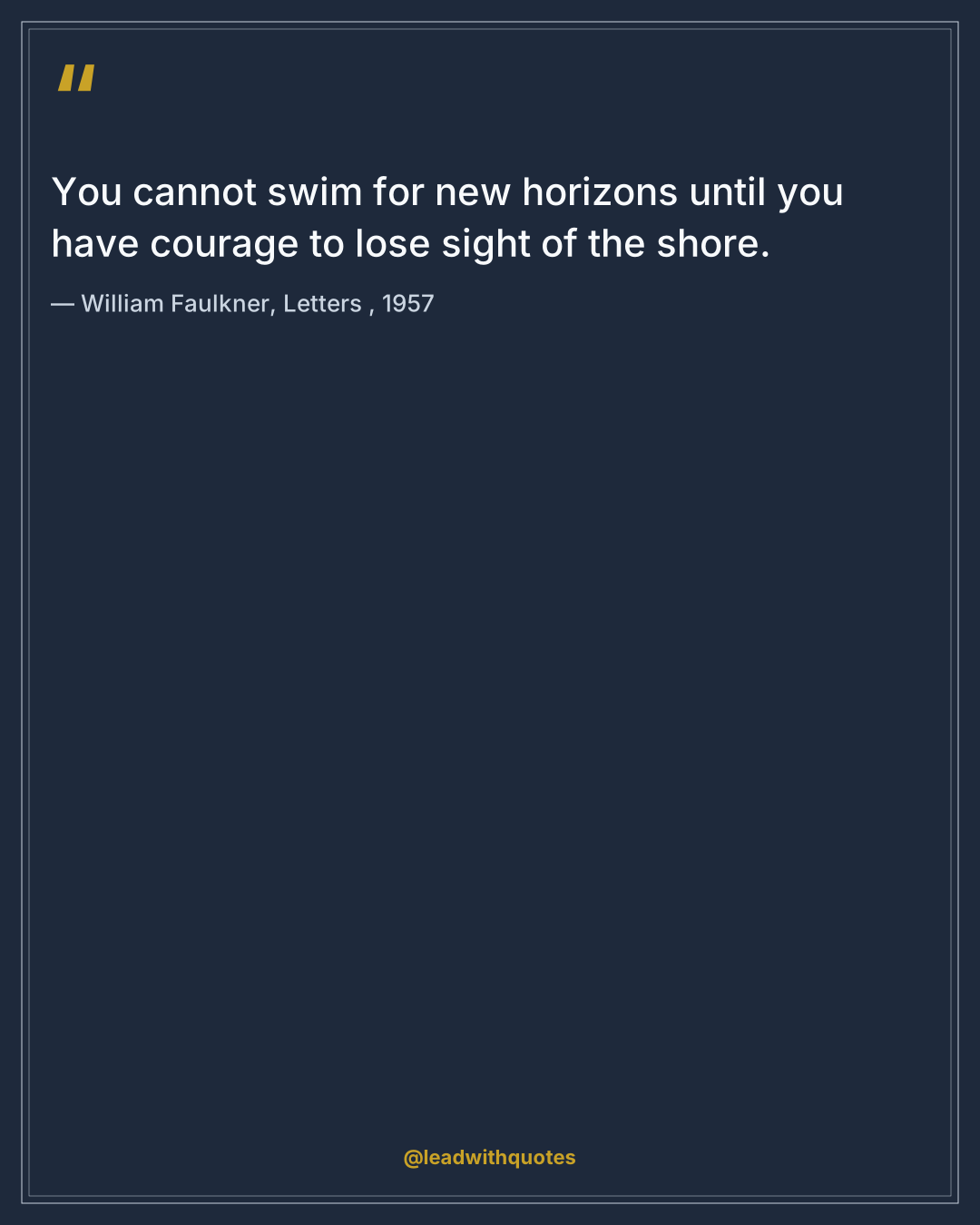
"You cannot swim for new horizons until you have courage to lose sight of the shore." — William Faulkner, Letters, 1957
This final thought grounds the entire dialogue in the uncomfortable reality of risk-taking.
As you look at your own schedule for Monday morning, notice which tasks merely maintain the present and which ones carve out a distinct path forward. Stepping into the week with a clear picture of what you are actually trying to build makes the immediate friction much easier to navigate.
Common Questions, Straight Answers
What distinguishes a visionary leader from a competent manager?
A competent manager optimizes the current reality, while a visionary forces the organization to prepare for a reality that does not yet exist. The former focuses on eliminating friction; the latter focuses on defining the final destination.
Can visionary leadership be taught?
The mechanics of strategic planning can certainly be taught, but the willingness to risk one's reputation on an unproven idea is usually forged through personal experience. It requires a high tolerance for early and persistent criticism.
Why do visionary initiatives often fail?
Many leaders mistake a grand idea for a complete operational strategy. Without the discipline to translate that massive vision into daily habits and concrete milestones, the horizon remains an unattainable mirage.