Desk essay
Unconventional Voices on Authority: 8 Quotes from Letters and Memoirs
Brief observations from historical letters and memoirs reveal a distinct approach to directing teams and wielding influence.
By Morgan Ellis
Morgan Ellis

The Weight of Quiet Directives
Sitting with my uncle on a farmhouse porch in rural Vermont back in 2005, I watched him manage a chaotic harvest crew with barely three words spoken at a time. The quietest directors often leave the sharpest instructions. When we dig through historical archives and personal diaries, we find that the most effective directors rarely relied on towering speeches to command respect from their peers. We often search for brief observations on command when managing daily friction. Sometimes a single line cuts through the noise.
"The art of leadership is saying no, not saying yes. It is very easy to say yes." — Tony Blair, The Andrew Marr Show, 2007
A prime minister reflects on the daily burden of rejection. It highlights how modern executives view authority when facing endless operational requests.
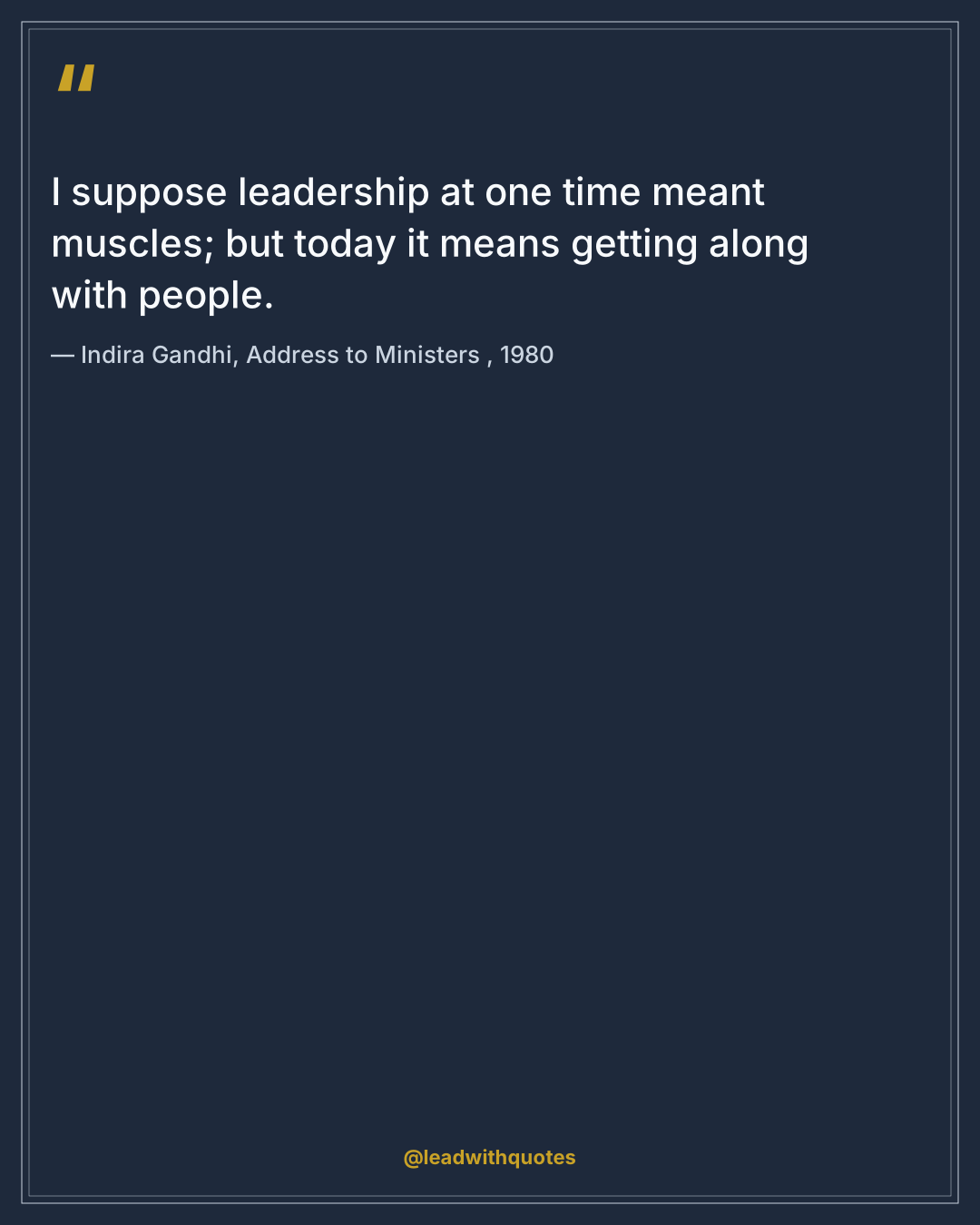
"I suppose leadership at one time meant muscles; but today it means getting along with people." — Indira Gandhi, Address to Ministers, 1980
Gandhi shifted the paradigm from physical dominance to diplomatic agility. This reflects a major shift in twentieth-century statecraft.
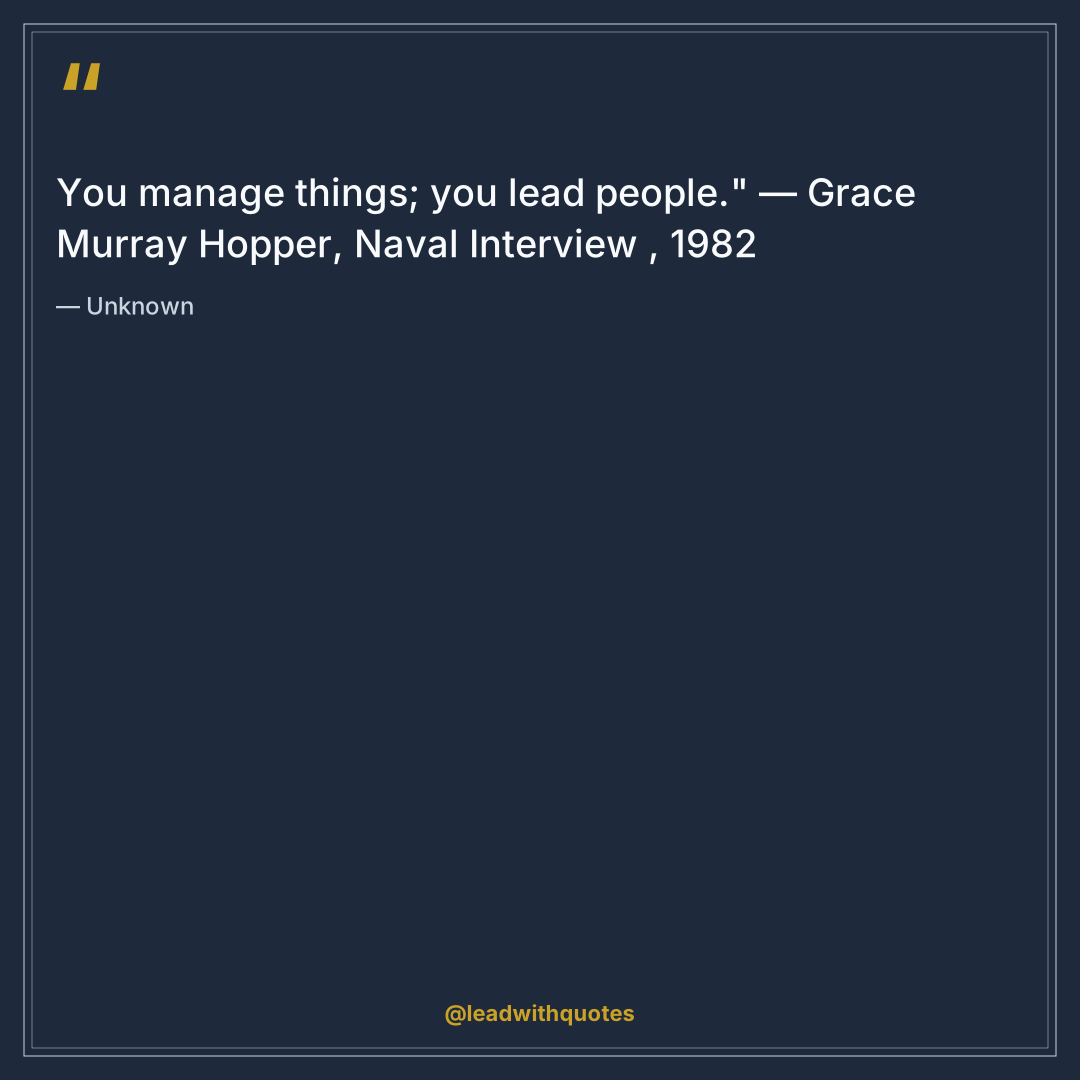
"You manage things; you lead people." — Grace Murray Hopper, Naval Interview, 1982
The pioneering computer scientist understood that human beings require an entirely different approach than the machines she programmed.
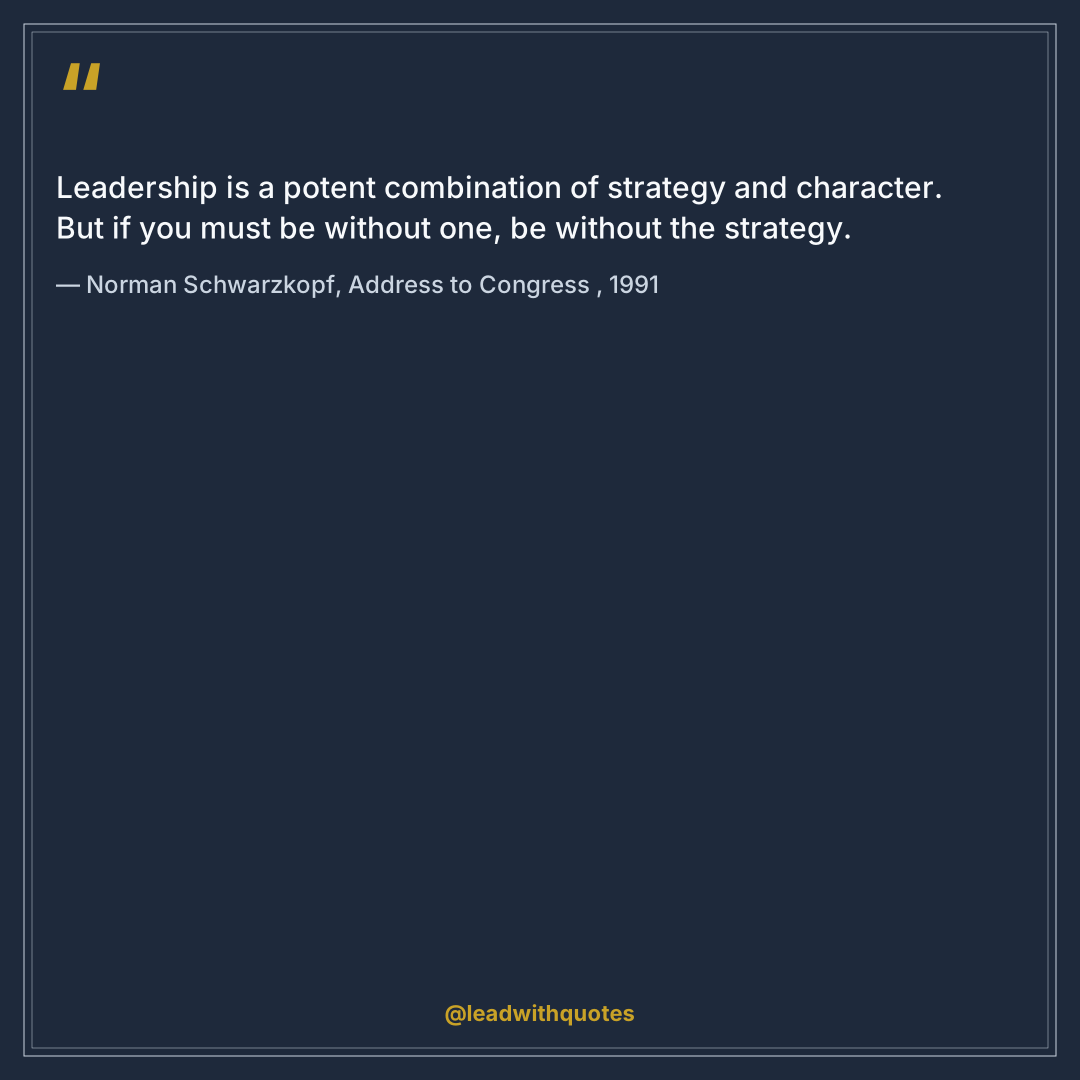
"Leadership is a potent combination of strategy and character. But if you must be without one, be without the strategy." — Norman Schwarzkopf, Address to Congress, 1991
General Schwarzkopf prioritized moral grounding over tactical brilliance.
Friction and Institutional Influence
Navigating large groups of people requires an understanding of human limits. These historical figures recognized that influence breaks down without trust.
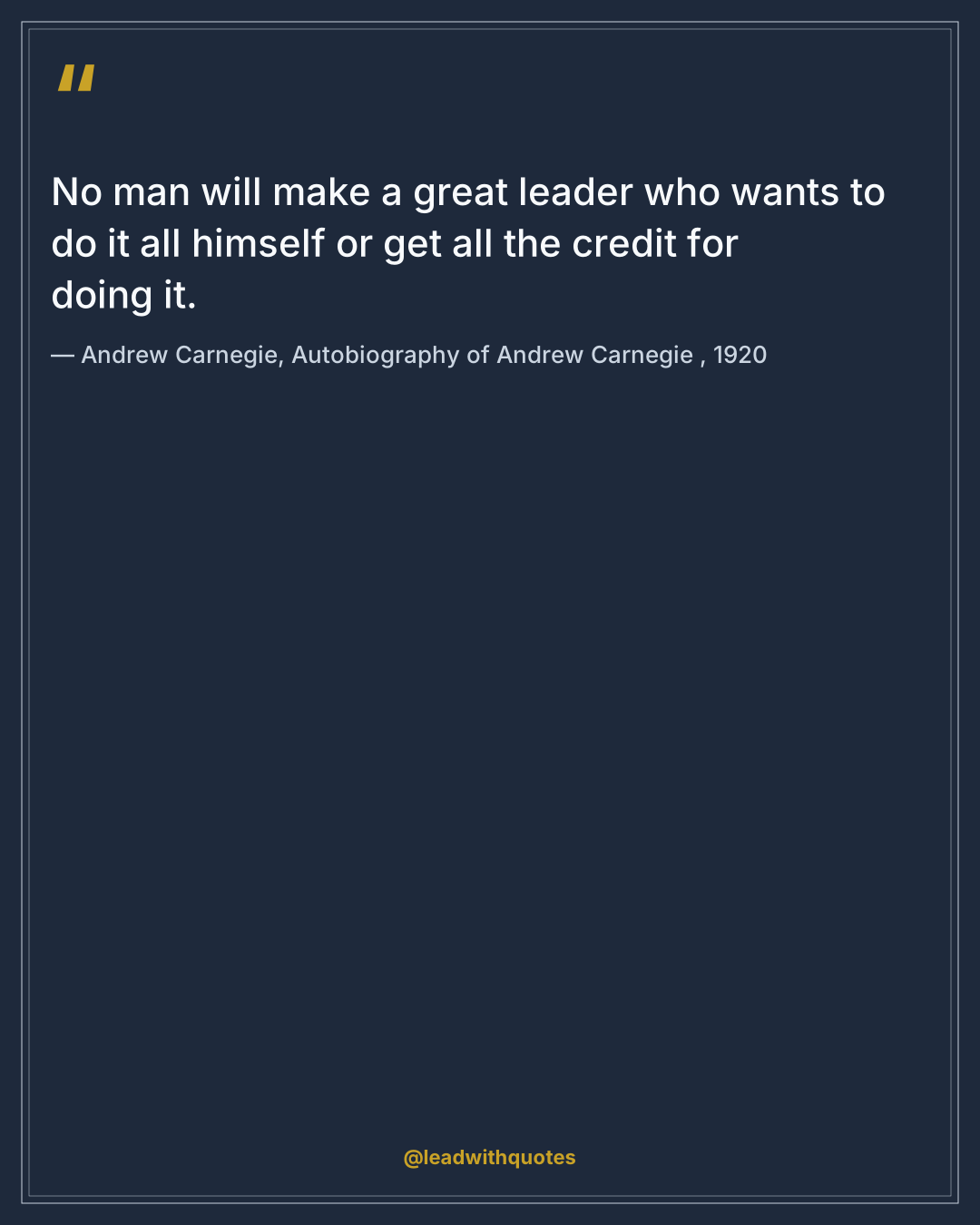
"No man will make a great leader who wants to do it all himself or get all the credit for doing it." — Andrew Carnegie, Autobiography of Andrew Carnegie, 1920
The industrialist recognized that delegation remains the core mechanism of industrial scale. This principle underlines the necessity of brevity in team motivation.
"A boss says 'Go!' — a leader says 'Let's go!'" — E.M. Kelly, The Rotarian, 1925
This early twentieth-century distinction perfectly captures the shift from autocratic management to collaborative momentum.
"Example is not the main thing in influencing others. It is the only thing." — Albert Schweitzer, Out of My Life and Thought, 1933
The medical missionary dismissed rhetorical tactics entirely in favor of lived behavior. It serves as a stark reminder when diagnosing communication failures across sprawling organizations.
"Leadership is an opportunity to serve. It is not a trumpet call to self-importance." — J. Donald Walters, The Art of Supportive Leadership, 1987
Walters reframes authority as a quiet duty rather than a public performance. The focus shifts entirely to the group's welfare.
Navigating authority requires more than memorizing management frameworks. Studying these concise personal reflections helps anchor our daily choices in proven historical precedent.
Common Questions, Straight Answers
Why do historical leaders prefer shorter maxims?
Executives operating in high-pressure environments lacked the luxury of time for long speeches. Crisis strips language down to its absolute essentials.
Are these quotes applicable to remote teams?
Yes. The core dynamics of trust and clear delegation transcend the physical office entirely.
How should managers use these phrases?
Instead of pasting them into company emails, use them as internal mental checks before making personnel decisions.