Desk essay
Why We Quote Simon Sinek When Corporate Communication Fails
Examining how modern managers use these specific frameworks to repair broken trust and rebuild psychological safety in tense office environments.
By Morgan Ellis
Morgan Ellis

The Shift from Directives to Dialogue
I remember listening to my cousin in a diner booth off Route 66 in Flagstaff, Arizona, back in 2021, trying to explain why her tech startup was hemorrhaging talent despite offering unlimited vacation days. The executives were sending out perfectly formatted memos about quarterly targets. The staff, meanwhile, felt entirely disconnected from the actual purpose of their daily grind. This disconnect forms the exact fault line where traditional management theory fractures and where a different vocabulary becomes necessary. When organizations face a crisis of alignment, the problem rarely stems from a lack of information. The friction usually originates from a catastrophic failure to articulate intent.
Modern corporate environments produce an overwhelming volume of text. Slack messages cascade down screens in endless waterfalls of operational updates. Yet, amid this deluge of data, actual comprehension remains remarkably low. Exploring broader philosophies of organizational guidance reveals that clarity requires more than just volume. The most effective communicators understand that transmitting data is a fundamentally different exercise than transferring belief. You can mandate compliance through a policy document, but you cannot mandate enthusiasm.
The Mechanics of Listening and Trust
Active Receptivity
The foundation of any functional workplace culture relies heavily on how information flows upward. When leaders speak constantly, they create an echo chamber that amplifies their own biases while drowning out critical operational feedback from the floor.
"Hearing is listening to what is said. Listening is hearing what isn't said." — Simon Sinek, Start With Why, 2009
This distinction separates passive auditory processing from active psychological engagement in high-stakes environments.
"Communication is not about speaking what we think. Communication is about ensuring others hear what we mean." — Simon Sinek, Leaders Eat Last, 2014
The burden of comprehension rests entirely on the person delivering the message, a principle that forces speakers to adjust their delivery based on the recipient's context.
"There is a difference between listening and waiting for your turn to speak." — Simon Sinek, Twitter Post, 2015
This observation diagnoses the primary flaw in most boardroom debates, where participants treat conversations as competitive rather than collaborative exercises.
When examining the impact of brevity on team direction, the pattern becomes clear. Leaders who prioritize concise, empathetic listening over prolonged broadcasting tend to gather more accurate intelligence about their organization's health. They build structures that reward honesty over flattery.
Articulating the "Why" Before the "What"
Purpose-Driven Clarity
Human beings are biologically wired to respond to narrative and purpose. Before anyone commits their energy to a difficult project, they need to understand the fundamental reason the project exists. Stripping away the context leaves only a list of chores.
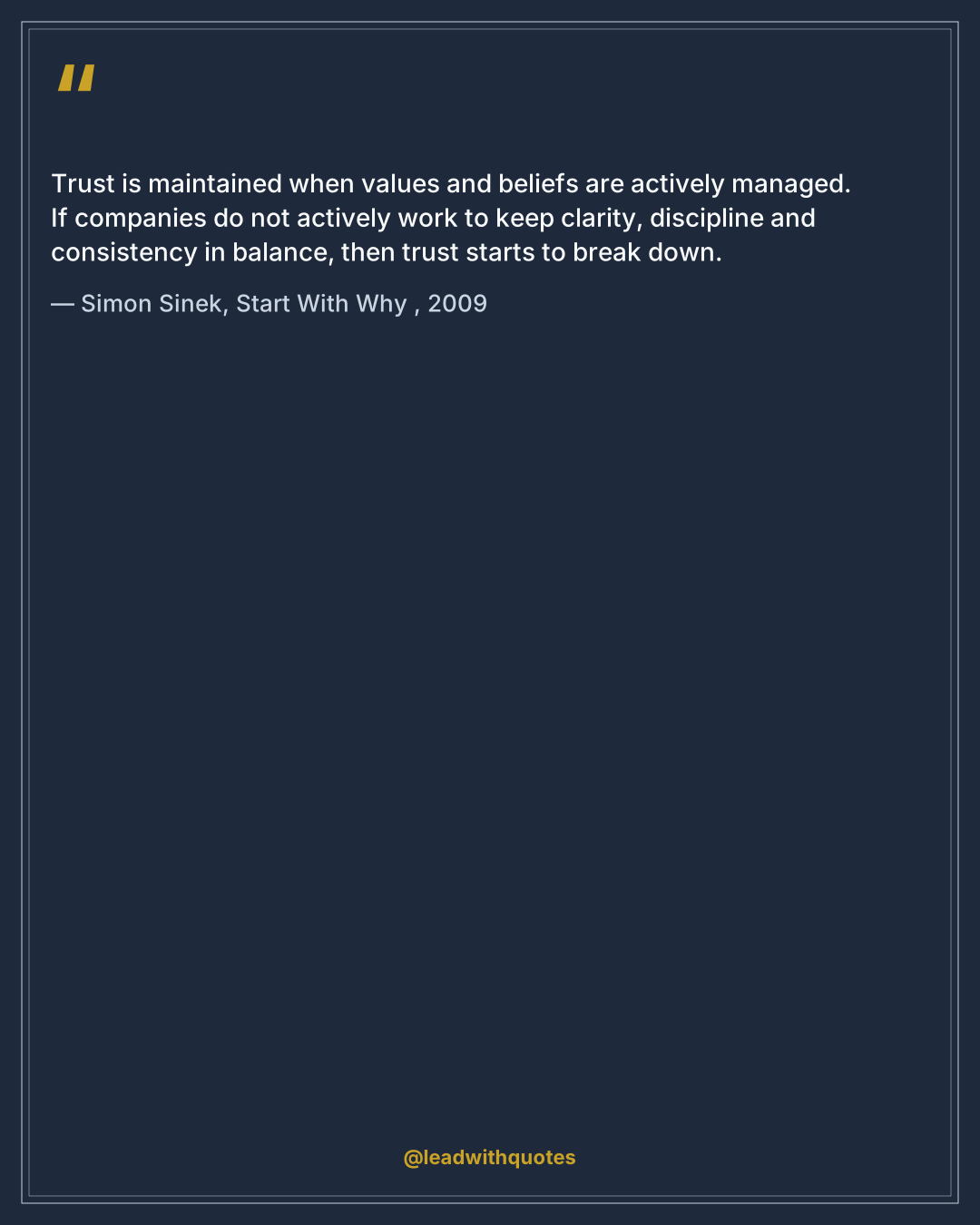
"Trust is maintained when values and beliefs are actively managed. If companies do not actively work to keep clarity, discipline and consistency in balance, then trust starts to break down." — Simon Sinek, Start With Why, 2009
Consistency in messaging prevents the cynical assumption that leadership shifts its values based on quarterly profit margins.
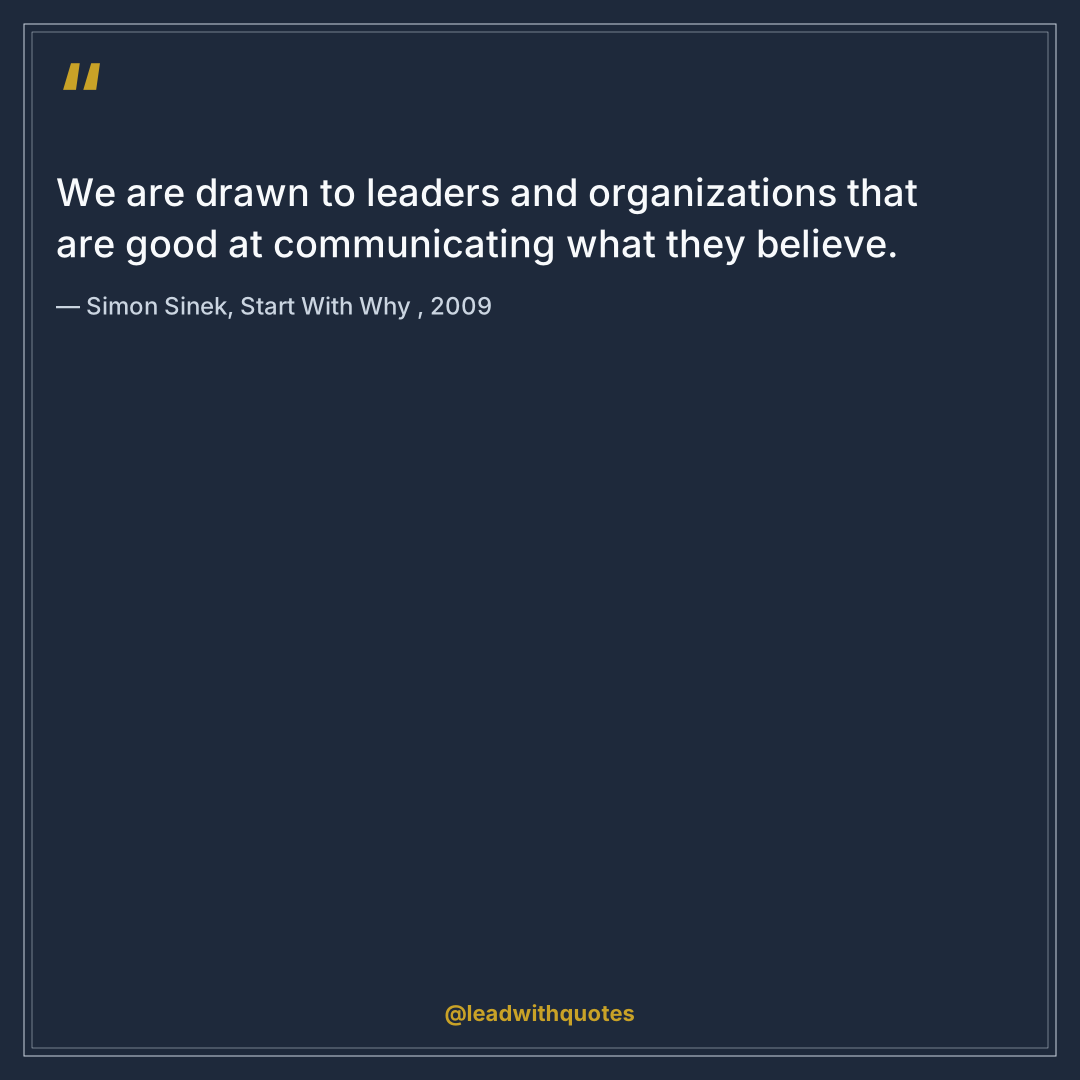
"We are drawn to leaders and organizations that are good at communicating what they believe." — Simon Sinek, Start With Why, 2009
The biological response to shared belief systems drives loyalty far more effectively than transactional compensation models.
"Words may inspire, but only action creates change." — Simon Sinek, Start With Why, 2009
Rhetoric without corresponding behavioral shifts inevitably breeds resentment among those who are asked to execute the vision.
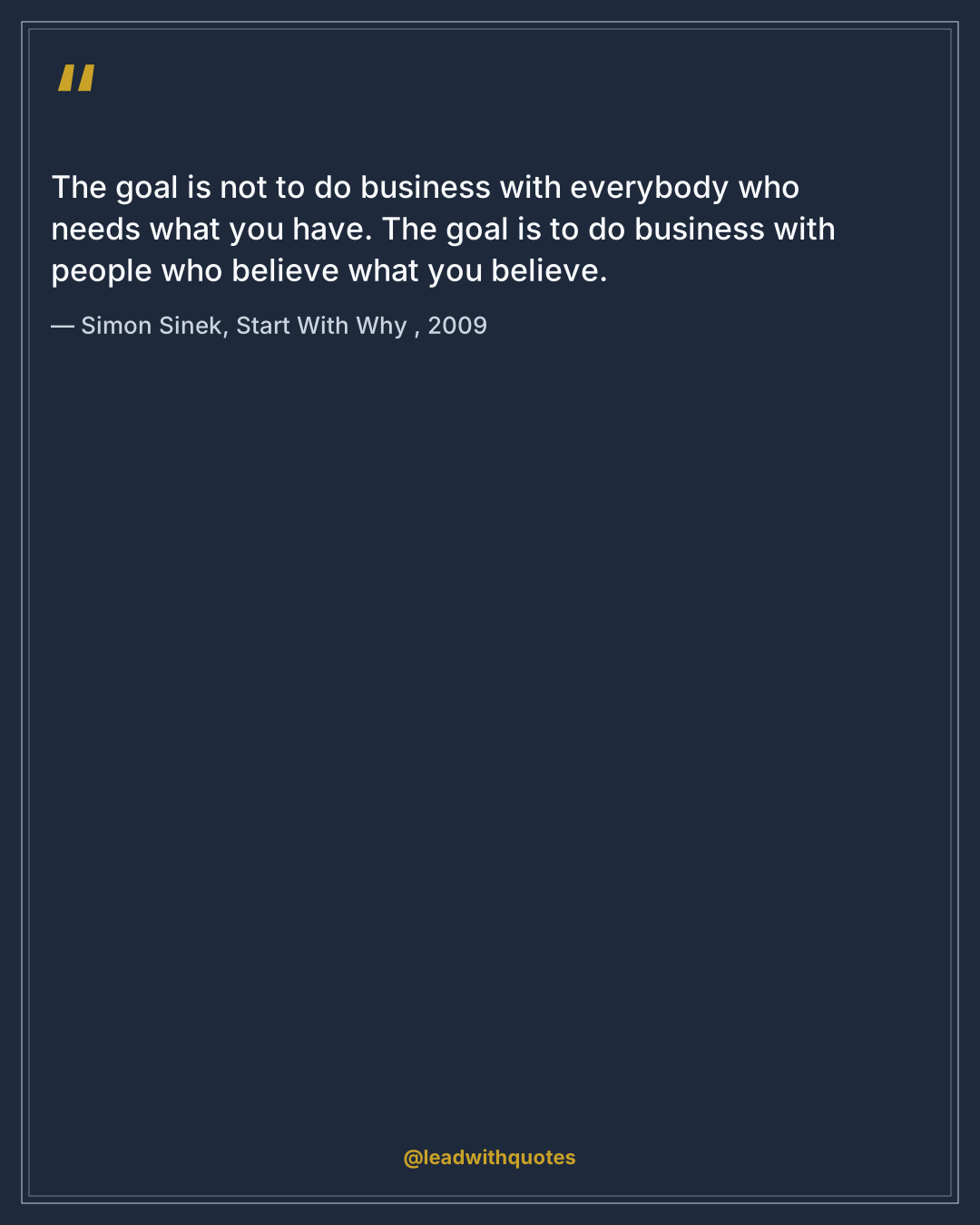
"The goal is not to do business with everybody who needs what you have. The goal is to do business with people who believe what you believe." — Simon Sinek, Start With Why, 2009
This filtering mechanism applies internally to hiring practices just as much as it applies externally to client acquisition.
Empathy as a Tactical Communication Tool
Human-Centric Dialogue
Treating employees as interchangeable components in a machine fundamentally misunderstands human psychology. People require acknowledgment of their humanity before they can effectively deploy their professional skills. If you ignore the person, you lose the professional.
"If you don't understand people, you don't understand business." — Simon Sinek, Capture Your Flag Interview, 2010
Technical expertise cannot compensate for a fundamental inability to navigate interpersonal dynamics and emotional intelligence.
"A boss has the title, a leader has the people." — Simon Sinek, Leaders Eat Last, 2014
Authority granted by an organizational chart rarely commands the genuine discretionary effort that defines high-performing teams.
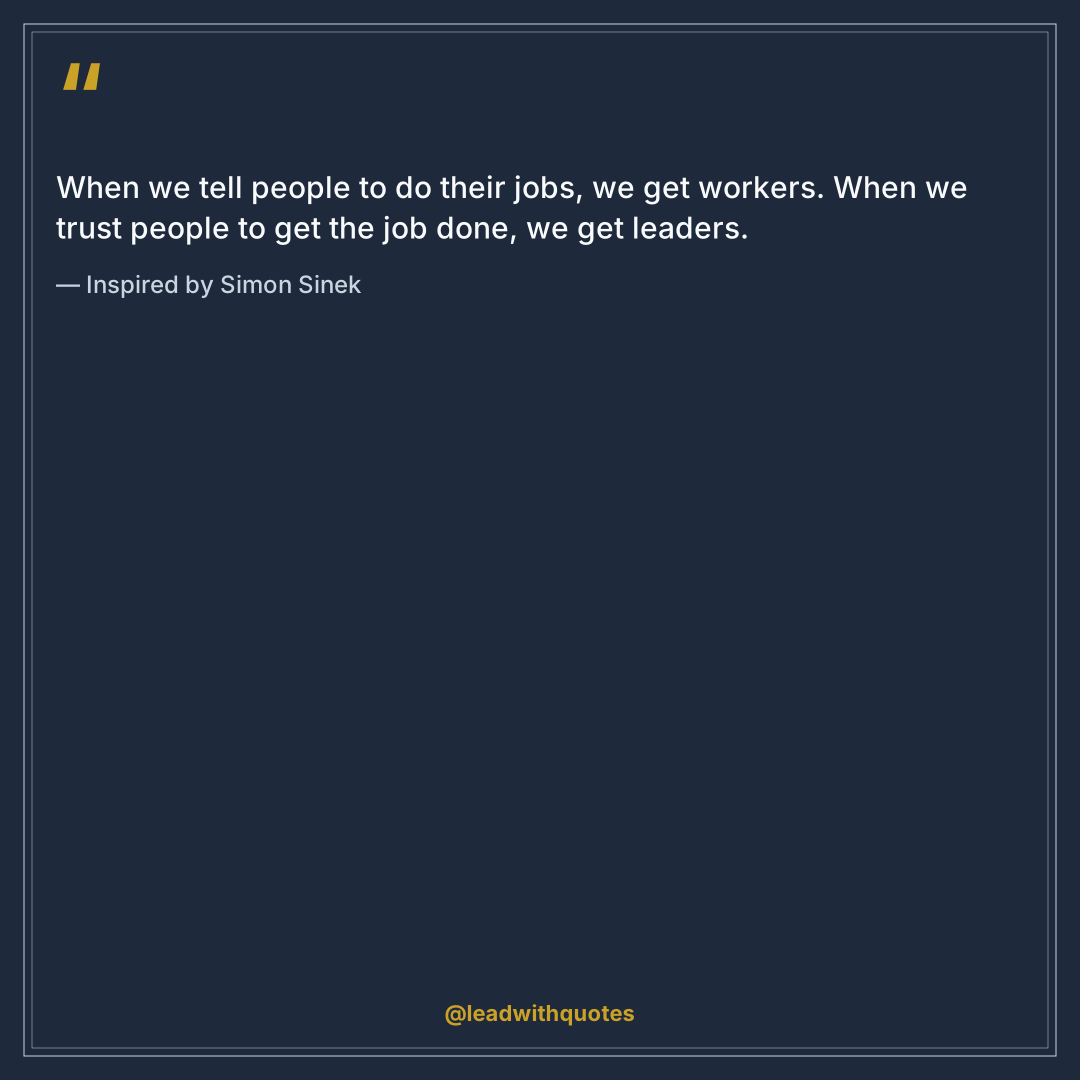
"When we tell people to do their jobs, we get workers. When we trust people to get the job done, we get leaders." — Inspired by Simon Sinek
Delegating authority rather than merely delegating tasks transforms the communication dynamic from a parent-child relationship to a peer-to-peer collaboration.
Further reading
- the foundational texts of servant leadership
- the core tenets of modern executive guidance
- genuine acknowledgment in the workplace
- concise frameworks for daily motivation
A Few Honest Corrections
Common claim: Sinek invented the concept of starting with purpose.
Closer to the evidence: The concept of purpose-driven organizational alignment has deep roots in mid-20th-century management theory, notably in the works of Peter Drucker and later Jim Collins. Sinek's contribution was synthesizing these academic concepts into the highly accessible "Golden Circle" framework that resonated with a digital-first generation of founders.
Common claim: His definition of listening requires total silence.
Closer to the evidence: Active listening in his framework does not mean remaining mute while others speak. It involves asking clarifying questions, mirroring back what was heard to confirm understanding, and actively dismantling one's own assumptions during the dialogue process.
Common claim: The Golden Circle applies exclusively to marketing.
Closer to the evidence: While frequently adopted by advertising agencies to sell products, the framework was originally designed to explain biological human behavior and decision-making. Its most potent applications occur in internal corporate communications, hiring practices, and the establishment of psychological safety within teams.
Take a moment today to review the last three emails you sent to your team, and rewrite the next one to explicitly state the underlying purpose before listing the required tasks.