Desk essay
15 Leadership Quotes For Work Every Manager Needs
These fifteen statements on workplace authority and success offer managers practical frameworks for guiding teams through complex daily challenges.
By Morgan Ellis
Morgan Ellis

"To command is to serve, nothing more and nothing less." — André Malraux, Man's Fate, 1933
Authority rarely looks like the movies. When I watched my former supervisor at a logistics hub in Memphis, Tennessee, 2014, handle a catastrophic supply chain failure, he did not give a rousing speech. He simply grabbed a clipboard and started sorting pallets alongside the night crew. That quiet competence forms the backbone of effective management. Finding the right words to articulate that standard requires looking past corporate jargon. We rely on practical leadership quotes to anchor our daily decisions in proven historical precedent. The most effective managers understand why concise directives matter in team settings.
Defining Success Through Action
"Action is the foundational key to all success." — Pablo Picasso, Conversations with Picasso, 1964
Picasso framed creative output as a matter of sheer momentum rather than waiting for divine inspiration. Managers who adopt this mindset prioritize steady progress over flawless planning.
"The secret of getting ahead is getting started." — Mark Twain, Unverified but widely attributed late 19th-century maxim
While often debated by Twain scholars, this pragmatic advice perfectly captures the necessity of overcoming initial inertia in project management. Teams stall when leaders hesitate.
"I never dreamed about success. I worked for it." — Estée Lauder, Estée: A Success Story, 1985
Lauder built a massive international cosmetics empire by prioritizing relentless execution over abstract vision boards. Her approach strips away the glamour of executive titles to reveal the gritty reality of daily operations.
Managing People and Expectations
Guiding a diverse group of professionals requires immense psychological flexibility. When examining how modern theorists address corporate communication breakdowns, the focus inevitably shifts toward empathy. Directives fail when they lack human context.
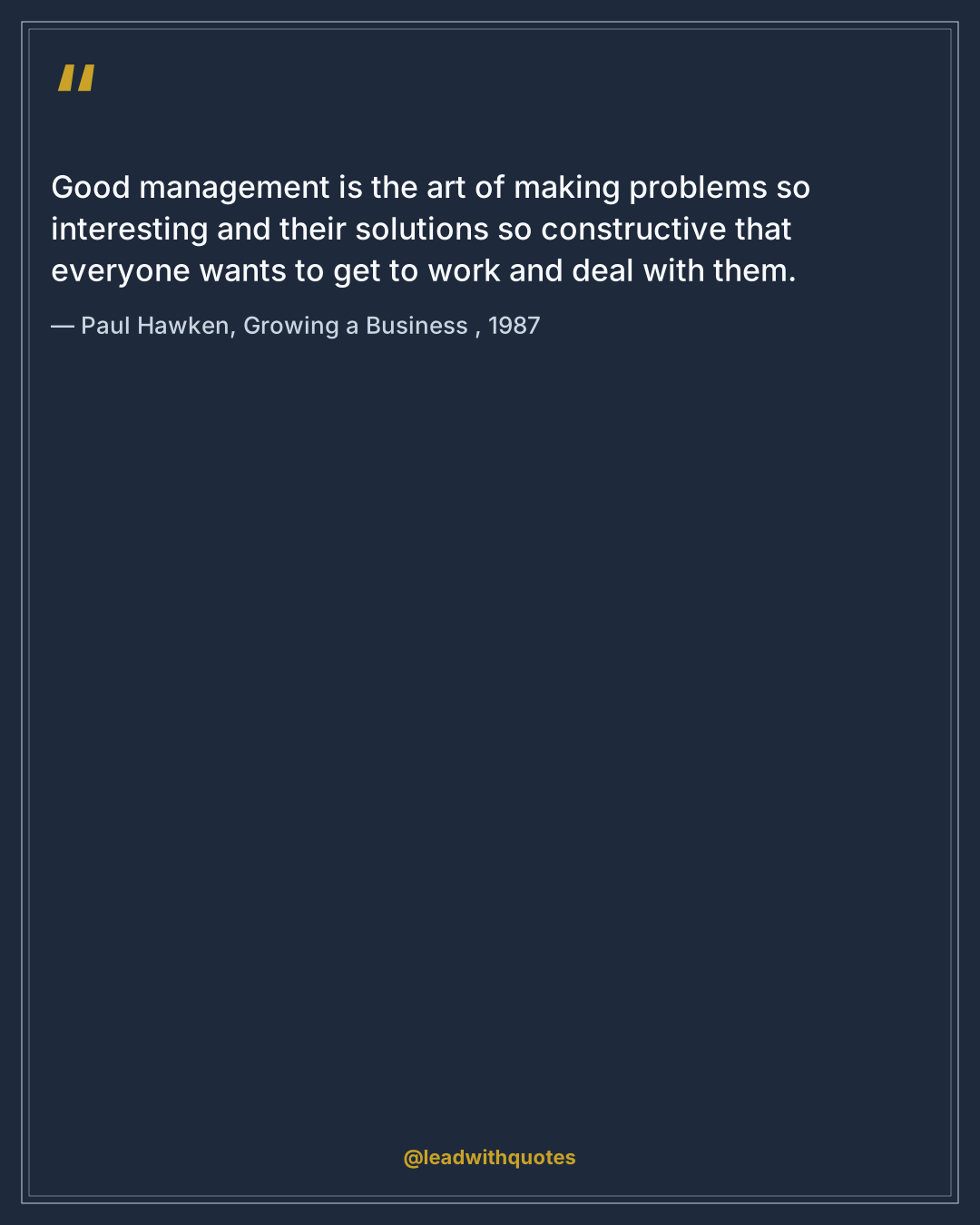
"Good management is the art of making problems so interesting and their solutions so constructive that everyone wants to get to work and deal with them." — Paul Hawken, Growing a Business, 1987
Hawken shifts the managerial burden from dictating tasks to framing challenges in a way that sparks intellectual curiosity. This subtle psychological pivot transforms reluctant employees into engaged problem solvers.
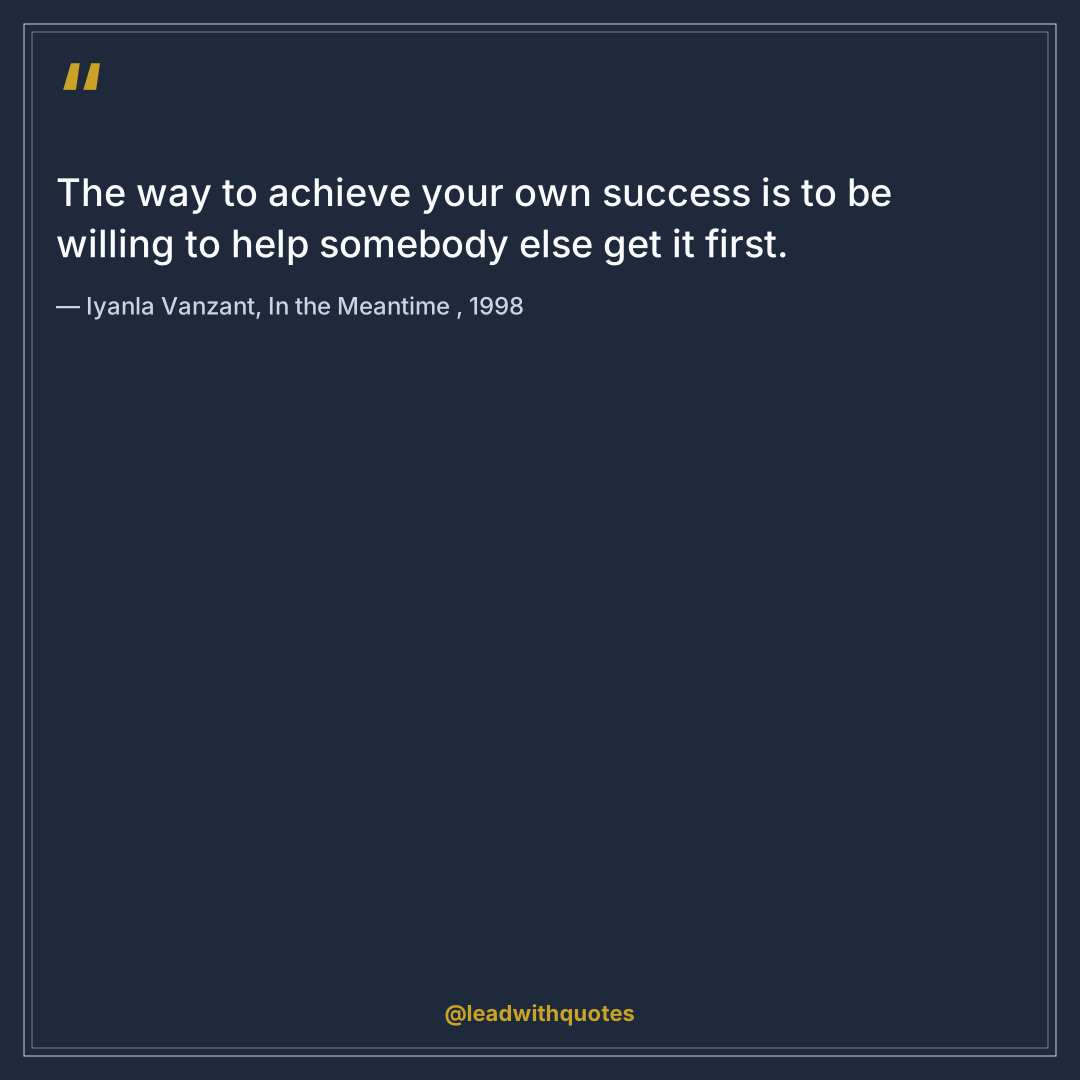
"The way to achieve your own success is to be willing to help somebody else get it first." — Iyanla Vanzant, In the Meantime, 1998
Vanzant highlights the reciprocal nature of professional advancement in collaborative environments. Leaders who hoard credit quickly find themselves isolated during critical operational crises.
"People who work together will win, whether it be against complex football defenses, or the problems of modern society." — Vince Lombardi, The Lombardi Rules, 2002
Lombardi understood that collective cohesion always outpaces isolated individual brilliance. His coaching philosophy translates seamlessly to corporate departments facing aggressive quarterly targets.
"Treat employees like they make a difference and they will." — Jim Goodnight, SAS Institute corporate philosophy, circa 1990
Goodnight built one of the most successful software companies in the world by institutionalizing respect as a core operational metric. Trust reduces turnover dramatically.
Resilience and Decision Making
Executives face constant pressure to predict volatile markets. Reviewing historical statements on authority reveals how predecessors navigated similar uncertainty. Paralysis destroys more companies than incorrect choices.
"Success is stumbling from failure to failure with no loss of enthusiasm." — Inspired by Winston Churchill
Though frequently misattributed to Churchill directly, the sentiment remains a vital survival mechanism for founders navigating early-stage startups. Maintaining morale during inevitable setbacks defines true executive endurance.
"Do not wait to strike till the iron is hot; but make it hot by striking." — William Butler Yeats, Early philosophical writings, 1890s
Yeats argues against the passive waiting for perfect market conditions. Aggressive leaders create their own momentum through decisive early intervention.
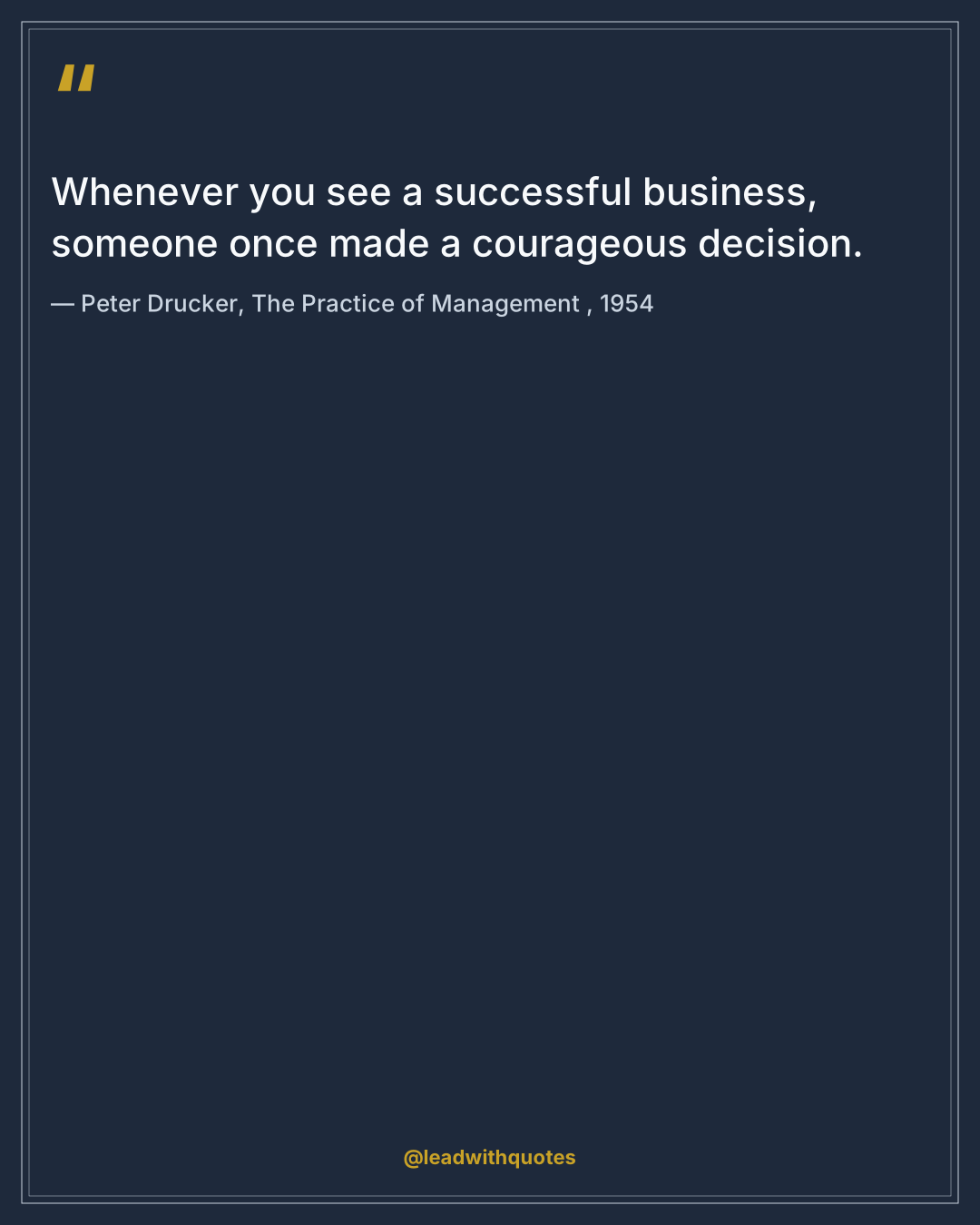
"Whenever you see a successful business, someone once made a courageous decision." — Peter Drucker, The Practice of Management, 1954
Drucker strips away the illusion of inevitable corporate growth, pointing instead to specific moments of calculated risk. Safe choices rarely yield market dominance.
"Risk more than others think is safe. Dream more than others think is practical." — Howard Schultz, Pour Your Heart Into It, 1997
Schultz reflects on the aggressive expansion strategies that transformed a local Seattle coffee bean roaster into a global phenomenon. Timidity guarantees mediocrity.
Cultivating Workplace Culture
The internal environment of an organization dictates its external output. We see this clearly when studying building resilient organizations through service-oriented frameworks. Culture requires deliberate daily maintenance.
"Corporate culture matters. How management chooses to treat its people impacts everything for better or for worse." — Simon Sinek, Leaders Eat Last, 2014
Sinek formalizes the idea that internal employee treatment is the ultimate leading indicator of external customer satisfaction. You cannot mandate excellent service from an exhausted workforce.
"To win in the marketplace you must first win in the workplace." — Doug Conant, TouchPoints, 2011
Conant turned around the Campbell Soup Company by focusing entirely on employee engagement metrics before addressing product lines. Internal alignment precedes external victory.
"Success is best when it's shared." — Howard Schultz, Onward, 2011
Returning to Schultz, this later reflection emphasizes equity and collective reward over isolated executive compensation. Shared victories build fierce institutional loyalty.
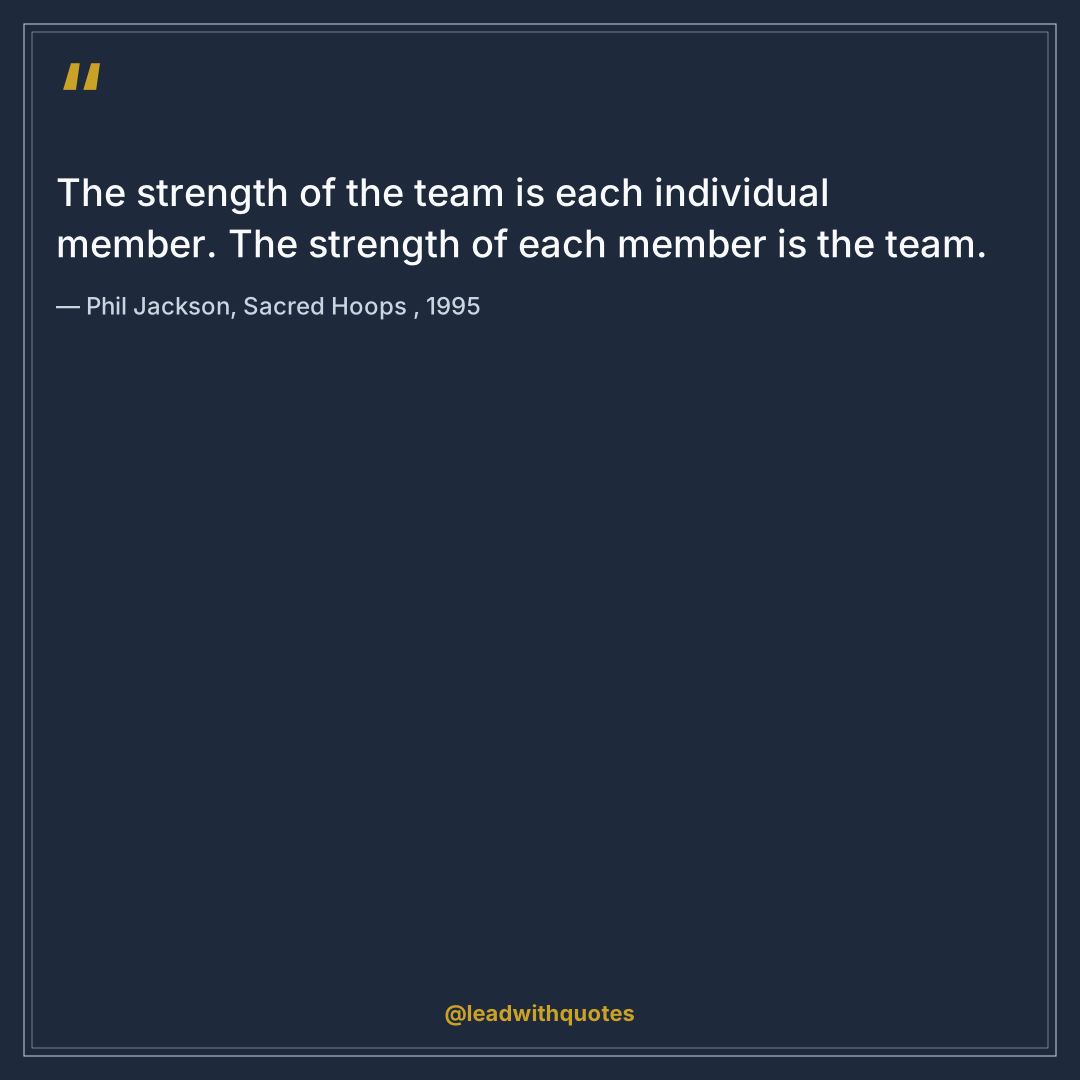
"The strength of the team is each individual member. The strength of each member is the team." — Phil Jackson, Sacred Hoops, 1995
Jackson managed massive egos in professional basketball by constantly reinforcing the symbiotic relationship between personal talent and group mechanics. This dynamic mirrors high-stakes corporate boardrooms perfectly.
Understanding how historical figures articulated executive burden provides modern managers with a vital sense of perspective. Tomorrow morning offers another chance to apply these frameworks to your own team dynamics.
Questions Readers Send In
How do I use these quotes in daily management?
Integrate them naturally into weekly team updates or one-on-one coaching sessions. A well-placed historical reference can depersonalize a difficult feedback conversation by grounding it in established management theory.
Why do older quotes still apply to modern tech companies?
Human psychology remains remarkably consistent regardless of the underlying technology. The anxieties, ambitions, and interpersonal conflicts experienced by industrial workers in 1920 mirror those of software engineers today.
Should I memorize these statements?
Memorization is less important than internalizing the core principles behind the words. Keep a few relevant concepts written down in your daily planner to reference when navigating sudden operational crises.