Desk essay
8 Women Empowerment Quotes in English That Will Ignite Your Ambition
The evolution of female authority is traced through modern speeches, historical texts, and the defiant words of those who refused to stay quiet.
By Morgan Ellis
Morgan Ellis

Reframing Power as an Internal Choice
When my older sister in her cramped Chicago walk-up, 2011, handed me a battered paperback anthology of feminist essays, she didn't offer a grand speech about potential. She simply pointed to a dog-eared page and told me to read the highlighted text. The rhetoric surrounding female authority often focuses on external barriers, but the most incisive thinkers begin by addressing the internal landscape. Understanding how leaders communicate agency requires looking at the moments when women decide to stop waiting for permission. They seize the narrative first.
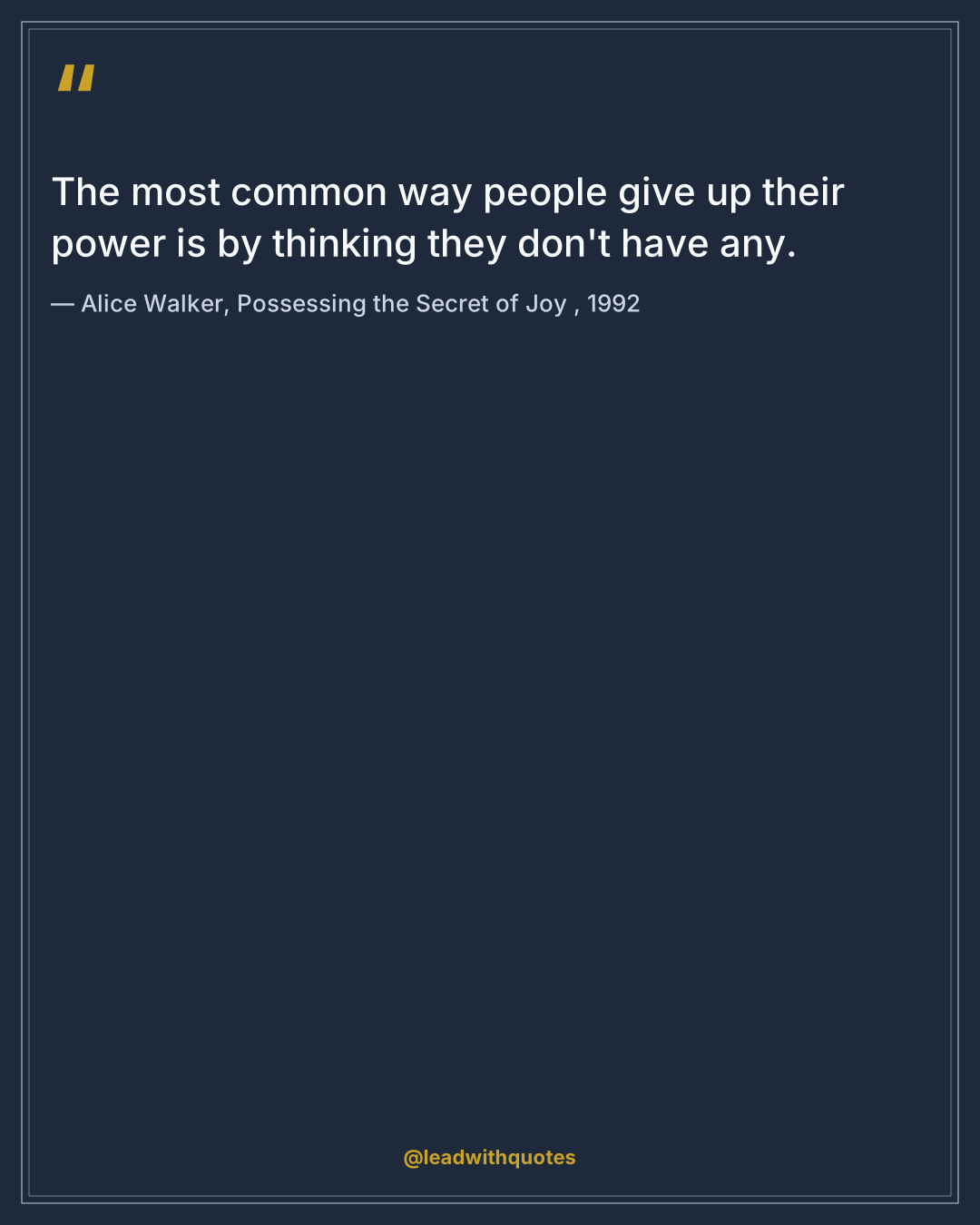
"The most common way people give up their power is by thinking they don't have any." — Alice Walker, Possessing the Secret of Joy, 1992
Walker's novel explores the severe physical and psychological trauma of female genital mutilation, making her commentary on autonomy deeply sobering.
"No one can make you feel inferior without your consent." — Eleanor Roosevelt, This Is My Story, 1937
Though often misattributed as a casual remark, Roosevelt first articulated this exact sentiment in her pre-war autobiography while reflecting on her awkward adolescence.
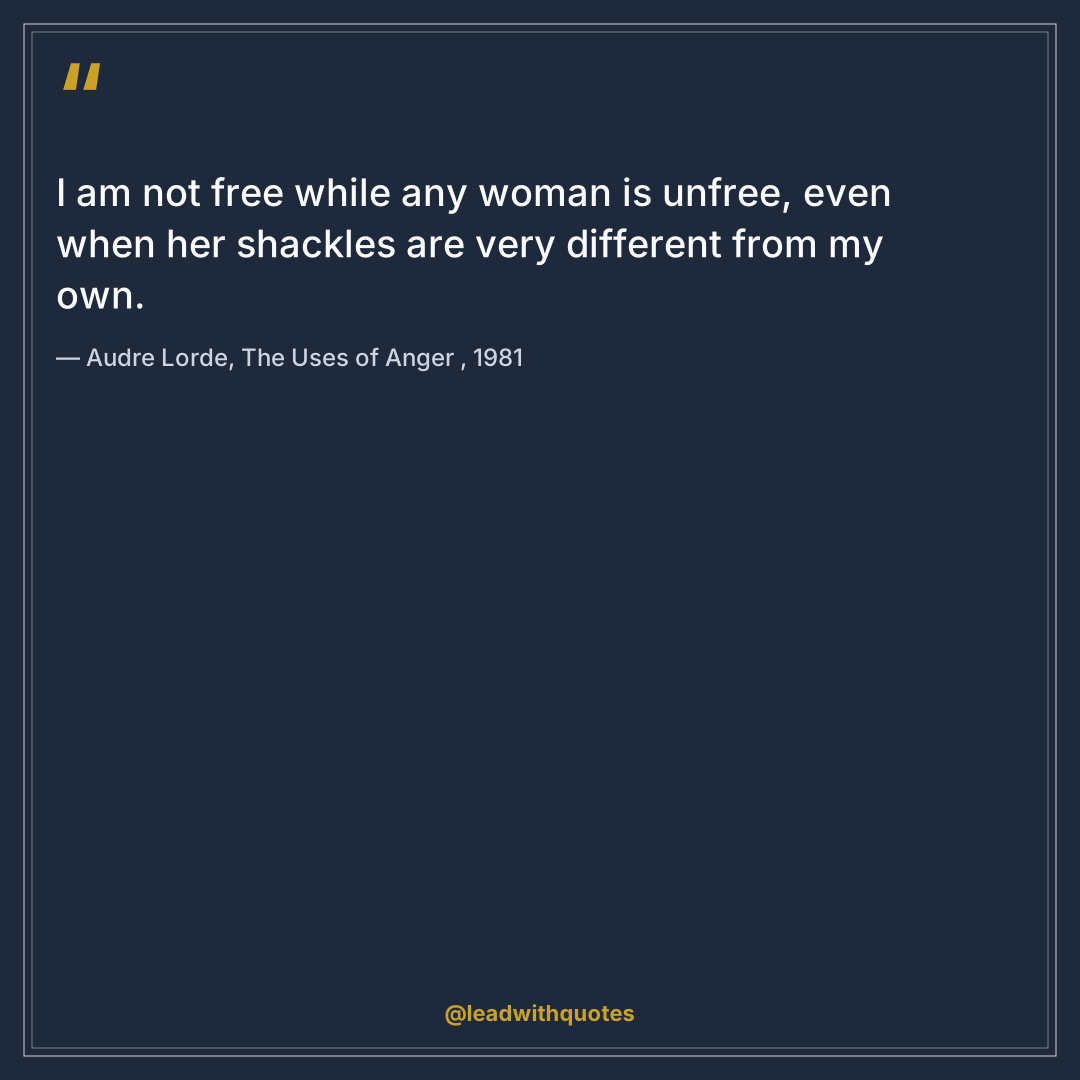
"I am not free while any woman is unfree, even when her shackles are very different from my own." — Audre Lorde, The Uses of Anger, 1981
Lorde delivered this keynote address at the National Women's Studies Association Conference, directly challenging the predominantly white audience to recognize intersectional struggles.
Pairs well with: Women Leadership Quotes
Discarding the Apology
Decades of behavioral conditioning train girls to soften their demands and hedge their statements. Breaking that habit requires friction. Reviewing what historical figures taught us about taking charge reveals a consistent pattern of deliberate unlikability. The speakers refuse to prioritize the comfort of the room over the urgency of their message. They state facts plainly. They demand space unapologetically.
"I have chosen to no longer be apologetic for my femaleness and my femininity." — Chimamanda Ngozi Adichie, We Should All Be Feminists, 2014
This essay, adapted from a widely shared TEDx talk, shifted the cultural conversation around gender expectations in both African and Western contexts.
"Some women choose to follow men, and some women choose to follow their dreams." — Lady Gaga, Interview with Cosmopolitan, 2010
The pop icon offered this blunt assessment during an era when media coverage heavily prioritized her romantic life over her prolific songwriting output.
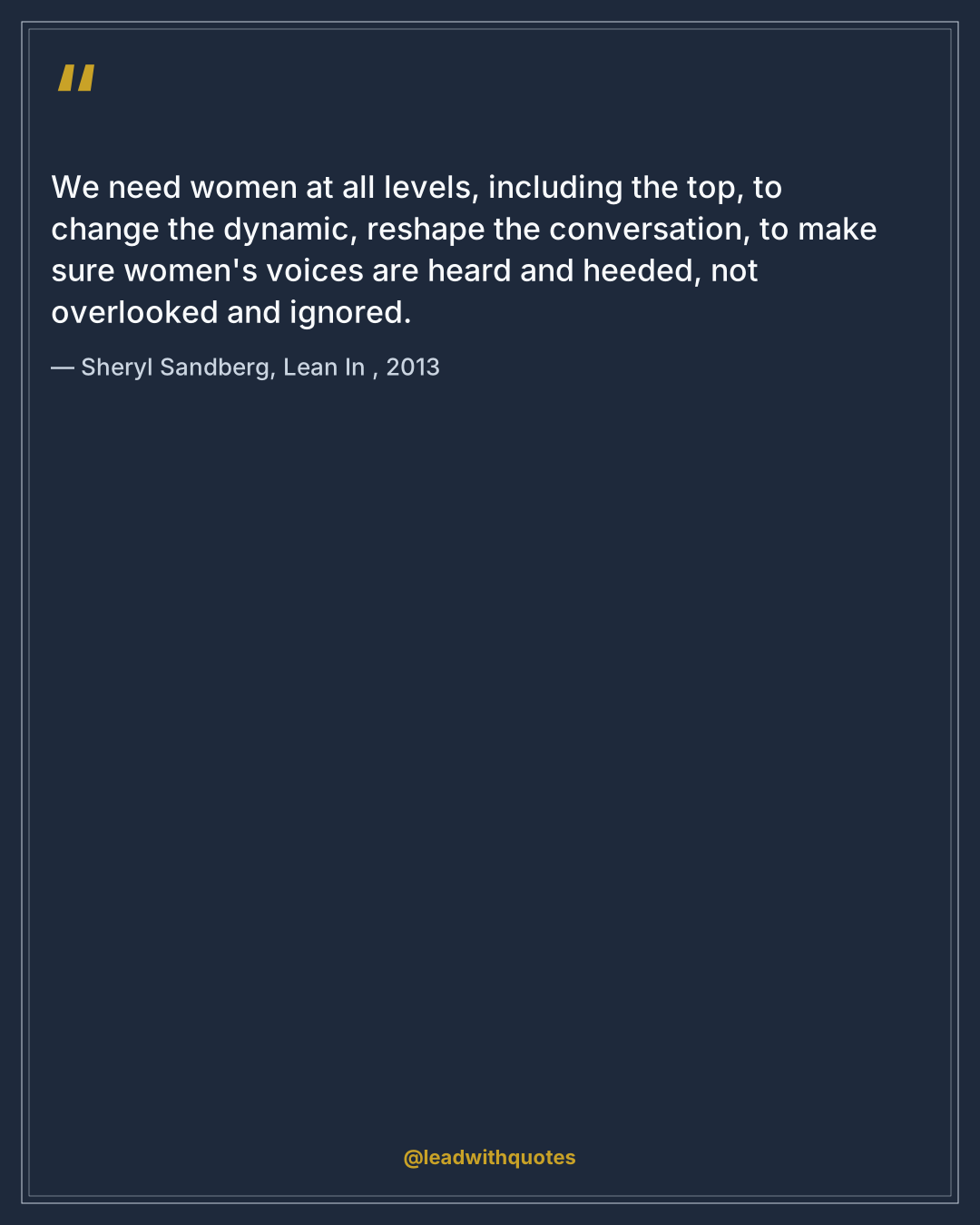
"We need women at all levels, including the top, to change the dynamic, reshape the conversation, to make sure women's voices are heard and heeded, not overlooked and ignored." — Sheryl Sandberg, Lean In, 2013
Sandberg's corporate manifesto sparked intense debate about systemic barriers versus individual responsibility in the modern boardroom.
Pairs well with: Famous Leadership Quotes: Women In Leadership
Defining the Future
The final phase of empowerment transitions from personal defense to collective building. Examining the ways modern voices redefine influence shows a pivot toward mentorship and structural reform. It is no longer enough to secure a single seat at the table. The goal shifts toward replacing the table entirely with something that accommodates the next generation.
"There is no limit to what we, as women, can accomplish." — Michelle Obama, Speech at Let Girls Learn Event, 2016
The former First Lady launched this global initiative specifically to address the complex geopolitical barriers keeping adolescent girls out of classrooms.
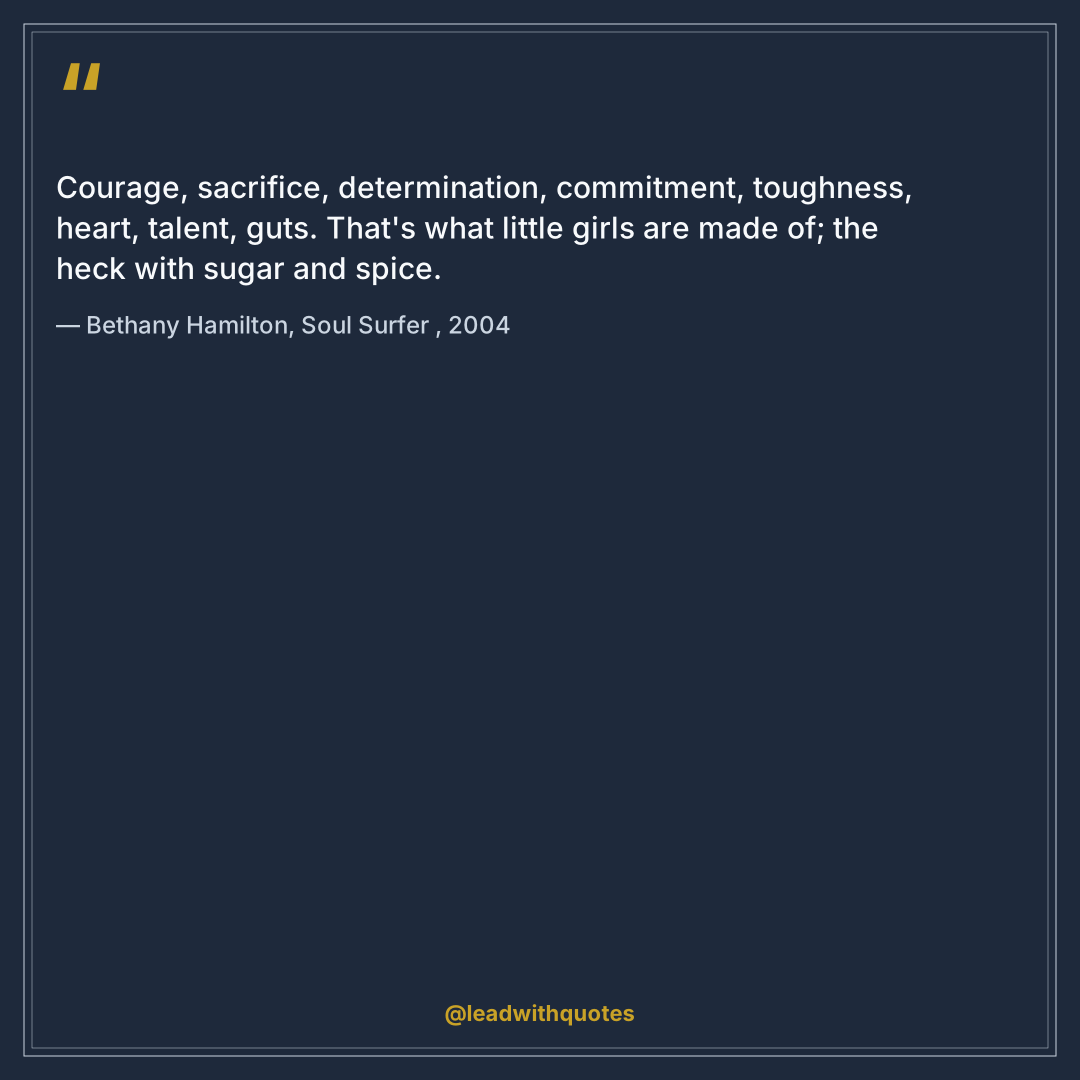
"Courage, sacrifice, determination, commitment, toughness, heart, talent, guts. That's what little girls are made of; the heck with sugar and spice." — Bethany Hamilton, Soul Surfer, 2004
Hamilton published her memoir just one year after losing her left arm in a shark attack, fundamentally rewriting the narrative of female athletic resilience.
Progress relies on the friction these voices provide. They leave a documented trail for the next cohort to follow, ensuring the fundamental arguments never have to be started from scratch.
Common Questions, Straight Answers
Why do historical quotes about female empowerment often lack clear attribution?
Many early statements advocating for women's rights were published anonymously or in collective pamphlets to protect the authors from social and legal retaliation during the 18th and 19th centuries.
How has the language of empowerment changed over the last decade?
Recent speeches prioritize intersectionality and systemic reform, moving away from the purely individualistic "bootstrap" rhetoric that dominated corporate feminism in the late 1990s.
Are translations of international feminist quotes reliable?
Scholarly translations usually capture the political nuance accurately, but viral social media graphics frequently strip away crucial context or entirely fabricate phrasing to fit modern aesthetics.