Desk essay
Thinkers on Visionary Leadership: 6 Quotes from Speeches and Memoirs
Translating a mental image into a shared reality separates idle dreamers from effective architects of the future.
By Morgan Ellis
Morgan Ellis

If we could gather the great forecasters of the past century into a single room, their dialogue would likely center on the friction between today's reality and tomorrow's potential. Watching my uncle draft blueprints in a cramped Toronto apartment in 1984 taught me that foresight requires immense patience. Translating a mental image into a physical structure takes years of unseen labor. We frequently look to historical figures who commanded global attention to understand how they managed this heavy burden of anticipation.
On the Burden of Foresight
"The only thing worse than being blind is having sight but no vision." — Helen Keller, Address to the Lions Clubs International Convention, 1925
Keller understood that physical limitations pale in comparison to a lack of imagination. This sentiment often surfaces when early industry disruptors mapped their futures against staggering institutional resistance.
"You can't connect the dots looking forward; you can only connect them looking backwards." — Steve Jobs, Stanford Commencement Address, 2005
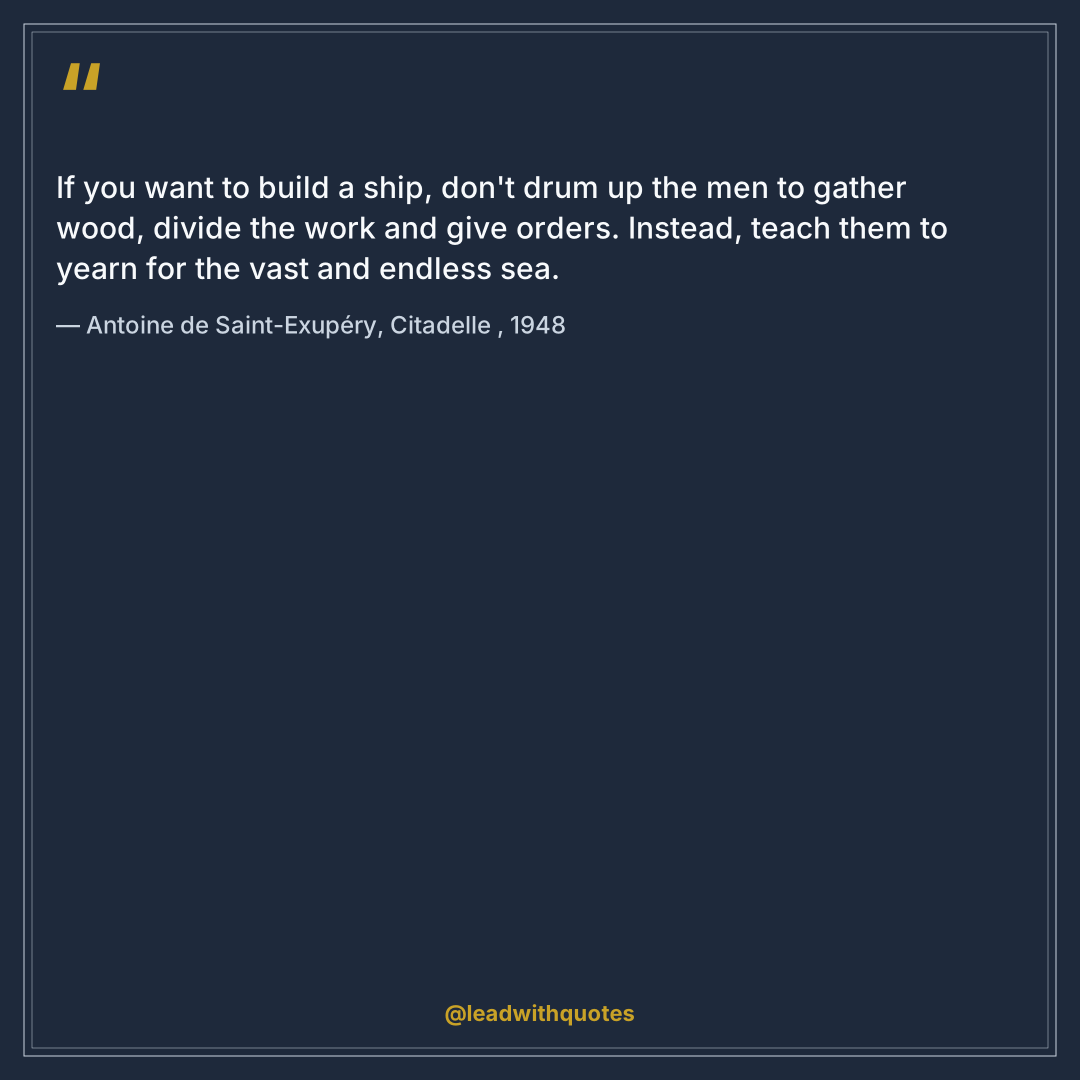
Jobs reframes the anxiety of the unknown into a retroactive certainty for his audience. He delivered this specific advice to university graduates standing nervously at the absolute edge of their professional careers.
On Mobilizing the Skeptics
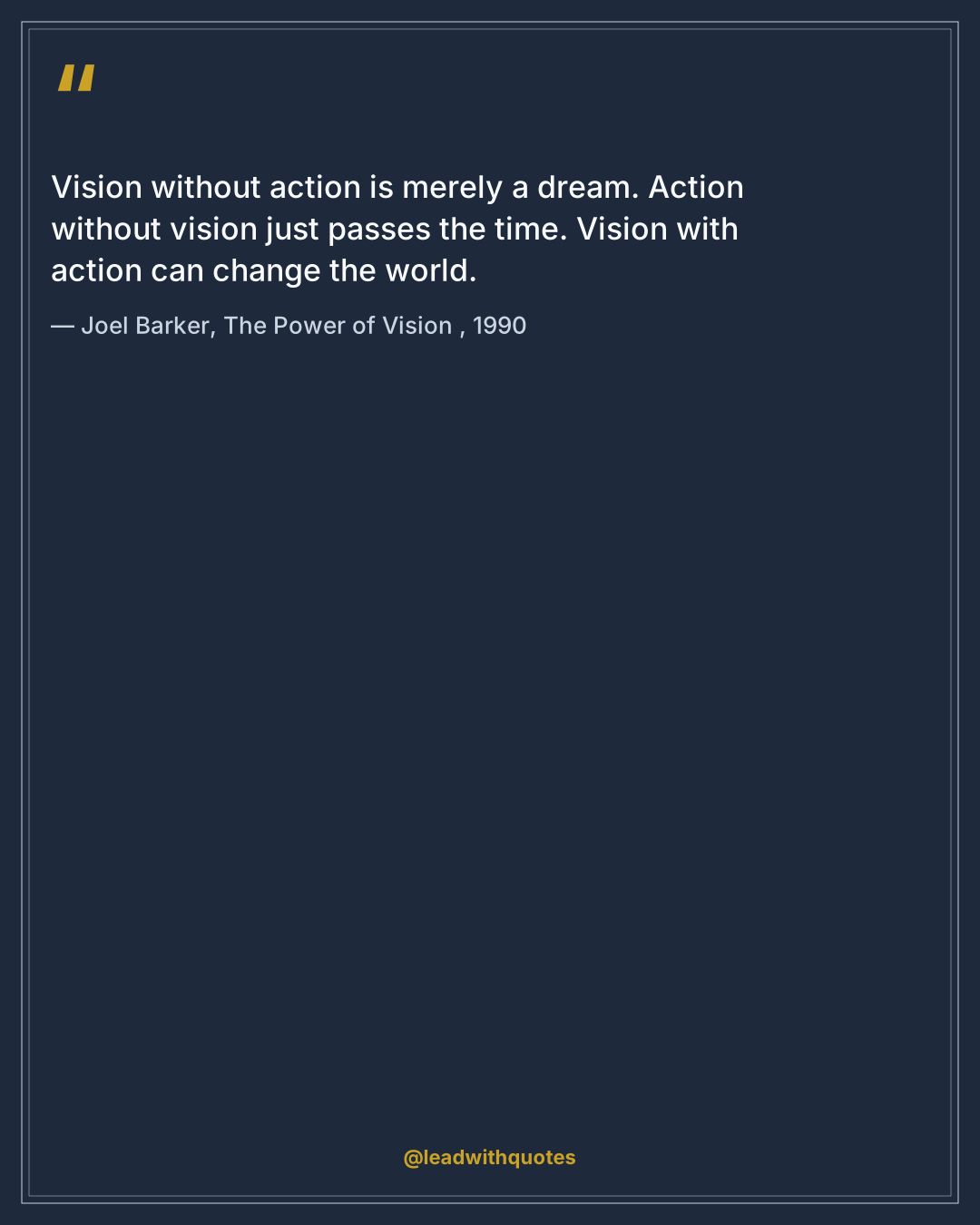
"If you want to build a ship, don't drum up the men to gather wood, divide the work and give orders. Instead, teach them to yearn for the vast and endless sea." — Antoine de Saint-Exupéry, Citadelle, 1948
Compliance cannot replace genuine enthusiasm. As modern boardroom rhetoric shifted drastically over the decades, executives increasingly favored this poetic approach to team alignment.
"If I had asked people what they wanted, they would have said faster horses." — Attributed to Henry Ford
Though historians heavily dispute whether Ford actually uttered these words, the phrase perfectly captures the core innovator's dilemma. The automotive magnate's legacy remains permanently tied to this philosophy of disregarding incremental consumer upgrades.
On Executing the Unprecedented
"Keep your eyes on the stars, and your feet on the ground." — Theodore Roosevelt, Speech at Groton School, 1904
Roosevelt delivered this practical charge while shaping younger minds to embrace uncertainty at a prestigious boarding school. A grand ambition demands strict operational discipline to survive the harsh constraints of the real world.
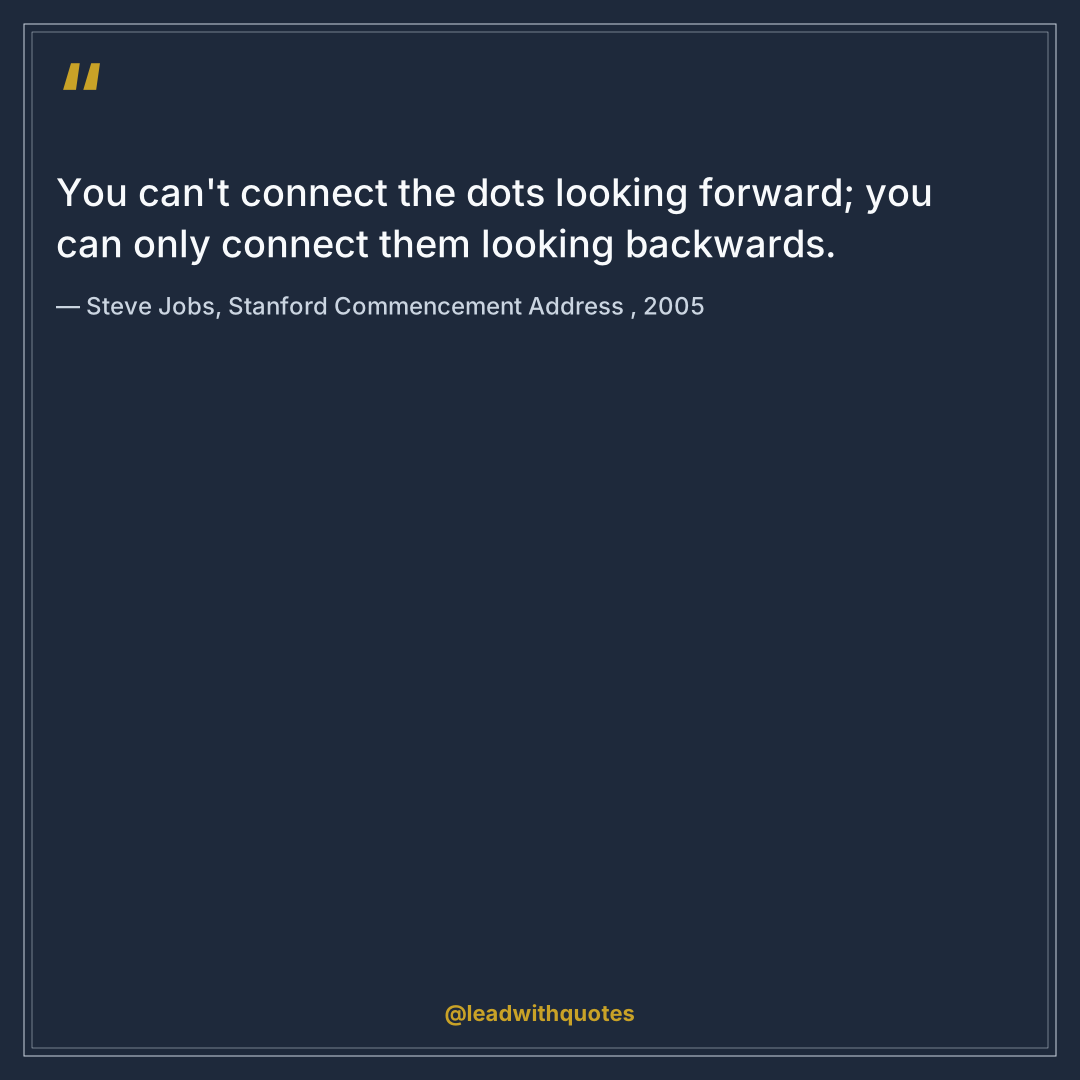
"Vision without action is merely a dream. Action without vision just passes the time. Vision with action can change the world." — Joel Barker, The Power of Vision, 1990
Barker synthesizes the entire organizational challenge into three starkly contrasting sentences. Managers navigating daily team dynamics on the floor rely heavily on these brief maxims passed down through corporate training modules.
Common Questions, Straight Answers
What defines a visionary leader?
A visionary leader articulates a clear picture of the future that motivates others to alter their current behavior. They balance abstract imagination with concrete strategic milestones to push projects forward.
Why is communication critical for visionaries?
An idea locked inside one person's head possesses zero utility for a functioning organization. Leaders must translate complex concepts into relatable metaphors that a diverse workforce can actually execute.
Can visionary leadership be learned?
While some individuals naturally gravitate toward long-term thinking, anyone can develop foresight by studying historical market trends. Actively soliciting dissenting opinions from peers also sharpens predictive instincts.