Desk essay
Why Student Council Quotes For Leadership Reveal Our Earliest Ideas of Authority
High school gymnasiums and campaign posters provide our first real glimpse into how young people process the burden of civic responsibility.
By Morgan Ellis
Morgan Ellis

I first understood the weight of a campaign promise while sitting with my older sister on the bleachers of Westview High School in Portland, 2004, watching her tape painted banners to the brick walls. The slogans were earnest and heavily glittered. They promised better vending machines and longer lunch periods, but beneath the teenage optimism lay a serious attempt to grapple with what it means to represent other people. We often dismiss teenage civic campaigns as popularity contests. Look closer at the language plastered across those crowded hallways, and you find a raw, unfiltered distillation of how society teaches young people to understand power and service.
When adolescents begin searching for brief memorable phrases about guiding others, they usually gravitate toward action over theory. They are not reading corporate management textbooks. They are pulling from history, literature, and pop culture to define a role they have never held before. This selection process acts as a mirror for our cultural values regarding authority.
The Promise of Representation
Before someone can govern a student body, they must convince their peers that they are willing to listen. The quotes chosen for campaign speeches often reflect a deep desire to bridge the gap between the administration and the student desk.
"The first responsibility of a leader is to define reality. The last is to say thank you. In between, the leader is a servant." — Max De Pree, Leadership Is an Art, 1989
De Pree originally wrote this for corporate executives, yet it translates perfectly to the high school auditorium where defining the reality of restrictive dress codes or limited extracurricular funding is the primary campaign platform.
"A leader takes people where they want to go. A great leader takes people where they don't necessarily want to go, but ought to be." — Rosalynn Carter, Campaign Remarks, 1976
This sentiment captures the difficult transition from simply being liked to actually making unpopular but necessary decisions for the student body's welfare.
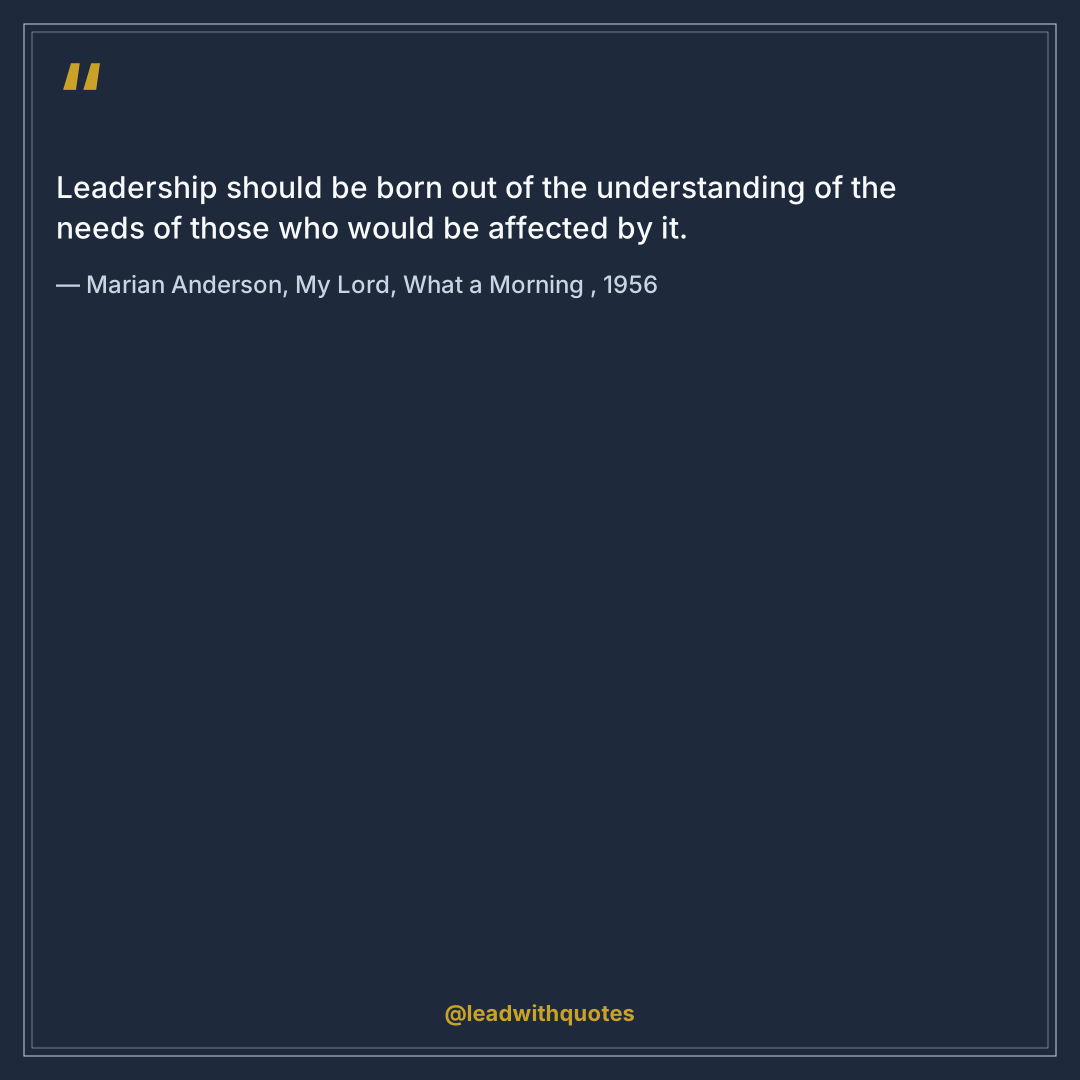
"Leadership should be born out of the understanding of the needs of those who would be affected by it." — Marian Anderson, My Lord, What a Morning, 1956
Anderson’s autobiography provides a foundational text for empathetic governance, reminding young candidates that their authority derives entirely from the consent and needs of their classmates.
Navigating Peer Authority
Stepping out of the crowd to lead your own friends requires a specific type of vulnerability. It is terrifying to stand on a cafeteria stage and ask for votes. Young candidates frequently turn to the words of historical female figures discussing autonomy to borrow the courage they need to face their peers.
"Courage starts with showing up and letting ourselves be seen." — Brené Brown, Daring Greatly, 2012
Brown’s work on vulnerability has permeated modern education, giving students a vocabulary to frame their nervousness not as weakness, but as the necessary first step of civic engagement.
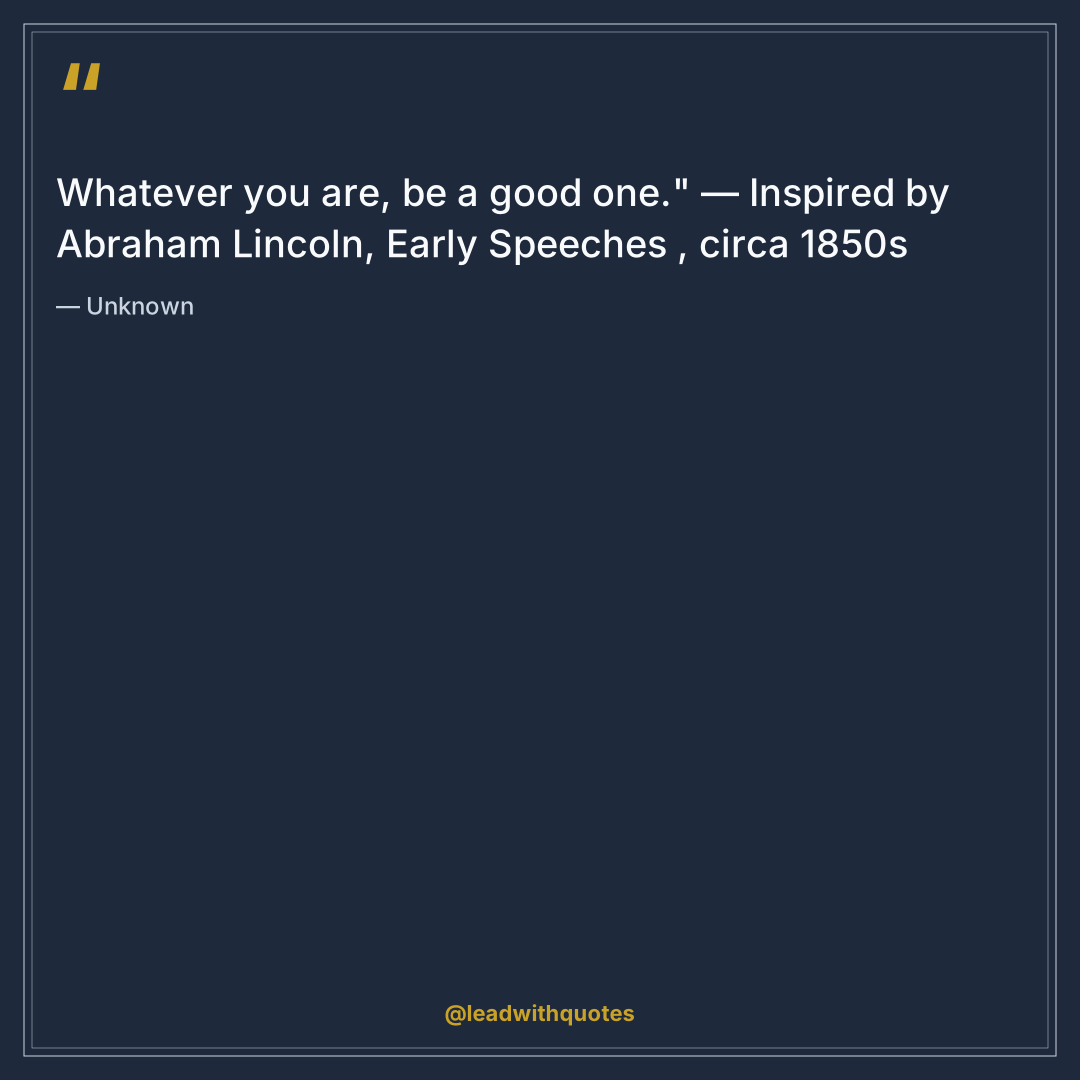
"Whatever you are, be a good one." — Inspired by Abraham Lincoln, Early Speeches, circa 1850s
Though frequently misattributed in its exact phrasing, this short maxim appears on countless neon poster boards because it demands excellence without prescribing a specific personality type.
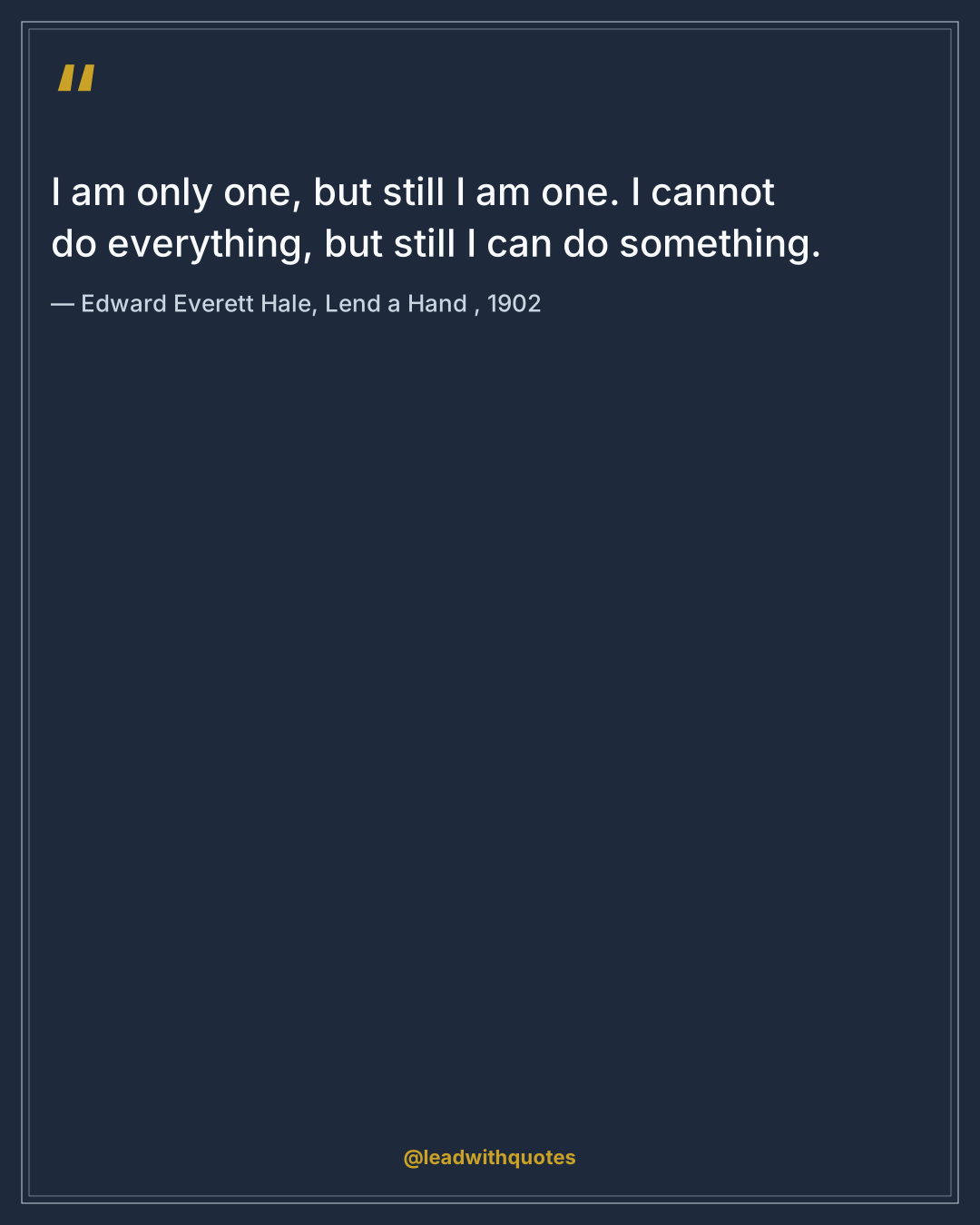
"I am only one, but still I am one. I cannot do everything, but still I can do something." — Edward Everett Hale, Lend a Hand, 1902
Hale’s century-old motto remains a staple in student government because it directly addresses the overwhelming feeling of being a single teenager trying to change an entrenched school system.
Further reading
- how mentors shape young minds today
- early pioneers taking charge before adulthood
- redefining ambition in academic settings
- broad perspectives on inspiring group action
The Hallway Campaign Trail
The mechanics of a high school election require distilling complex ideas into digestible soundbites. This constraint forces candidates to identify what actually matters to their electorate. They must move beyond personal ambition and articulate a collective vision.
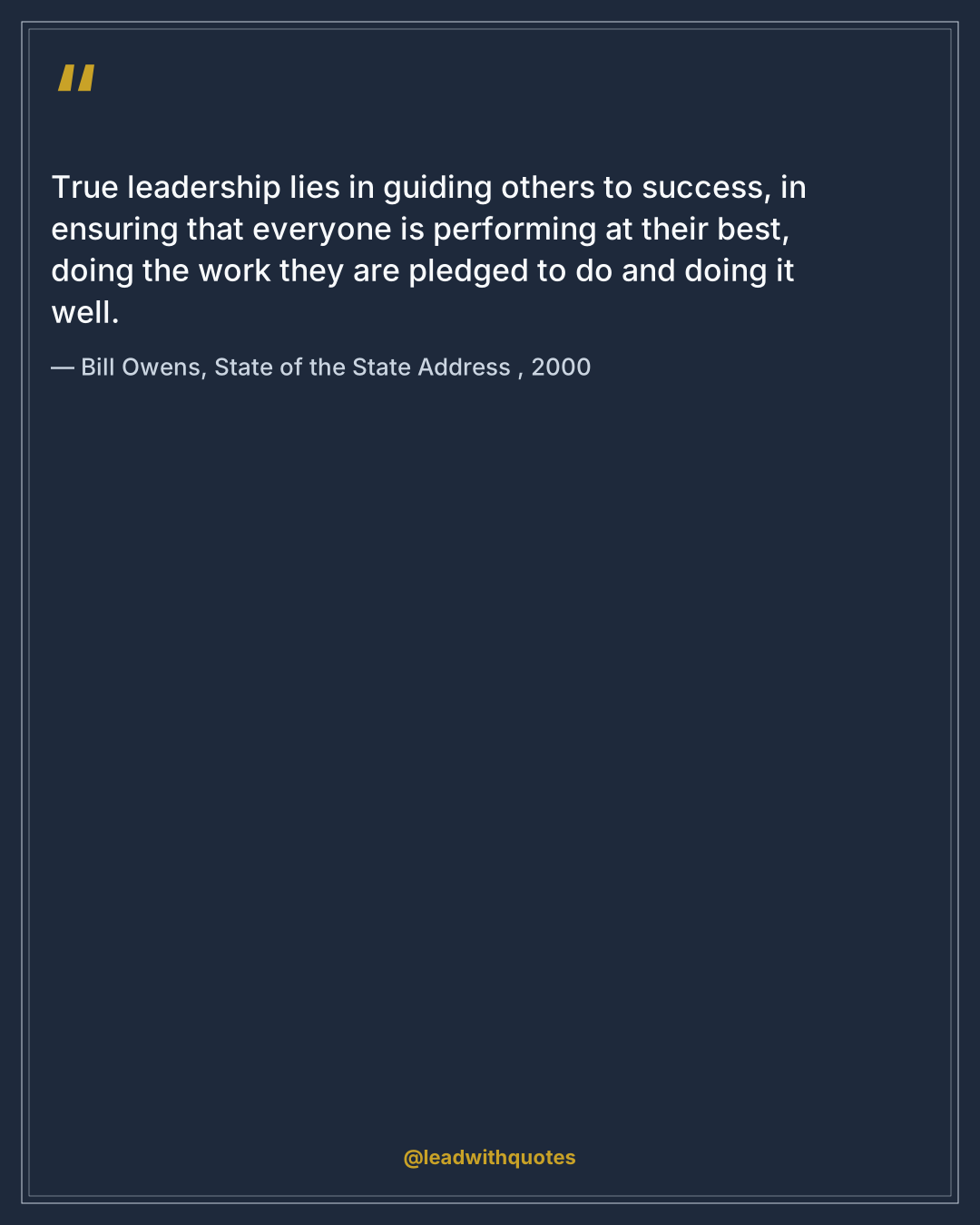
"True leadership lies in guiding others to success, in ensuring that everyone is performing at their best, doing the work they are pledged to do and doing it well." — Bill Owens, State of the State Address, 2000
Political speeches often filter down into educational settings, providing students with a framework for evaluating their own committee structures and volunteer drives.
"Action is the foundational key to all success." — Pablo Picasso, Archival Interviews, 1950s
When student councils stall in endless parliamentary debate over prom themes, this quote serves as a sharp reminder that constituents measure success by visible results.
A Few Honest Corrections
Popular reading: Student campaigns only mimic adult politics.
On closer look: While teenagers borrow the visual language of adult campaigns—buttons, banners, and podiums—their motivations are often much closer to immediate community service than long-term career maneuvering. The stakes feel incredibly high because they govern the exact environment they inhabit for eight hours every day.
Popular reading: Teenagers lack the lived experience to understand true responsibility.
On closer look: Adolescents acutely feel the impact of administrative policies, from budget cuts in the arts to inequitable disciplinary actions. Their lived experience within the school system gives them a highly specialized understanding of how institutional power affects daily life.
Popular reading: The slogans are just empty promises for better cafeteria food.
On closer look: A promise about cafeteria food is rarely just about the menu. It represents a demand for dignity, choices, and a voice in how the school’s resources are allocated. These seemingly trivial issues are the training ground for tackling larger systemic inequalities later in life.
Sitting in those bleachers watching my sister secure her painted banners, I realized that the election results hardly mattered. The act of gathering those words, writing them in thick marker, and hanging them in the main corridor was the actual lesson in civic duty. Long after the votes are tallied and the glitter sweeps away, those early attempts to articulate a vision of shared responsibility remain etched in the minds of the students who dared to run.