Desk essay
Short Famous Leadership Quotes For Modern Executives
A single concise sentence from a seasoned executive often cuts through the corporate noise better than a hundred-page strategy document.
By Morgan Ellis
Morgan Ellis

The Myth of the Grand Oration
People often assume that profound leadership requires lengthy speeches and complex theoretical frameworks. We picture historical figures standing on balconies delivering hour-long addresses that shift the course of nations. Business schools reinforce this by assigning dense textbooks that turn the daily friction of managing a team into an abstract science.
That assumption collapses the moment you study how effective decisions are actually communicated on the ground. I first grasped this distinction listening to my older brother in a diner booth off Route 66 in Flagstaff, Arizona, 2017, as he sketched out a restaurant shift schedule on a napkin. True administrative weight relies on brevity. A compressed directive leaves no room for ambiguity, forcing the speaker to distill their philosophy into a single, actionable truth.
Foundational Directives from History
Examining classic executive principles reveals a clear preference for the succinct over the verbose.
"Do what you can, with what you have, where you are." — Theodore Roosevelt, Autobiography, 1913
This pragmatic doctrine anchors resource-constrained managers dealing with immediate operational crises rather than idealized scenarios.
"Management is doing things right; leadership is doing the right things." — Peter Drucker, Essential Drucker, 2001
Drucker neatly separates the mechanical necessity of operational efficiency from the moral and strategic burden of executive direction.
"Leadership is the capacity to translate vision into reality." — Warren Bennis, On Becoming a Leader, 1989
Bennis strips away the romanticism of the visionary founder, demanding instead a focus on the brutal mechanics of execution.
"A leader is a dealer in hope." — Napoleon Bonaparte, Maxims, 1804
This stark assessment acknowledges the psychological role a commander plays when troops or employees face overwhelming market or battlefield odds.
The Shift Toward Empowerment
Analyzing how modern leaders frame authority requires looking at the transition from command-and-control to collaborative frameworks.
"The function of leadership is to produce more leaders, not more followers." — Ralph Nader, Interview, 1999
Nader frames organizational health around succession planning and capacity building rather than the accumulation of personal power.
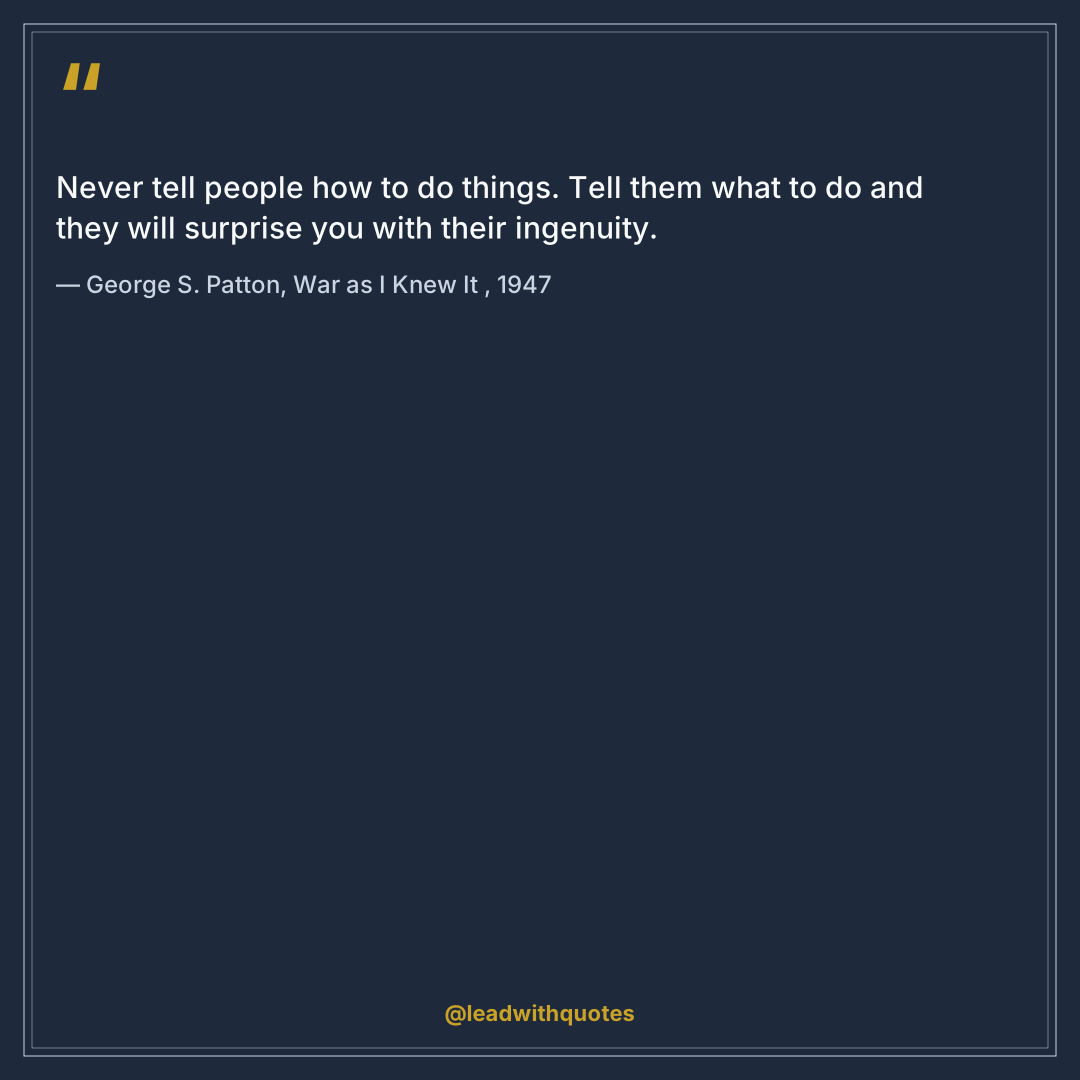
"Never tell people how to do things. Tell them what to do and they will surprise you with their ingenuity." — George S. Patton, War as I Knew It, 1947
Patton outlines the ultimate delegation philosophy for field commanders who must trust their subordinates in rapidly changing environments.
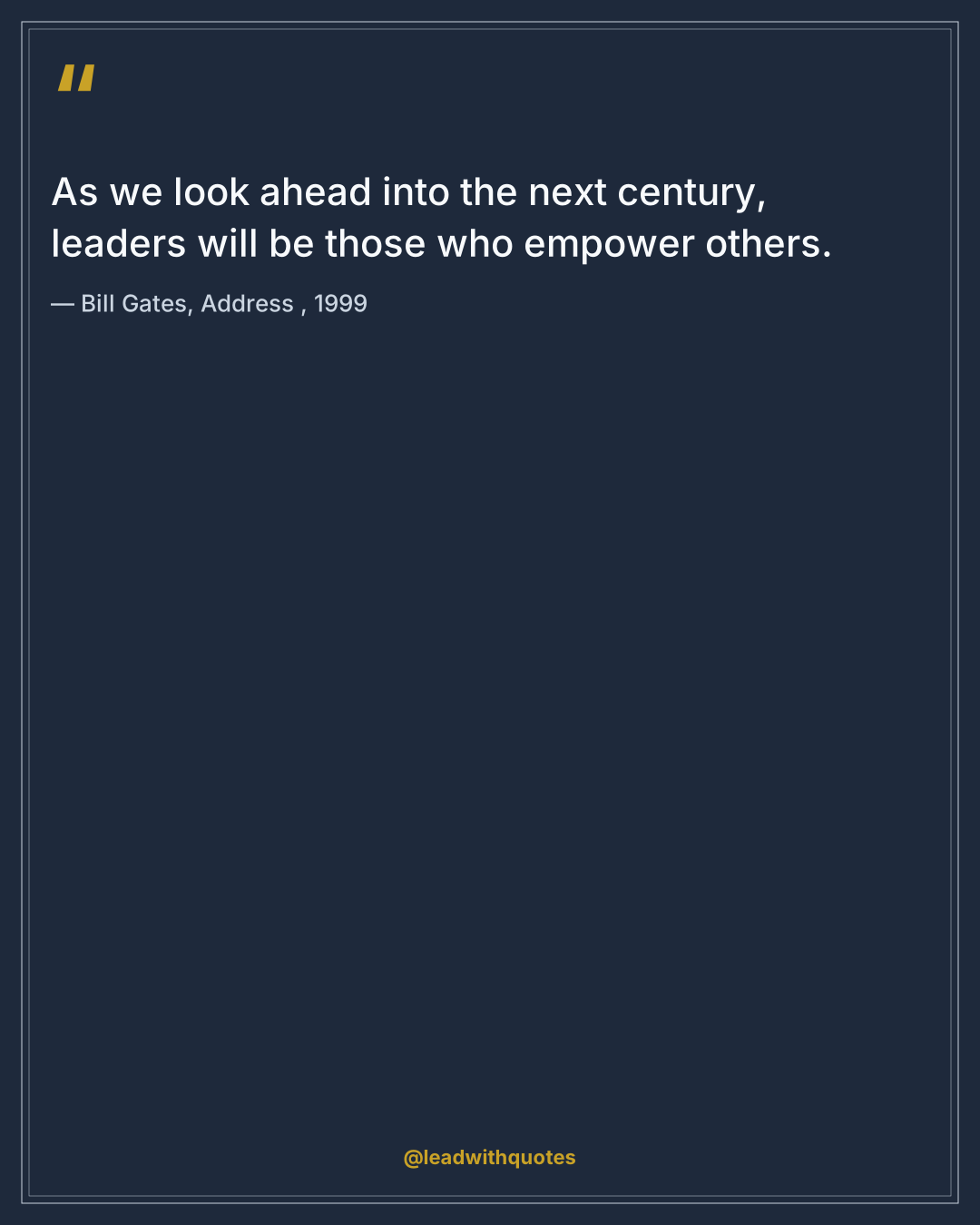
"As we look ahead into the next century, leaders will be those who empower others." — Bill Gates, Address, 1999
Gates predicted the necessary shift in the technology sector, where rapid iteration requires decentralized decision-making.
"Example is not the main thing in influencing others. It is the only thing." — Albert Schweitzer, Reverence for Life, 1969
Schweitzer removes the option of hypocrisy, binding a director's influence entirely to their visible daily behavior.
Emotional Intelligence in Command
Listening to the voices of female pioneers highlights the integration of empathy into structural power dynamics.
"To handle yourself, use your head; to handle others, use your heart." — Eleanor Roosevelt, Newspaper Column, 1945
Roosevelt establishes a bipartite system for executives, separating internal emotional regulation from external team management.
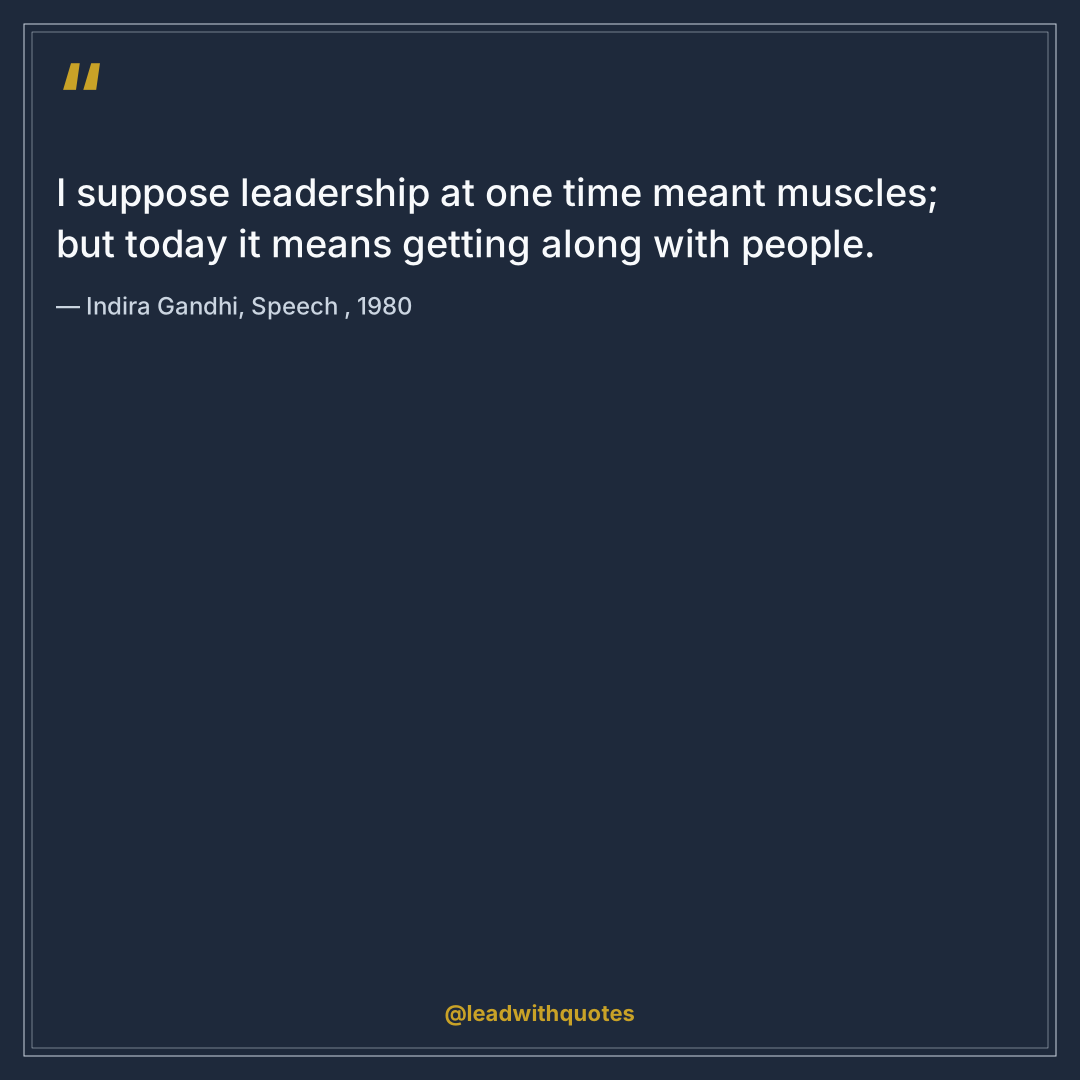
"I suppose leadership at one time meant muscles; but today it means getting along with people." — Indira Gandhi, Speech, 1980
Gandhi marks the historical transition from coercive force to coalition building in modern governance.
"Leadership and learning are indispensable to each other." — John F. Kennedy, Undelivered Speech, 1963
Kennedy prepared these words for the Dallas Trade Mart, cementing the idea that an executive must remain a perpetual student.
"The supreme quality for leadership is unquestionably integrity." — Dwight D. Eisenhower, Crusade in Europe, 1948
Eisenhower identifies the baseline metric of trust required to coordinate massive multinational alliances during a global conflict.
The Final Word on Brevity
A short quote survives through the decades precisely because it requires no further explanation. These compressed statements act as operational anchors for teams navigating complex market conditions. When you strip away the corporate jargon, what remains is the unadorned truth of human coordination.
Notes for the Fridge
- Brevity forces clarity, stripping away the theoretical padding that often obscures weak management directives.
- The distinction between doing things right and doing the right things remains the primary hurdle for newly promoted directors.
- Empowerment has replaced command-and-control as the default operating system for high-velocity technology firms.
- Personal integrity provides the invisible infrastructure that allows teams to function without constant surveillance.
- Emotional intelligence is a structural necessity for maintaining coalition alignment over long organizational timelines.