Desk essay
How Classroom Leadership Quotes Shape Our Earliest Concepts of Authority
Examining the psychological weight of the phrases we repeat to young adults before they step into positions of real responsibility.
By Morgan Ellis
Morgan Ellis

When exactly does a young person realize they are expected to lead? Is it a sudden mandate, or a gradual accumulation of expectations? Authority rarely arrives overnight. Instead, it builds through the language we absorb early on. I still remember my older sister sitting at the kitchen table in suburban Chicago, 2011, drafting a high school debate speech using phrases she barely understood but knew sounded powerful. We feed students these maxims to shape their moral framework before the stakes get too high.
If we could gather the historical thinkers who best articulate this early phase of responsibility, the conversation would likely center not on corporate strategy, but on character. The dialogue requires us to look closely at how young minds grasp early authority before they ever hold a formal title. Here is how that moderated dialogue on early influence might unfold.
On Early Responsibility
The panel begins with the foundational concept of personal accountability. Before anyone can direct a team, they must first demonstrate control over their own reactions and choices.
"Character, not circumstances, makes the man." — Booker T. Washington, Up from Slavery, 1901
Washington understood that the foundation of influence begins long before a formal title is granted. His autobiography remains a testament to building institutional power from the ground up at Tuskegee Institute.
The conversation shifts to the danger of ego in early leadership roles. Ambitious students often confuse doing everything themselves with being an effective leader.
"No man will make a great leader who wants to do it all himself, or to get all the credit for doing it." — Andrew Carnegie, Autobiography of Andrew Carnegie, 1920
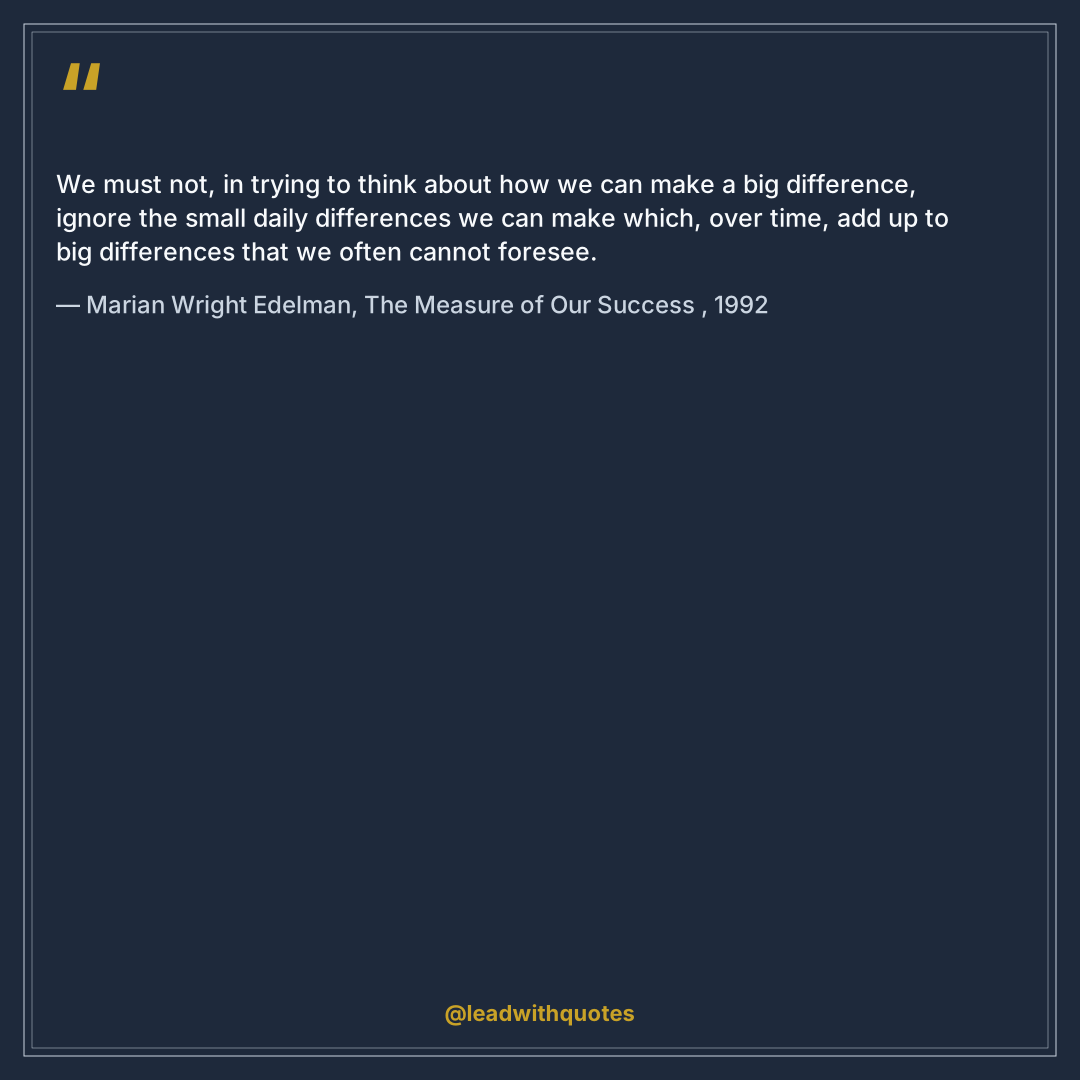
Carnegie's reflection serves as a sharp counterpoint to the hyper-individualism often sold to ambitious youth. He built an empire by recognizing the specific technical expertise of the engineers and managers around him.
On Facing Resistance
Any discussion about who actually prepares the next generation must address the inevitability of failure. The speakers turn to the resilience required when initial plans collapse.
"I attribute my success to this: I never gave or took any excuse." — Florence Nightingale, Life of Florence Nightingale, 1913
Nightingale cuts through the noise of modern academic pressure, offering a stark standard for personal accountability. She reformed the entire British military medical system by refusing to accept bureaucratic delays in Crimea.
When students face systemic issues, the sheer scale of the problem can cause paralysis. The dialogue addresses how to maintain momentum when the end goal seems impossibly distant.
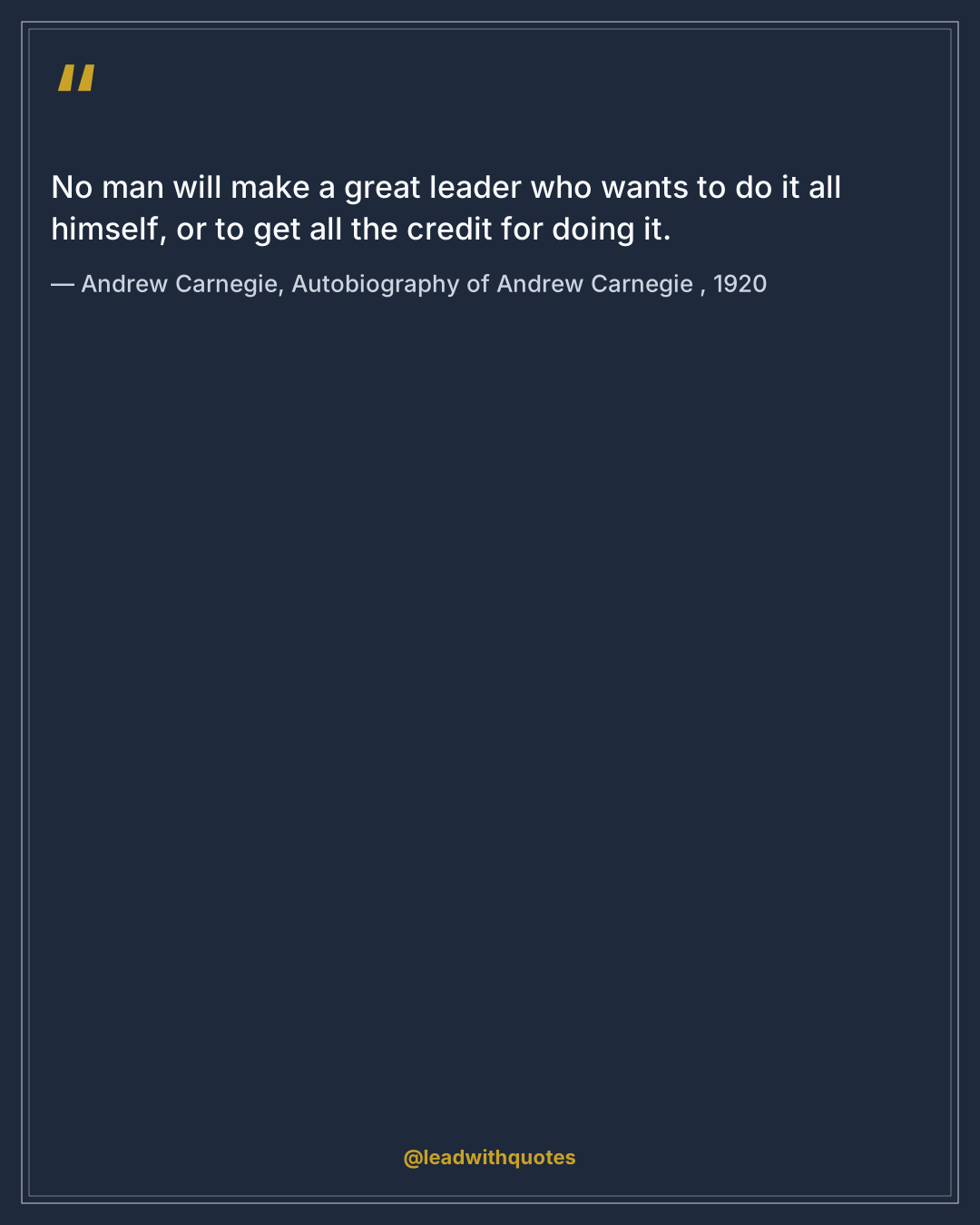
"We must not, in trying to think about how we can make a big difference, ignore the small daily differences we can make which, over time, add up to big differences that we often cannot foresee." — Marian Wright Edelman, The Measure of Our Success, 1992
Edelman shifts the focus from grand, sweeping gestures to the quiet, compounding daily choices that define true influence. Her work with the Children's Defense Fund relied entirely on these incremental legislative victories.
On Vision and Direction
The panel moves to the necessity of forward-thinking. Students seeking finding inspirational leadership models need language that pushes them past immediate anxieties.
"The only limit to our realization of tomorrow will be our doubts of today." — Franklin D. Roosevelt, Undelivered Jefferson Day Address, 1945
Roosevelt penned these words the night before he died in Warm Springs, Georgia. He left a final written testament to the absolute necessity of forward momentum during global recovery.
Vision requires the willingness to abandon comfortable routines. The speakers emphasize that growth demands a temporary tolerance for deep uncertainty.
"Hold fast to dreams, for if dreams die, life is a broken-winged bird that cannot fly." — Langston Hughes, The Dream Keeper and Other Poems, 1932
Hughes frames ambition not as a corporate ladder, but as a vital survival mechanism for the human spirit. His poetry provided a linguistic anchor for an entire generation navigating the Harlem Renaissance.
On Service to Others
The dialogue concludes with the ultimate purpose of authority. Distilling complex ideas into short leadership philosophies helps students remember that power exists to serve the collective.
"The best way to find yourself is to lose yourself in the service of others." — Mahatma Gandhi, Collected Works, 1927

Gandhi’s principle remains the ultimate antidote to the self-centered ambition that often plagues early career planning. He demanded that political action remain tethered to the material uplift of the poorest citizens.
The final word centers on the metric by which all leadership is eventually judged. It is a direct challenge to the listener.
"Life's most persistent and urgent question is, 'What are you doing for others?'" — Martin Luther King Jr., Conquering Self-Centeredness, 1957
King delivered this challenge to an audience in Montgomery during a pivotal sermon. He demanded that personal success be measured exclusively by collective uplift and societal transformation.
What to Carry Forward
- Authority begins with self-regulation long before any formal title or responsibility is officially granted.
- Delegation is not a sign of weakness but a necessary skill for scaling any meaningful project beyond individual capacity.
- Excuses erode trust faster than honest failures, making strict accountability a non-negotiable trait for young leaders.
- Incremental daily actions compound into massive systemic changes over a long enough timeline.
- True influence requires abandoning the safety of known routines to test new theories in public.