Desk essay
The Essential Guide to Famous Leadership Quotes on Authority and Action
Historical transcripts and private letters reveal how commanders and organizers actually spoke about holding power during crises.
By Morgan Ellis
Morgan Ellis

If we could arrange a quiet room with the commanders and organizers of the past two centuries, we would find their private fears mirror our own modern anxieties. Real influence rarely sounds like a megaphone barking orders from a podium. I recognized this dynamic while listening to my aunt in a crowded diner in Memphis, Tennessee, 1993, as she patiently sketched out a complex union grievance on the back of a paper napkin. She explained that authority requires holding space for other people's friction. The historical figures we categorize under famous leadership quotes often spoke in these same measured, practical rhythms rather than loud battle cries. What follows is an arranged dialogue drawn from their letters, memoirs, and recorded transcripts.
On Restraint
The philosophical foundation of command begins with governing oneself before attempting to direct a single subordinate. Ancient strategists treated this internal discipline as a physical fortress.
"Mastery of others is strength; mastery of yourself is true power." — Lao Tzu, Tao Te Ching, 400 BC
Translations of this ancient text vary widely across centuries, but the core distinction between brute force and internal regulation remains intact. Operating from a place of emotional control prevents temporary setbacks from escalating into organizational failures.
American politicians navigating the volatile mid-twentieth century understood this self-regulation as a prerequisite for asking anything of their constituents. Sam Rayburn, managing a deeply divided legislature, viewed compliance as a two-way street.
"You cannot be a leader, and ask other people to follow you, unless you know how to follow, too." — Sam Rayburn, Speaker of the House Address, 1940
Rayburn recognized that demanding obedience without demonstrating submission to a higher principle reads as tyranny. His approach mirrors his thoughts on discipline in early training, proving that effective executives must first master the art of taking direction.
On Decision
Inaction destroys credibility faster than a flawed tactical choice. Executives writing after the First World War emphasized momentum over perfection.
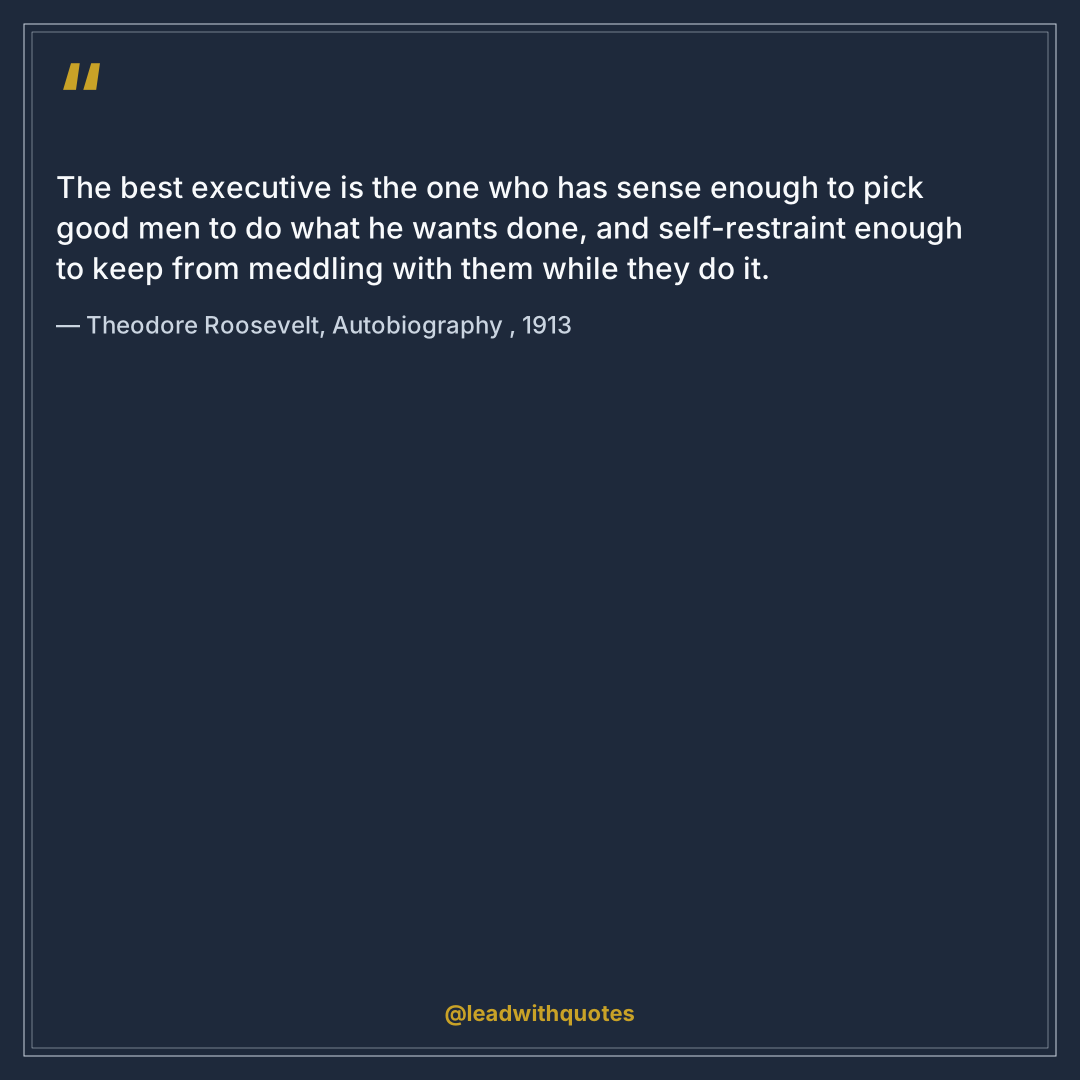
"The best executive is the one who has sense enough to pick good men to do what he wants done, and self-restraint enough to keep from meddling with them while they do it." — Theodore Roosevelt, Autobiography, 1913
Roosevelt framed delegation not as a luxury, but as a mandatory survival mechanism for anyone managing complex national operations. Micromanagement signals a fundamental lack of trust in the hiring process itself.
Military commanders deployed to the European theater faced decision fatigue that paralyzed lesser officers. George S. Patton approached battlefield autonomy by stripping away prescriptive methods.
"Never tell people how to do things. Tell them what to do and they will surprise you with their ingenuity." — George S. Patton, War as I Knew It, 1947
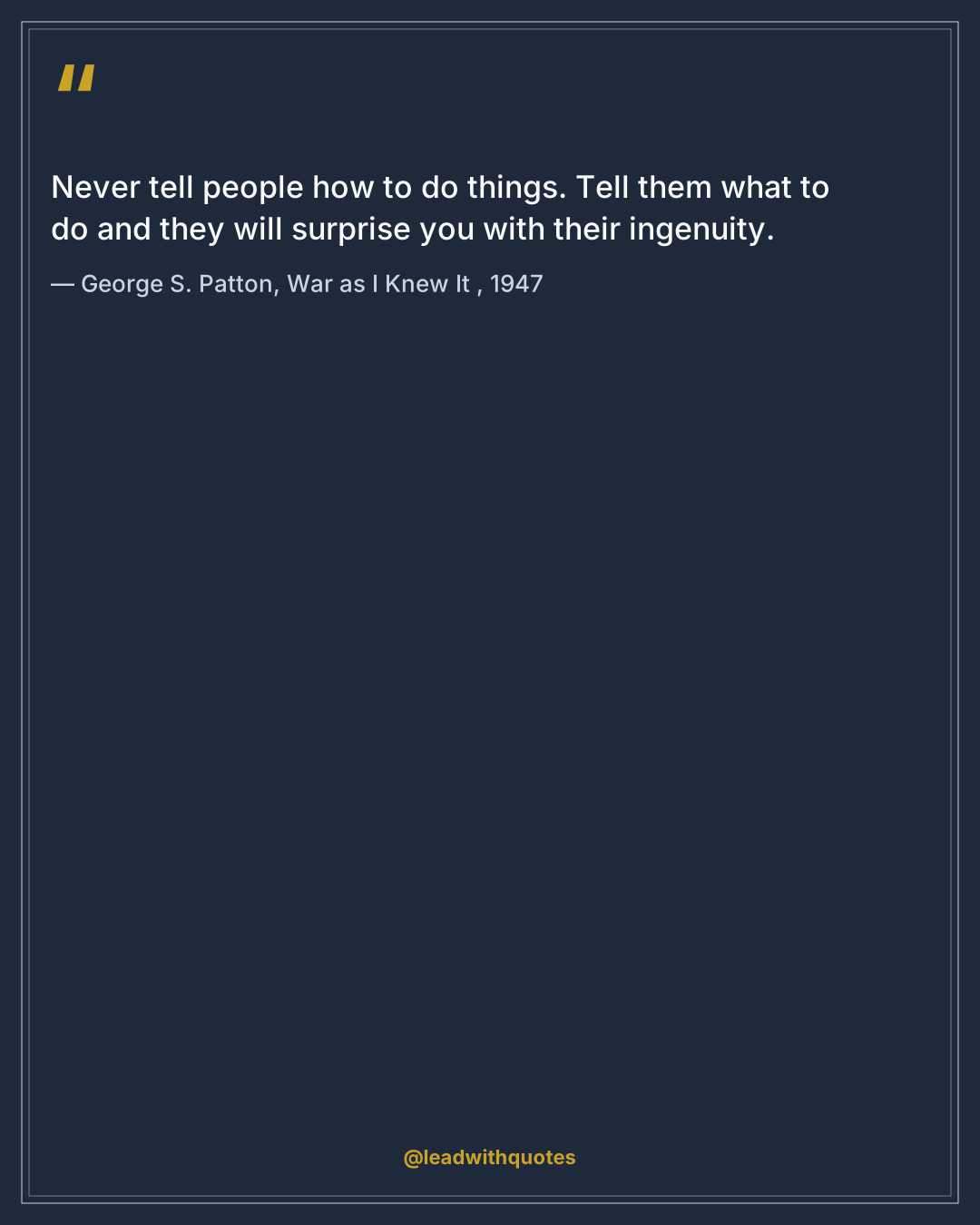
Patton's abrasive public persona often obscured this surprisingly modern view of decentralized command. Granting tactical freedom yields better results, a lesson reminiscent of how Hemingway handled fear under pressure during his wartime reporting assignments.
On Character
Reputation functions as the currency of influence. Revolutionary writers viewed integrity not as an abstract virtue, but as a fragile asset requiring constant defense.
"Character is much easier kept than recovered." — Thomas Paine, The American Crisis, 1776
Paine drafted these words while shivering with continental soldiers during a brutal winter campaign. He understood that a commander caught in a lie permanently loses the moral authority to order troops into danger.
Newspaper editors observing the chaotic aftermath of the American Civil War saw politicians rise and fall on the whims of public opinion. Horace Greeley warned against trading permanent credibility for temporary applause.
"Fame is a vapor, popularity an accident, riches take wings. Only one thing endures and that is character." — Horace Greeley, Speech at the Union League, 1865
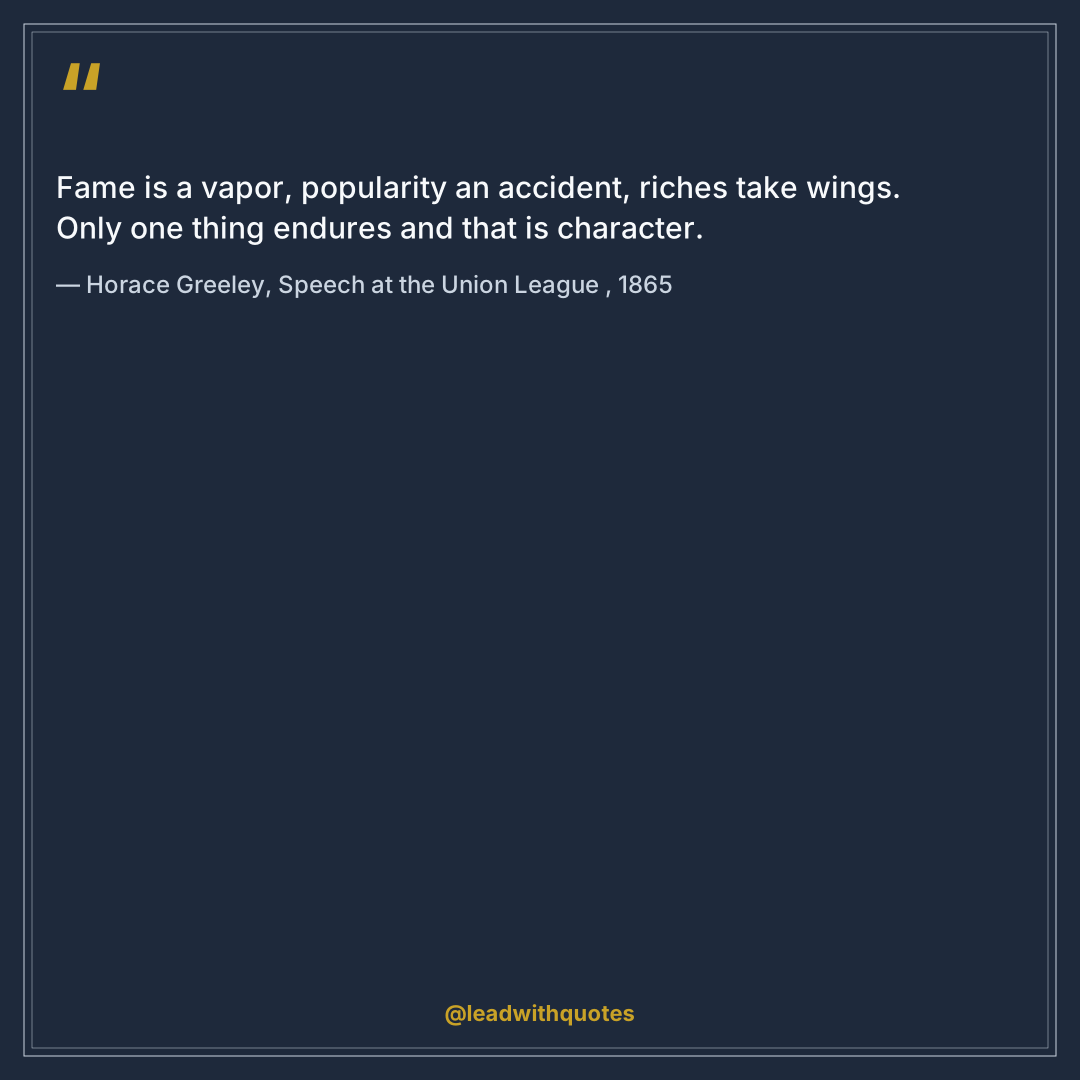
Greeley witnessed financial panics wipe out industrial fortunes overnight. He argued that personal integrity outlasts market crashes, a sentiment often echoed in funny truths on authority shared by cynical journalists of the era.
On Humility
Arrogance blinds decision-makers to shifting realities on the ground. Humorous observations from early twentieth-century writers punctured the inflated egos of corporate directors.
"It is well to remember that the entire universe, with one trifling exception, is composed of others." — John Andrew Holmes, Wisdom in Small Doses, 1927
Holmes delivered this gentle reprimand to executives who confused their specific departmental goals with the center of the cosmos. Maintaining perspective requires acknowledging the vast machinery operating outside one's own office doors.
Presidents managing existential national crises often admitted their own powerlessness in the face of historical momentum. Abraham Lincoln flatly denied controlling the trajectory of the war that defined his legacy.
"I claim not to have controlled events, but confess plainly that events have controlled me." — Abraham Lincoln, Letter to Albert G. Hodges, 1864

Lincoln wrote this startling admission to a Kentucky newspaper editor, rejecting the myth of the omnipotent commander. This radical transparency serves as a blueprint for what young environmentalists can learn when facing systemic challenges that defy quick solutions. Similar threads of pragmatic humility run through perspectives from trailblazing women who navigated rigid institutional barriers.
Corrections to the Record
Popular reading: True leaders never show hesitation.
On closer look: Archival letters from figures like Lincoln and Roosevelt show constant agonizing over outcomes in private. Public decisiveness usually followed weeks of profound internal doubt and consultation with dissenting advisors.
Popular reading: Charisma dictates organizational success.
On closer look: Introverted strategists routinely outlasted their flamboyant peers by focusing on logistics rather than speeches. The historical record heavily favors administrators who prioritized supply chains over grandstand rhetoric.
Popular reading: Authority means having the final word.
On closer look: The most effective historical commanders frequently deferred to civilian experts during operational planning. Surrendering the floor to a specialist demonstrates supreme confidence rather than weakness.
Take one concrete phrase from these historical transcripts and write it at the top of your meeting agenda tomorrow morning to center your focus.