Desk essay
12 Humble Servant Leadership Quotes That Will Ground Your Ambition
Examine the subtle mechanics of authority through twelve historical perspectives on service, ambition, and the quiet labor of supporting teams.
By Morgan Ellis
Morgan Ellis

The Mechanics of Mutual Support
The demand for dominant figures often overshadows the quiet machinery that actually keeps communities running. I first understood the silent weight of responsibility watching my mother in a bungalow kitchen in Asheville, North Carolina, 1991, as she systematically prepared meals for neighbors recovering from a bitter winter storm. She commanded no one. Yet, the entire street organized itself around her kitchen table. This dynamic forms the core of an alternative approach to authority, one that abandons theatrical displays of power for the steady labor of maintaining the group. Studying the long tradition of service reveals a distinct vocabulary of leadership that prioritizes the welfare of the follower over the ego of the director.
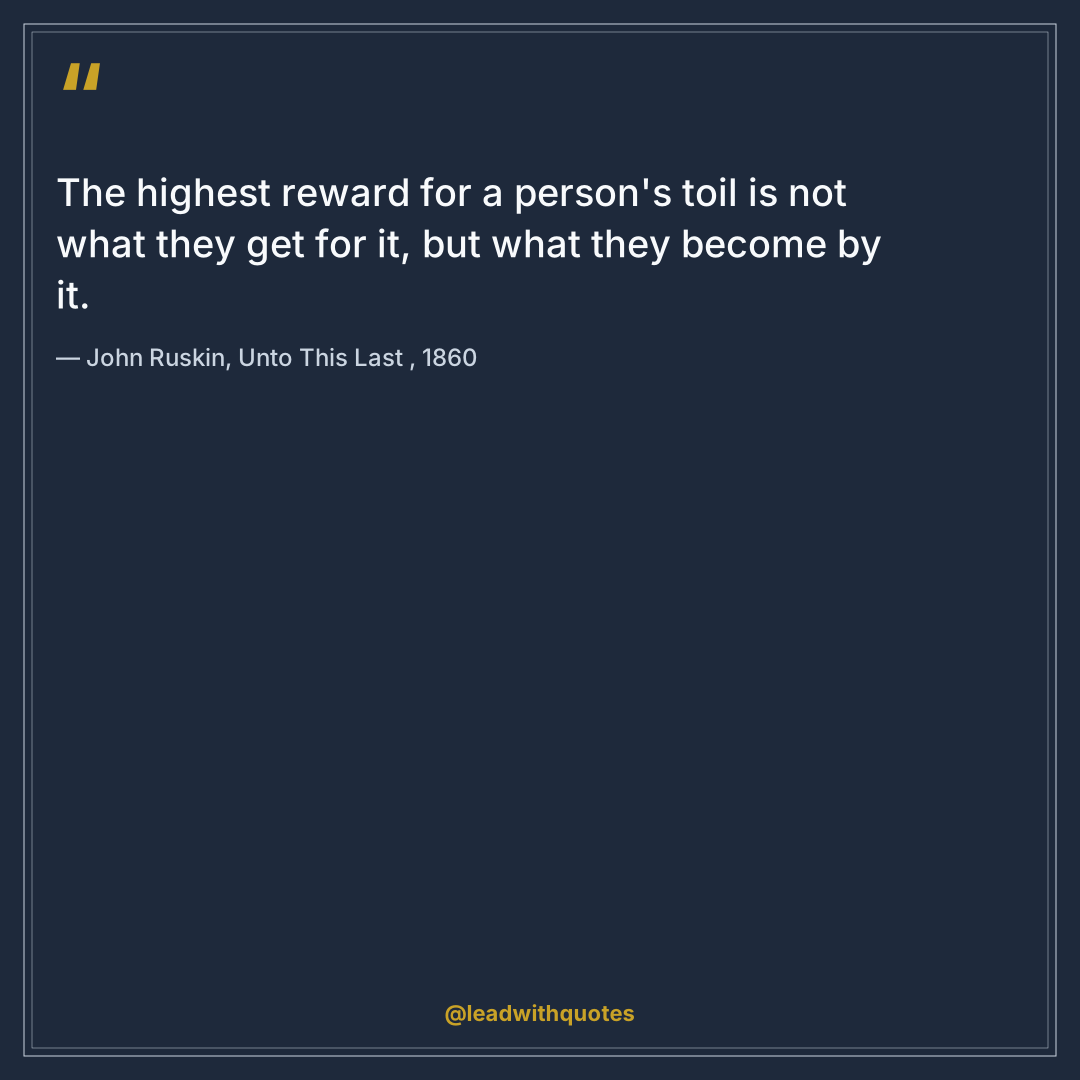
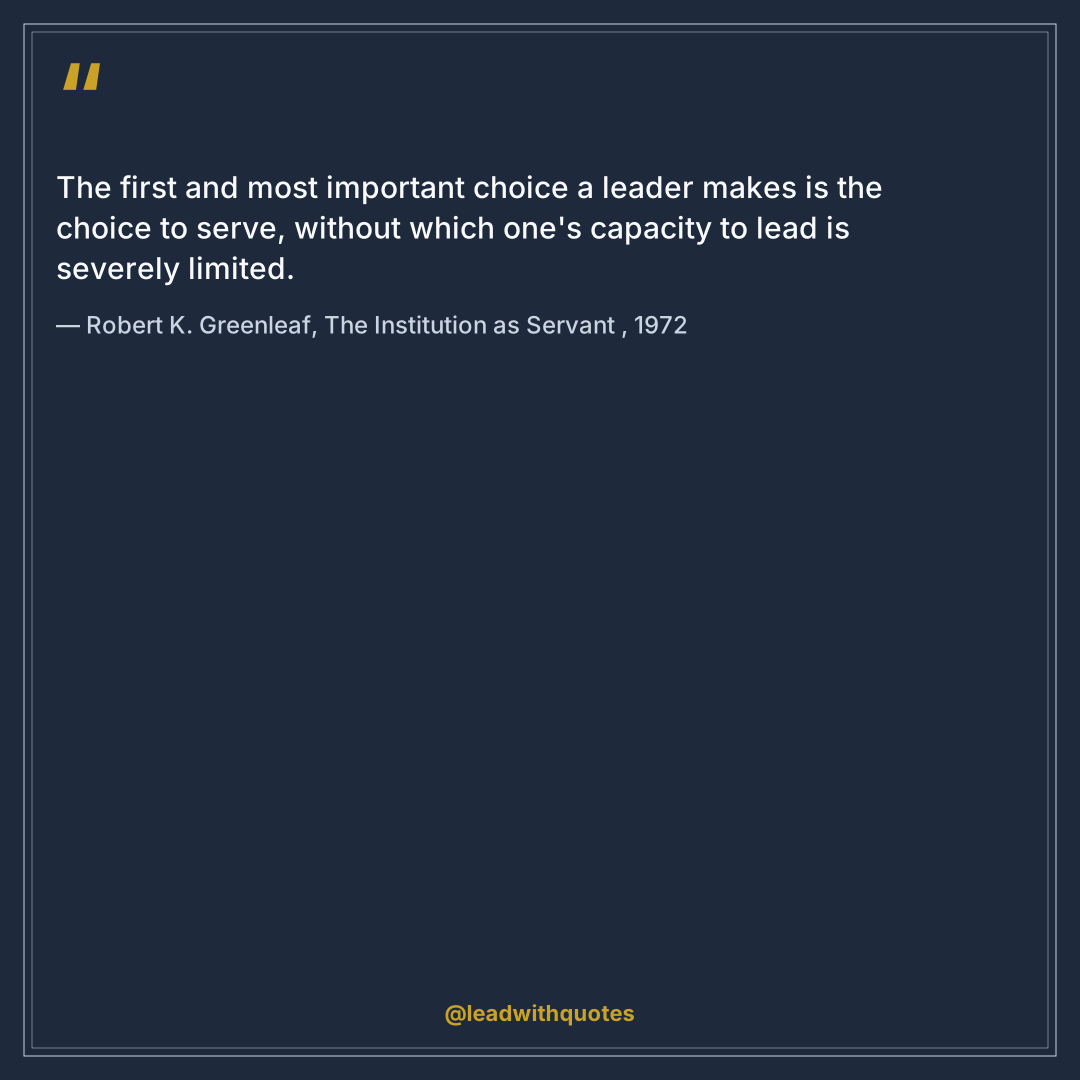
"The first and most important choice a leader makes is the choice to serve, without which one's capacity to lead is severely limited." — Robert K. Greenleaf, The Institution as Servant, 1972
Greenleaf published this defining essay during a period of massive institutional distrust in America, shifting focus from executive ambition to collective stewardship.
"You don't lead by hitting people over the head—that's assault, not leadership." — Dwight D. Eisenhower, Remarks at the Republican National Committee Luncheon, 1954
Speaking to a politically fractured audience in the wake of global conflict, Eisenhower summarized the absolute failure of coercive management strategies.
"Authority is always built on service." — James C. Hunter, The Servant, 1998
Hunter codified the distinction between power, which relies on fear, and true authority, which is granted voluntarily by those being led.
When organizations face internal friction, executives often double down on rigid hierarchies rather than evaluating how well they are supporting their workforce. Analyzing when corporate messaging fails completely usually uncovers a fundamental disconnect between what a manager demands and what they actually provide to their team.
Related: how modern managers maintain morale
Quiet Acts of Continuation
Historical shifts rarely begin with a single grand decree delivered from a balcony. They emerge from the compounding effect of individuals choosing to absorb friction rather than pass it down the chain of command. Many concise directives on authority emphasize this exact mechanism of absorbing stress to protect the working capacity of the group.
"No one is useless in this world who lightens the burdens of another." — Charles Dickens, Our Mutual Friend, 1865
Dickens embedded this observation in his final completed novel, contrasting the hollow pursuit of wealth with the tangible value of human support.
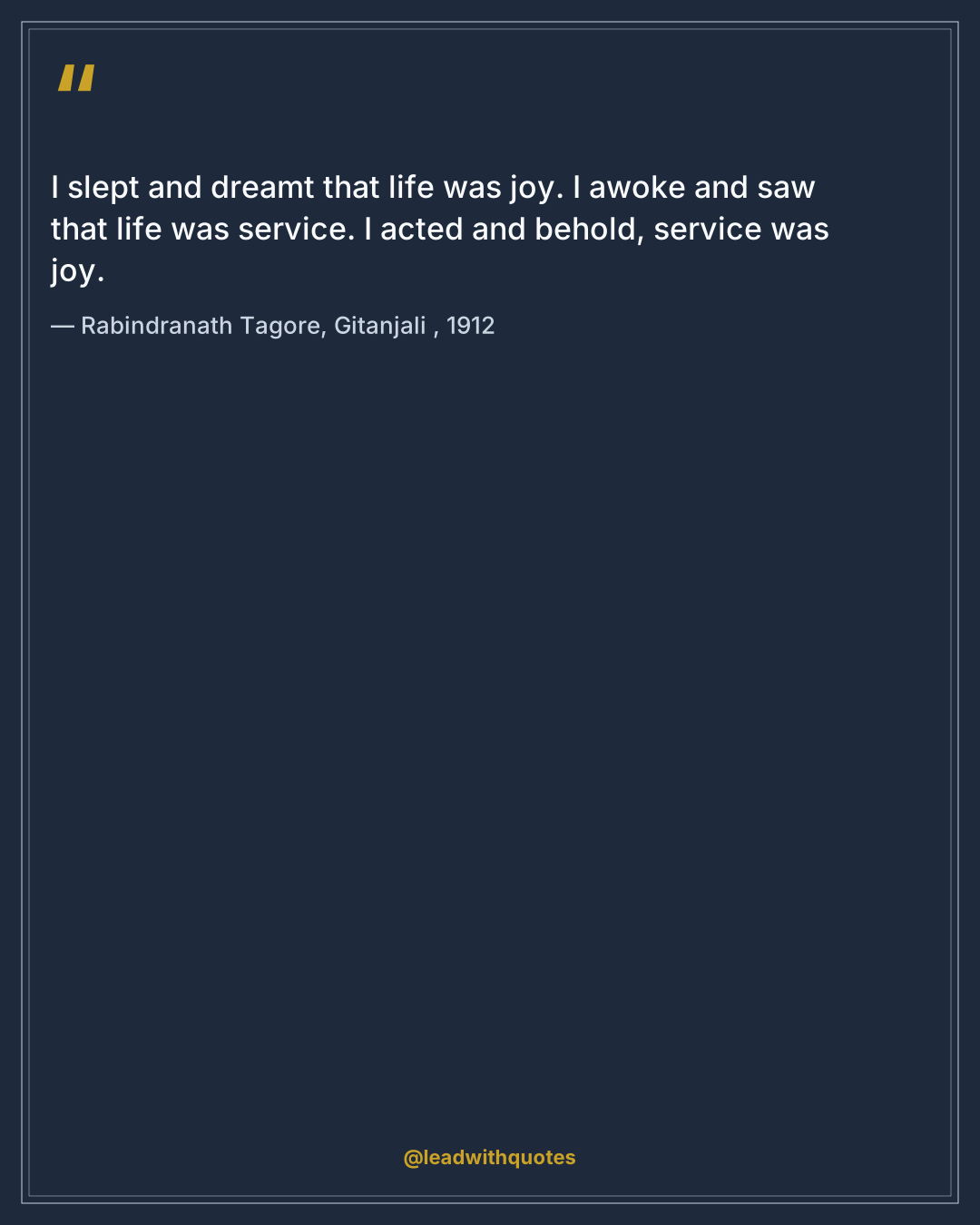
"I slept and dreamt that life was joy. I awoke and saw that life was service. I acted and behold, service was joy." — Rabindranath Tagore, Gitanjali, 1912
The Bengali polymath framed duty not as a restriction of personal freedom, but as the primary engine for finding meaning in a chaotic world.
"The highest reward for a person's toil is not what they get for it, but what they become by it." — John Ruskin, Unto This Last, 1860
Ruskin challenged the industrializing economy of Victorian England by arguing that the true output of labor was the character forged in the process.
"Help thy brother's boat across, and lo! thine own has reached the shore." — William Danforth, I Dare You!, 1931
Drawing on Eastern philosophical traditions, Danforth popularized this imagery during the Great Depression to encourage mutual aid over ruthless competition.
The persistence of an organization relies entirely on the willingness of its members to bridge gaps in competence and resource allocation. Examining how historical figures viewed command demonstrates that the most enduring leaders spent the majority of their time managing logistics and removing obstacles for their subordinates.
Related: building organizations that withstand crises
The Yielding of Ego
True authority requires an active surrender of the spotlight. This runs contrary to modern professional incentives that reward self-promotion and visible metrics of dominance. The individuals who actually hold communities together rarely possess the loudest voices in the room.
"Service is the rent we pay for being. It is the very purpose of life, and not something you do in your spare time." — Marian Wright Edelman, The Measure of Our Success, 1992
The founder of the Children's Defense Fund positioned advocacy not as a charitable hobby, but as a mandatory condition of basic human participation.
"We make a living by what we get, but we make a life by what we give." — Attributed to Winston Churchill
Widely credited to Churchill around 1908, primary source evidence points to a mid-century origin, yet the sentiment perfectly encapsulates the shift from acquisition to contribution.
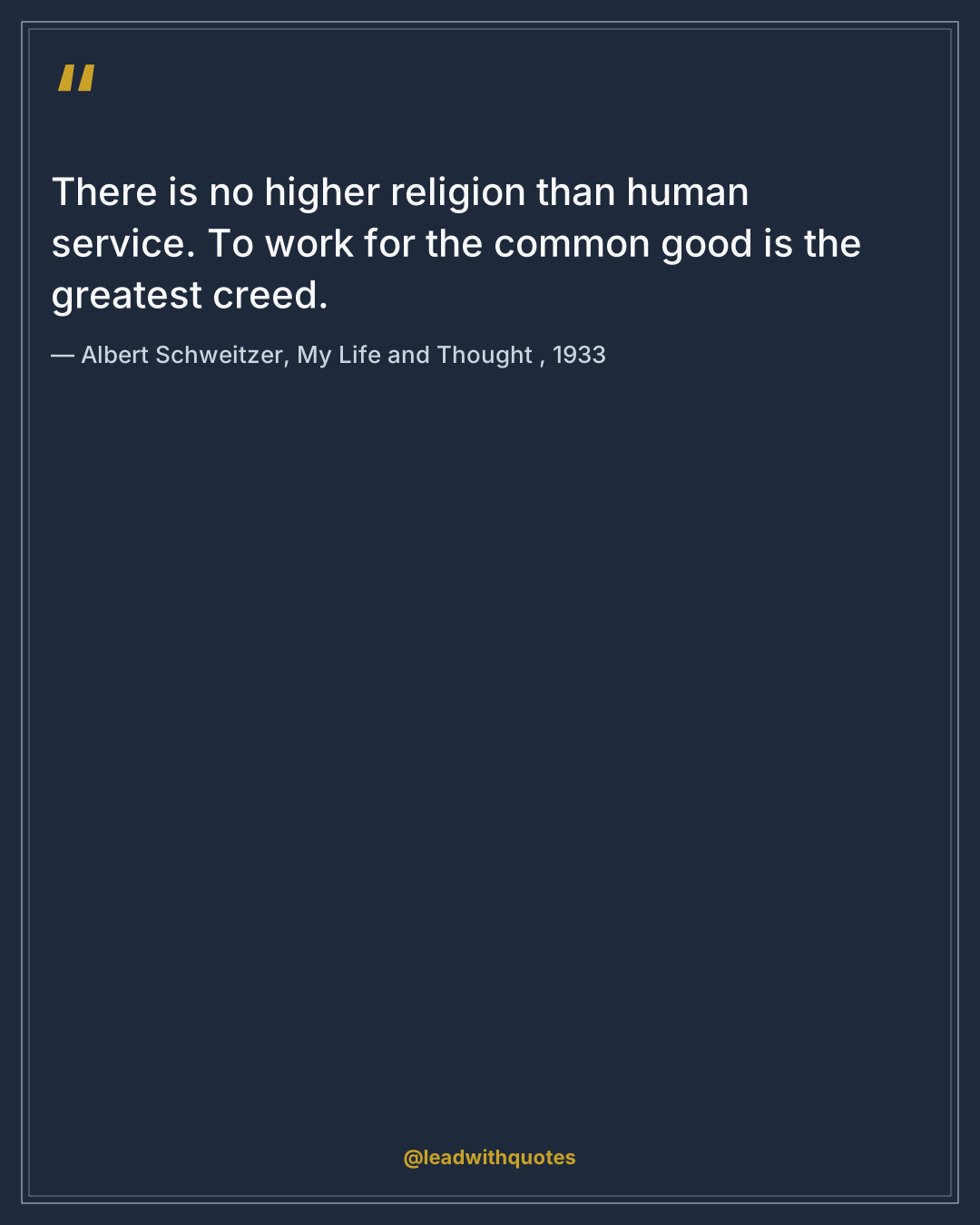
"There is no higher religion than human service. To work for the common good is the greatest creed." — Albert Schweitzer, My Life and Thought, 1933
Schweitzer abandoned a comfortable academic career in Europe to establish a hospital in French Equatorial Africa, putting his philosophical theories into rigorous physical practice.
"Our prime purpose in this life is to help others. And if you can't help them, at least don't hurt them." — 14th Dalai Lama, The Compassionate Life, 2001
Tenzin Gyatso distills complex theological frameworks into a stark, binary ethical baseline that governs daily interaction.
"The best of people are those that bring most benefit to the rest of mankind." — Inspired by Islamic Hadith traditions
This enduring principle from classical Islamic scholarship removes status and lineage from the equation, measuring human worth purely by communal utility.
Assumptions Worth Revisiting
Popular reading: Servant leadership means never making hard decisions
On closer look: Relieving a team member of their duties or terminating a failing project often serves the greater good of the entire organization. Protecting a dysfunctional dynamic out of a misplaced desire to be accommodating actively harms the collective you are supposed to be supporting. A manager who refuses to correct poor performance is prioritizing their own comfort over the team's operational health.
Popular reading: Humility requires downplaying your own competence
On closer look: Feigned ignorance does not help a team execute a complex strategy. True humility involves utilizing your maximum capability to advance the group's objective rather than to secure personal accolades. You must acknowledge your specific skills in order to deploy them effectively on behalf of the people relying on your expertise.
Popular reading: Service-oriented managers lack professional ambition
On closer look: Redirecting ambition away from personal status and toward the success of a collective enterprise requires intense drive and focus. The scale of the ambition actually increases because the goal expands beyond the survival of a single career. Building an infrastructure that thrives after your departure demands far more rigorous planning than simply climbing the immediate corporate ladder.