Desk essay
How Do We Redefine Power? 14 Short Quotes About Servant Leadership
Stripping away executive ego reveals a model where authority exists solely to elevate the collective effort of the team.
By Morgan Ellis
Morgan Ellis

Why do we still cling to the image of the solitary executive barking orders from a corner office? What happens to an organization when authority shifts from commanding a room to clearing the path for others? Watching my aunt manage a busy community clinic in Portland, Oregon, back in 2006, I realized that true authority rarely looks like a command. She spent her days removing administrative obstacles so her nursing staff could focus entirely on patient care. This inversion of the traditional hierarchy replaces ego with utility. When managers view their role as a support function rather than a dictatorial right, the entire operational dynamic changes.
A broader look at this philosophy lives in our archive of perspectives on servant leadership.
Shifting the Center of Gravity
The concept of placing the employee above the manager requires a deliberate dismantling of corporate vanity. It demands that executives measure their success by the competence and comfort of their subordinates. This approach does not eliminate accountability. It simply changes who is responsible for providing the tools necessary to meet those standards.
"It begins with the natural feeling that one wants to serve." — Robert K. Greenleaf, The Servant as Leader, 1970
Greenleaf coined the modern term in an essay that fundamentally altered corporate management theory.
"Life’s most persistent and urgent question is, 'What are you doing for others?'" — Martin Luther King Jr., Conquering Self-Centeredness, 1957
Delivered during a sermon in Montgomery, this framing demands action over passive observation.
"The best way to find yourself is to lose yourself in the service of others." — Mahatma Gandhi, Collected Works, 1925
This principle suggests that identity solidifies through outward contribution rather than inward focus.
This dynamic is explored further in our breakdown of the linguistic shift in modern executive theory.
The Mechanics of Empowerment
Vision statements accomplish very little if the people expected to execute them lack the necessary resources. Effective directors understand that their primary job is to secure budgets, eliminate bureaucratic friction, and shield their teams from external distractions. The goal is to build an environment where talent can operate without unnecessary hindrance.
"The function of leadership is to produce more leaders, not more followers." — Ralph Nader, Speech, 1999
Nader challenged the traditional metric of influence by prioritizing replication over obedience.
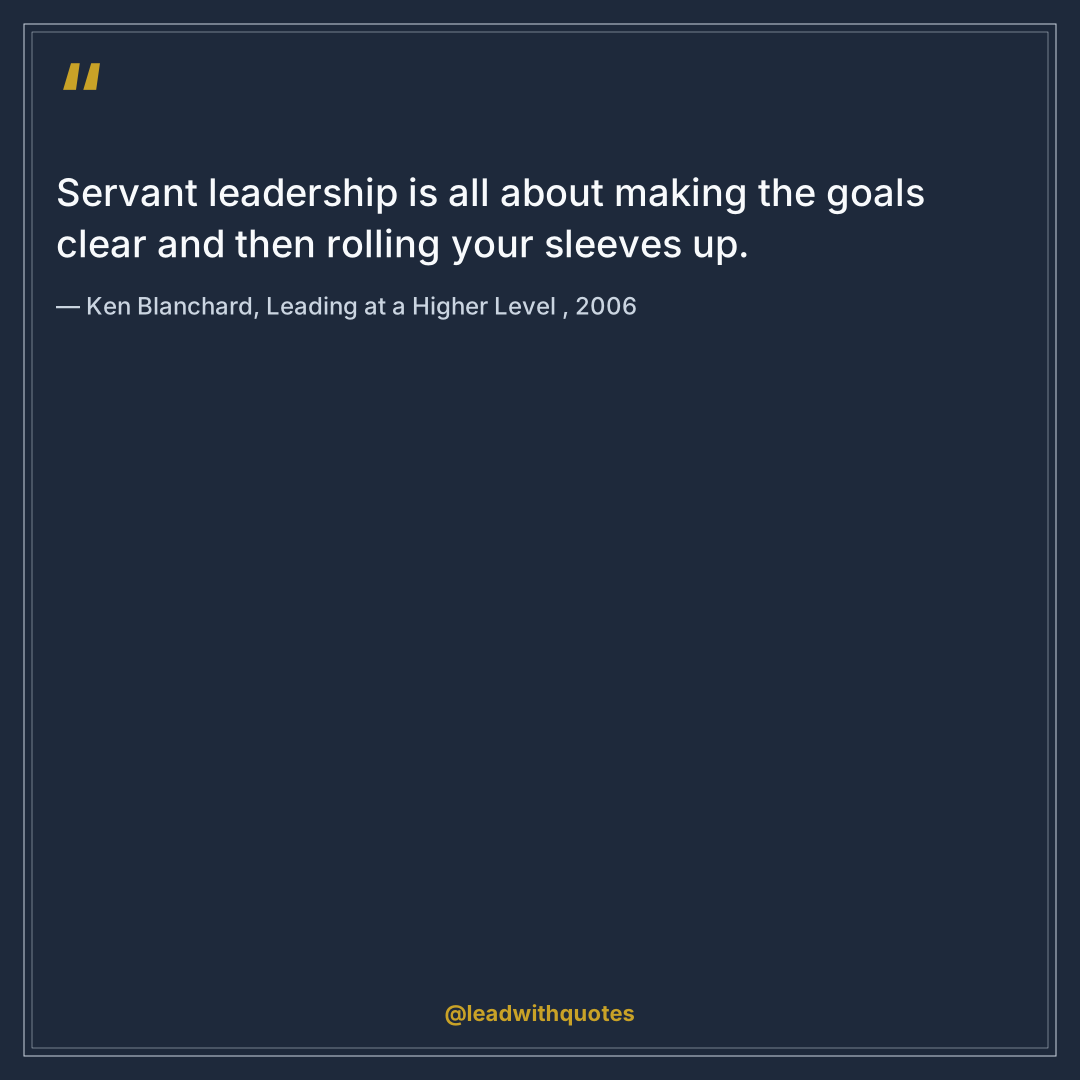
"Servant leadership is all about making the goals clear and then rolling your sleeves up." — Ken Blanchard, Leading at a Higher Level, 2006
Blanchard emphasizes that setting a vision must be followed by tangible, ground-level assistance.
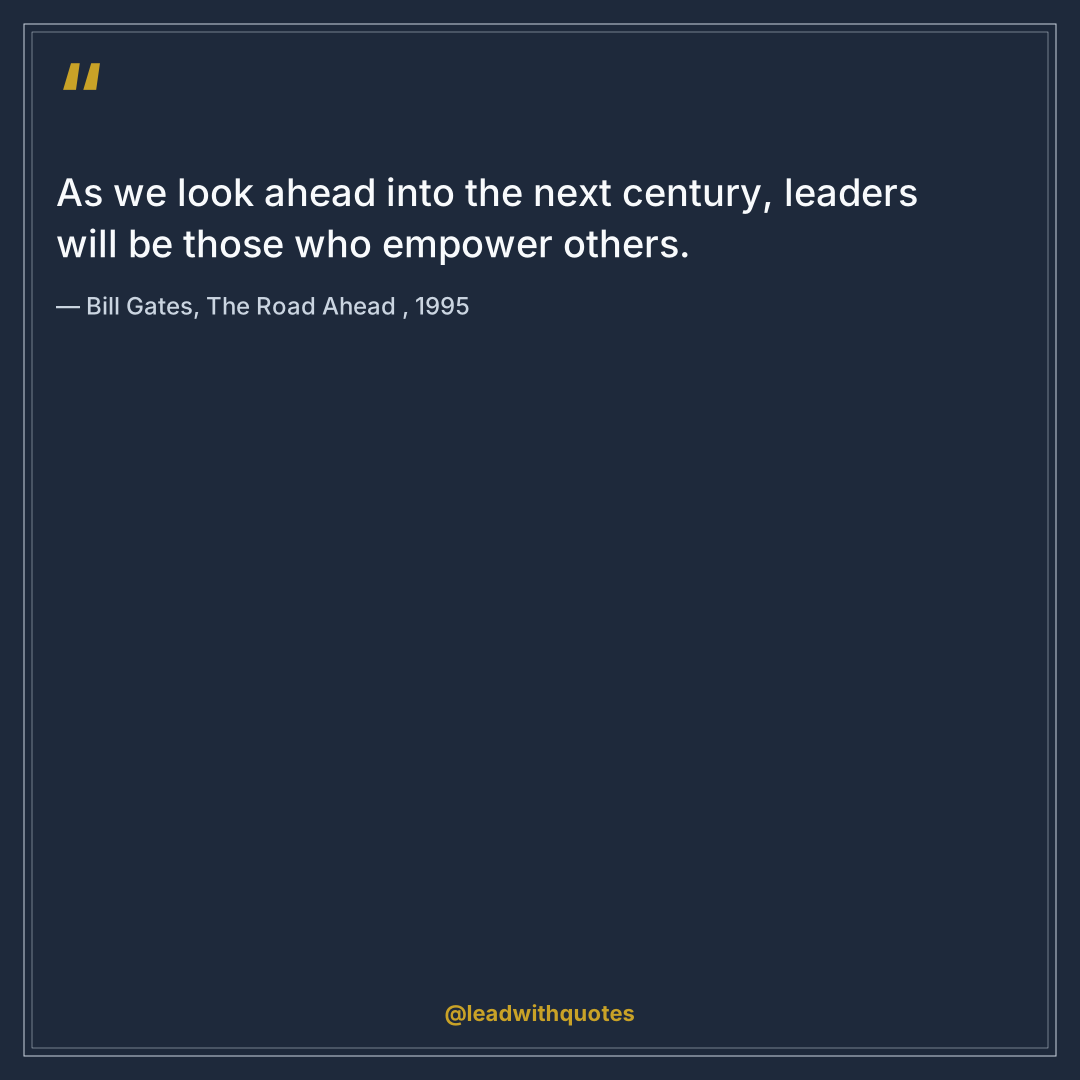
"As we look ahead into the next century, leaders will be those who empower others." — Bill Gates, The Road Ahead, 1995
Written at the dawn of the internet age, this observation predicted the necessity of decentralized decision-making.
"Leadership is an action, not a position." — Donald McGannon, Broadcasting Industry Address, 1955
The broadcasting executive dismissed formal titles in favor of observable, daily momentum.
For the counterpoint on brevity, examine why concise directives often outlast long speeches.
Relinquishing the Spotlight
Scaling an enterprise inevitably forces founders to step back from the daily accolades. Those who refuse to share credit quickly find themselves surrounded by compliance rather than innovation. True influence requires a willingness to let others stand at the podium when the project succeeds.
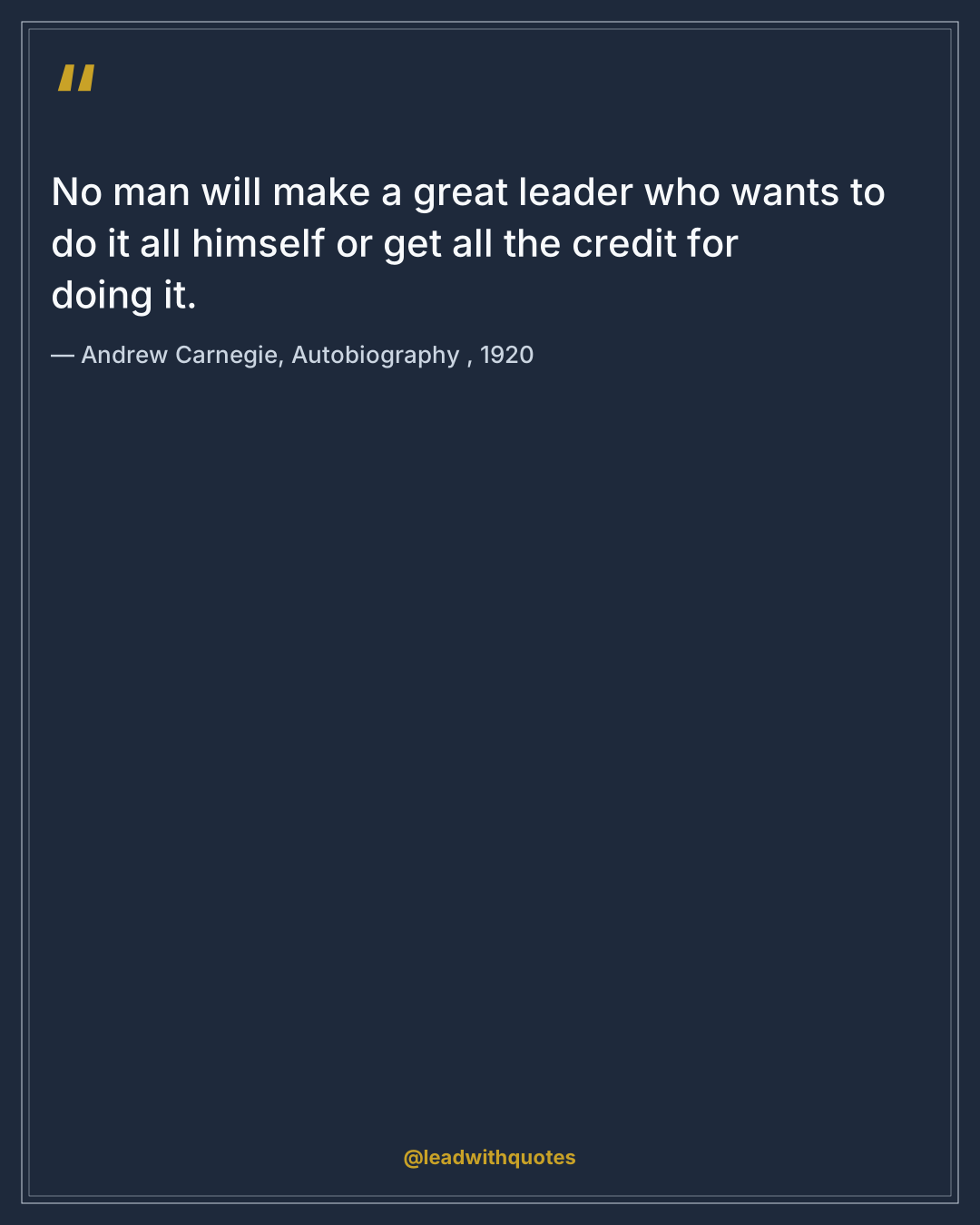
"No man will make a great leader who wants to do it all himself or get all the credit for doing it." — Andrew Carnegie, Autobiography, 1920
The industrialist recognized that scaling any enterprise requires surrendering personal glory.
"To lead people, walk behind them." — Lao Tzu, Tao Te Ching, 4th Century BC
Ancient philosophy often positioned the ideal guide as an invisible force propelling the group forward.
"The ear of the leader must ring with the voices of the people." — Woodrow Wilson, Speech, 1912
Wilson argued that isolation from the daily struggles of the workforce inevitably destroys executive judgment.
"People do not care how much you know until they know how much you care." — Theodore Roosevelt, Letters, 1905
Though frequently paraphrased, this sentiment captures the emotional prerequisite for genuine influence.
Related insights can be found in our analysis of how modern teams establish psychological safety.
The Legacy of Elevation
Organizations that adopt a service-oriented framework tend to outlast those built entirely around a charismatic founder. By distributing capability throughout the ranks, the company insulates itself against the eventual departure of its top executives. The legacy of a great manager is a department that functions perfectly well in their absence.
"The growth and development of people is the highest calling of leadership." — Harvey S. Firestone, Men and Rubber, 1926
Firestone viewed his factories not just as production centers, but as environments for human cultivation.
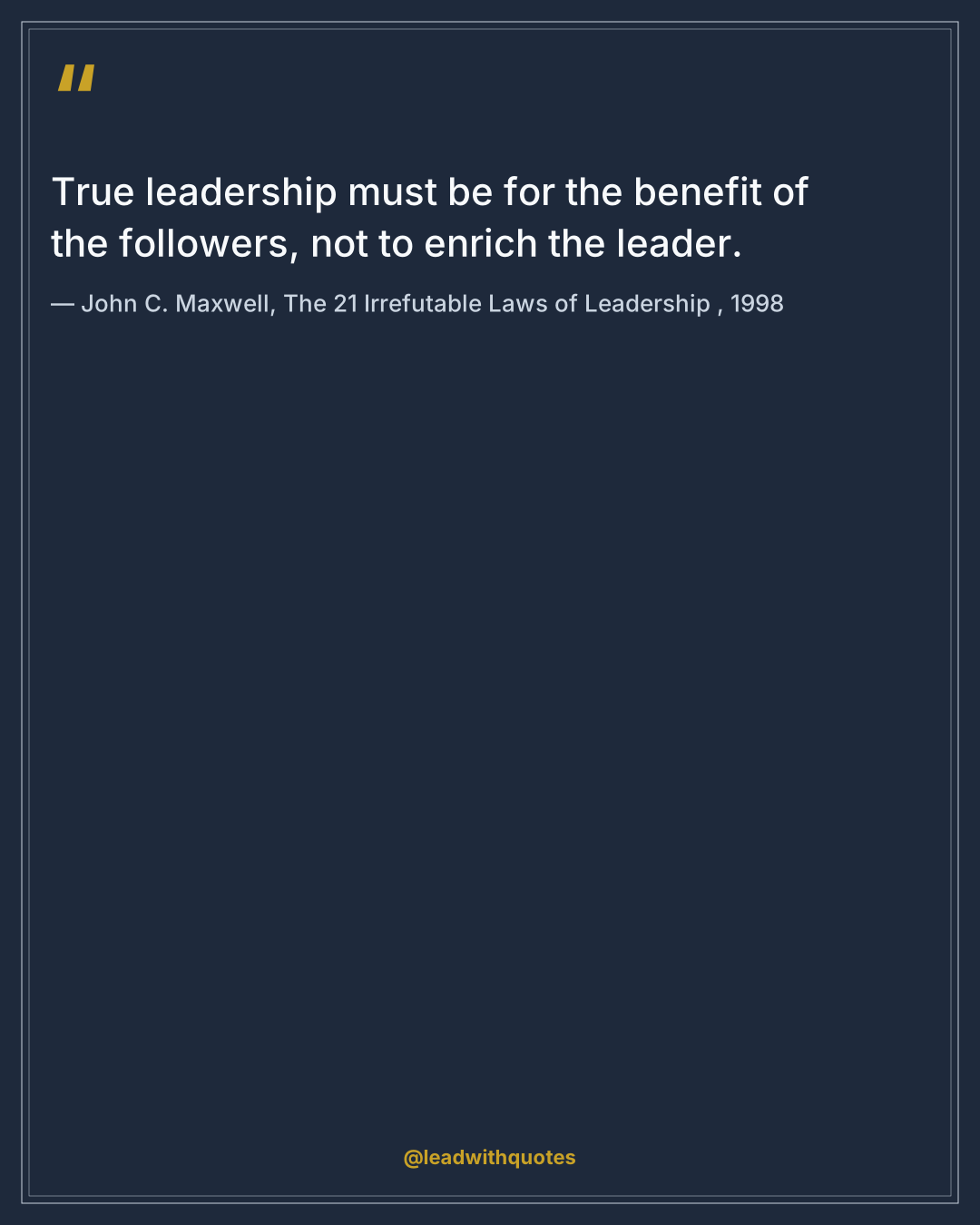
"True leadership must be for the benefit of the followers, not to enrich the leader." — John C. Maxwell, The 21 Irrefutable Laws of Leadership, 1998
This contemporary standard explicitly rejects the extraction model of corporate management.
"We rise by lifting others." — Robert G. Ingersoll, The Liberty of Man, Woman and Child, 1877
Ingersoll distilled the core mechanism of mutual advancement into a single, enduring image.
You can trace similar threads through our curated compilation of brief leadership maxims.
When the noise of ambition fades, what remains is the tangible impact left on the people who actually do the work. The shift from demanding compliance to offering resources fundamentally alters the trajectory of a business. It turns a group of stressed employees into a resilient operational unit.
If You Only Remember a Few Things
- Servant leadership requires executives to remove obstacles rather than simply issue commands.
- True authority scales by empowering subordinates to make decisions independently.
- Sharing credit is a mechanical necessity for retaining top talent in any industry.
- The ultimate test of a manager is whether the team can function efficiently without their direct supervision.