Desk essay
The Essential Collection of 14 Servant Leadership Quotes on Authority
Analyzing the historical shift from top-down command to radical empathy reveals the demanding nature of true stewardship.
By Morgan Ellis
Morgan Ellis

Modern management lore often paints the servant leader as a passive figurehead who merely hands out snacks and approves vacation requests. This oversimplified view assumes that stepping back to empower others is fundamentally a surrender of authority. Nothing could be further from the truth.
To actively elevate a team requires an ironclad ego and a ruthless commitment to accountability. Watching my stepmother manage her bakery staff from a cramped bungalow kitchen in Asheville, North Carolina, in 2021 taught me that genuine care involves holding people to immensely high standards. She scrubbed ovens alongside the newest hires while simultaneously demanding flawless pastry execution. The contrast between historical command-and-control models and this modern inversion of the organizational chart provides endless material for study. If you explore foundational ideas of service, you quickly notice that true stewardship is exhausting work. It demands a posture of continuous learning and an active dismantling of personal vanity.
Classical Philosophers vs. Modern Practitioners on Humility
Ancient texts often framed leadership as a burden of moral superiority, whereas contemporary thinkers frame it as a functional mechanism for group success. Both agree that arrogance destroys effectiveness, but their methods of achieving humility differ drastically.
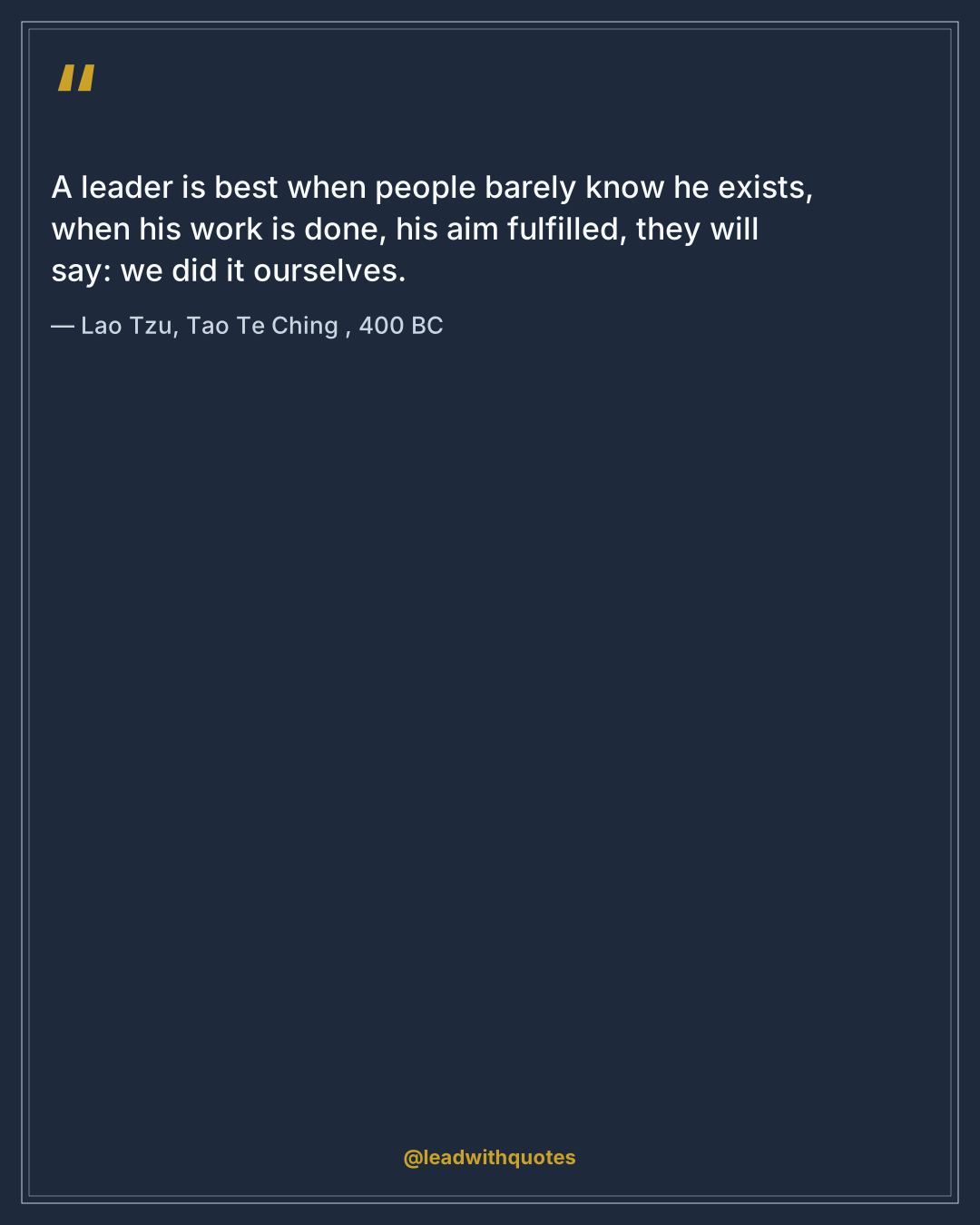
"A leader is best when people barely know he exists, when his work is done, his aim fulfilled, they will say: we did it ourselves." — Lao Tzu, Tao Te Ching, 400 BC
The ancient Chinese philosopher grounded his entire worldview in the concept of effortless action, suggesting that visible interference often ruins the natural harmony of a group.
"Rank does not confer privilege or give power. It imposes responsibility." — Peter Drucker, The Effective Executive, 1966
Drucker dragged the philosophical concept of humility into the modern boardroom by defining executive function entirely through the lens of obligation to others.
"Waste no more time arguing about what a good man should be. Be one." — Marcus Aurelius, Meditations, 167 AD
The Roman Emperor wrote these admonitions privately to himself while commanding armies, proving that the struggle against hypocrisy is a solitary internal battle.
"Servant leadership is more about character than style." — Ken Blanchard, The Servant Leader, 2003
Modern theorists like Blanchard insist that surface-level behavioral tweaks fail without a fundamental shift in personal integrity.
Historical Statesmen vs. Organizational Theorists on Stewardship
Those who governed nations often viewed their role as a sacred trust held for future generations. In contrast, twentieth-century theorists began measuring stewardship through immediate organizational health and the psychological safety of workers. Examining unexpected thoughts from historical memoirs reveals how political power frequently alienated its holders.
"Nearly all men can stand adversity, but if you want to test a man's character, give him power." — Abraham Lincoln, Attributed by Robert G. Ingersoll, 1883
While often quoted as a direct statement from Lincoln, this specific phrasing was actually coined by orator Robert Ingersoll during an 1883 tribute to the late president.
"Leadership is not defined by the exercise of power but by the capacity to increase the sense of power among those led." — Mary Parker Follett, Creative Experience, 1924
Follett was decades ahead of her time, conceptualizing power-with rather than power-over during the height of the industrial revolution's obsession with scientific management.
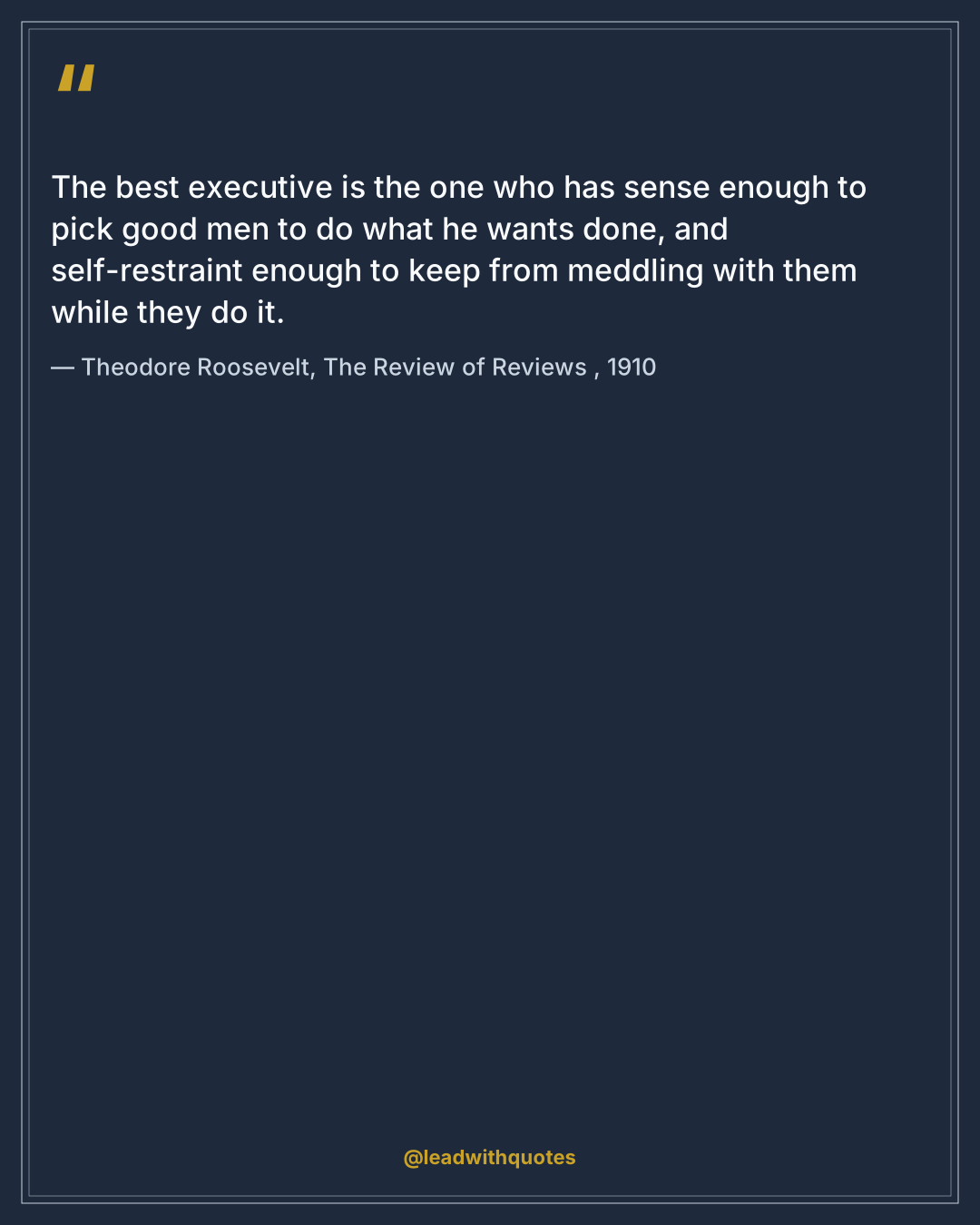
"The best executive is the one who has sense enough to pick good men to do what he wants done, and self-restraint enough to keep from meddling with them while they do it." — Theodore Roosevelt, The Review of Reviews, 1910
Roosevelt recognized that the sheer force of a dynamic personality could easily crush the initiative of subordinates.
"Leadership is a matter of how to be, not how to do." — Frances Hesselbein, Hesselbein on Leadership, 2002
Drawing from her monumental turnaround of the Girl Scouts, Hesselbein argued that presence and authenticity matter far more than tactical micromanagement.
"Level 5 leaders channel their ego needs away from themselves and into the larger goal of building a great company." — Jim Collins, Good to Great, 2001
Collins provided empirical data to support the idea that the most enduringly successful CEOs possessed a paradoxical blend of intense professional will and extreme personal humility.
Social Activists vs. Corporate Reformers on Empathy

Activists fighting entrenched systemic injustices approach leadership as an act of communal survival. Corporate reformers later co-opted these exact principles to fix toxic workplace cultures, recognizing that building enduring organizational trust requires genuine human connection.
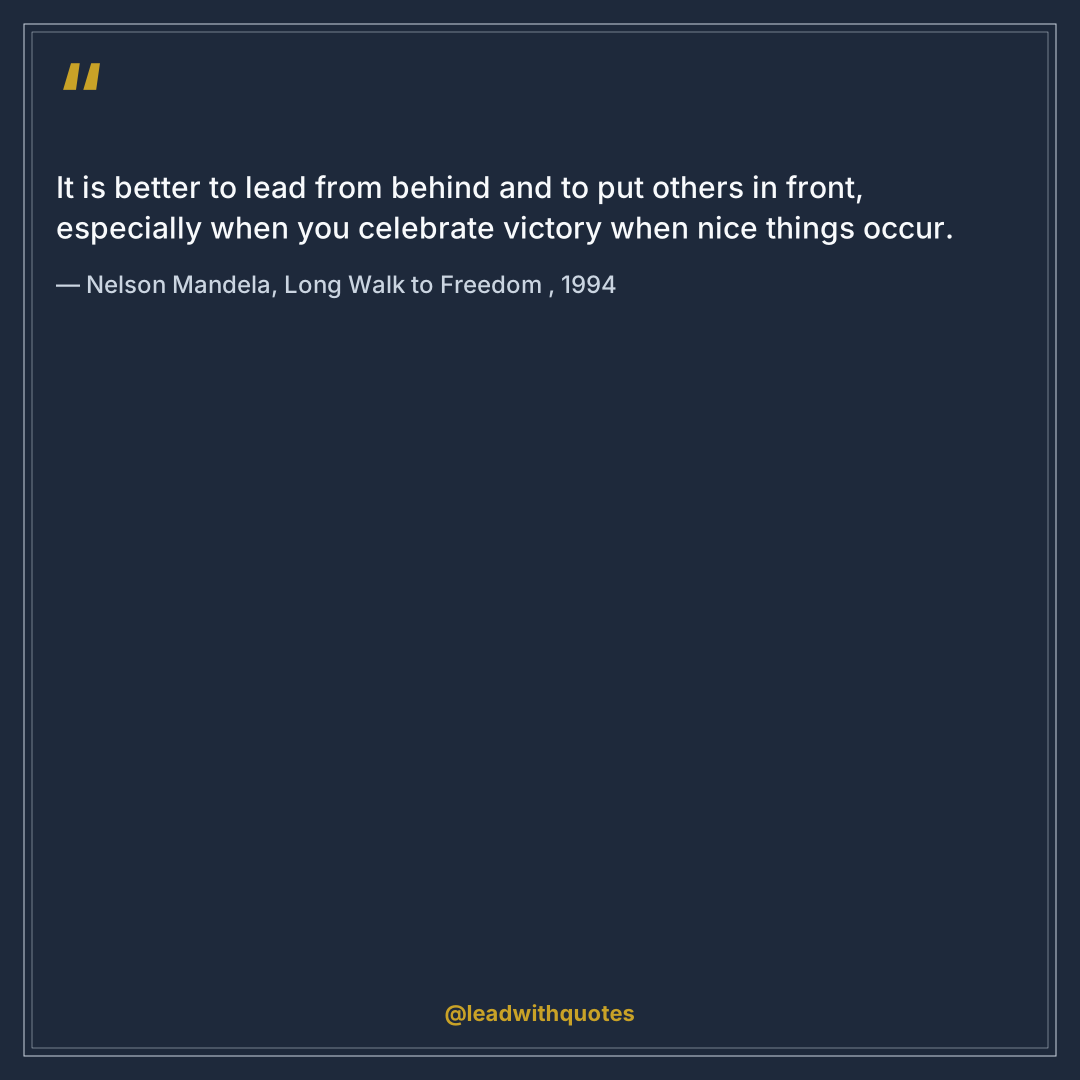
"It is better to lead from behind and to put others in front, especially when you celebrate victory when nice things occur." — Nelson Mandela, Long Walk to Freedom, 1994
Mandela famously compared a great leader to a shepherd who directs the flock from the rear, allowing the most nimble to go ahead.
"A good leader inspires people to have confidence in the leader, a great leader inspires people to have confidence in themselves." — Eleanor Roosevelt, My Day Column, 1945
Her vast public correspondence offers profound historical perspectives on feminine agency and the subtle art of indirect influence.
"I don't know what your destiny will be, but one thing I do know: the only ones among you who will be really happy are those who have sought and found how to serve." — Albert Schweitzer, Address at Silcoates School, 1935
The medical missionary framed service not as a duty owed to society, but as the only reliable mechanism for achieving personal fulfillment.
"Everybody can be great... because anybody can serve." — Martin Luther King Jr., The Drum Major Instinct Sermon, 1968
Delivered just two months before his assassination, this sermon dismantled the societal obsession with prestigious titles and exclusive credentials.
"The leader must be a servant first." — Cheryl Bachelder, Dare to Serve, 2015
Bachelder proved that adopting a radical service mindset could rescue a failing restaurant brand from bankruptcy and restore dignity to its frontline workers.
Reading them together
When you place an ancient stoic text alongside a modern corporate turnaround manual, the core mandate remains shockingly identical. The mechanics of human motivation simply do not change, even as our economic structures evolve. We still require brief but potent observations to remind us that power is a tool for elevation, not extraction. Leaders across all eras eventually discover that hoarding authority only isolates them, while distributing it multiplies their actual impact. Finding examples of radical humility in corporate settings proves that these ancient virtues survive intact within modern spreadsheets.
Points Worth Pinning
- Power testing character remains a universal historical truth.
- Empowering others actively multiplies organizational capacity rather than diminishing executive control.
- Personal integrity operates as the non-negotiable foundation for any lasting influence.
- Visible restraint often yields better results than constant tactical intervention.
- True service acts as a reliable pathway to deep personal fulfillment.
Examining these contrasting voices proves that the fundamental nature of stewardship requires abandoning the spotlight. The real work happens quietly in the background.