Desk essay
15 Short Women Leadership Quotes for Moments of Professional Doubt
These concise reflections from female pioneers offer immediate clarity when you face resistance in the boardroom or question your own authority.
By Morgan Ellis
Morgan Ellis

To the woman staring at a drafted email she is afraid to send. Why do we hesitate when the floor is ours? How do you command a room that expects you to blend into the wallpaper? I watched my aunt in a cramped back office in Portland, Oregon, 1984, quietly rewrite her own resignation letter three times before deciding to stay and fight for her department. That kind of silent battle happens every day across industries where the rules of authority were written by men. You read management books that feel completely disconnected from the reality of being interrupted in a Tuesday morning stand-up meeting.
You must stop apologizing for your own expertise
Doubt often disguises itself as politeness in corporate environments. When you review how trailblazing women of color navigated systemic barriers, you notice a distinct refusal to minimize their own competence to make others comfortable. You do not need to soften your directives. Keep these brief maxims for quick reflection handy when you feel the urge to add "just" or "sorry" to your professional correspondence.
"I attribute my success to this: I never gave or took any excuse." — Florence Nightingale, Private Letters, 1861
Nightingale revolutionized modern nursing not through gentle bedside manner, but through ruthless administrative efficiency and strict statistical analysis during the Crimean War.
"You can't be that kid standing at the top of the waterslide, overthinking it." — Tina Fey, Bossypants, 2011
Fey captured the paralyzing nature of perfectionism in comedy writing, reminding professionals that momentum often matters more than flawless execution.
"I learned to always take on things I'd never done before." — Ginni Rometty, Northwestern Commencement Speech, 2015
The former IBM CEO frequently spoke about how stepping into unqualified territory is the only reliable mechanism for executive growth.
"I don't go by the rule book; I lead from the heart, not the head." — Princess Diana, BBC Panorama Interview, 1995
This admission challenged the rigid protocol of the British monarchy, proving that emotional intelligence could command global influence.
"We need to accept that we won't always make the right decisions." — Arianna Huffington, Thrive, 2014
Huffington wrote extensively about redefining success after collapsing from exhaustion, positioning failure as a stepping stone rather than a dead end.
You will need these when the room goes quiet
There is a specific silence that falls over a conference table when a woman introduces a disruptive idea. Studying words that historically fueled female empowerment reveals that this silence is not a sign of your failure, but a symptom of their surprise. Stand your ground. If you want broader perspectives on female authority, look at how these leaders handled the friction of sudden visibility.
"Done is better than perfect." — Sheryl Sandberg, Lean In, 2013
This operational mantra became a cultural touchstone for women paralyzed by the expectation of flawless performance in male-dominated tech spheres.
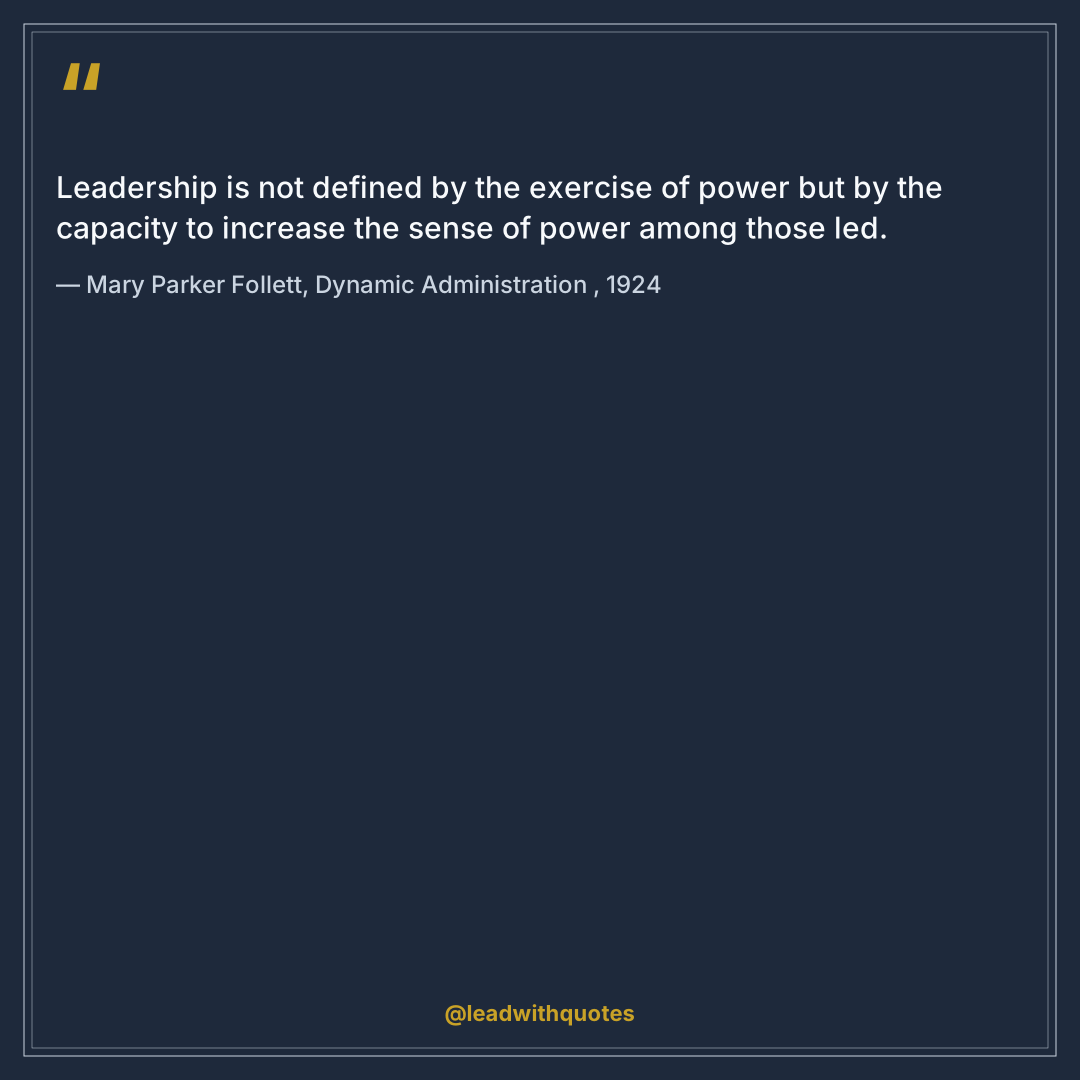
"Leadership is not defined by the exercise of power but by the capacity to increase the sense of power among those led." — Mary Parker Follett, Dynamic Administration, 1924
Follett was decades ahead of her time, introducing concepts of organizational behavior that modern management theorists still rely upon today.
"Normal is not something to aspire to, it's something to get away from." — Jodie Foster, Golden Globes Speech, 2013
Foster used her lifetime achievement platform to dismantle the industry's obsession with conventional paths and predictable career trajectories.
"I never dreamed about success. I worked for it." — Estée Lauder, Estée: A Success Story, 1985
Lauder built a global cosmetics empire from scratch, emphasizing relentless daily execution over grand visionary daydreaming.
"You manage things; you lead people." — Grace Hopper, US Navy Interview, 1982
Rear Admiral Hopper, a pioneer of computer programming, drew a sharp line between administrative oversight and genuine human inspiration.
You can use these to reset your team's focus
Managing a team requires you to absorb their anxieties while projecting a clear path forward. Unlike the reflections found in historical political memoirs, the daily reality of management is often highly tactical. You have to remind people why they are doing the work. Embracing the quiet power of serving your team first allows you to lead without relying on intimidation.
"Don't be intimidated by what you don't know." — Sara Blakely, Forbes Interview, 2012
The Spanx founder credited her lack of traditional business education as her greatest asset, allowing her to ask questions industry veterans ignored.
"Whatever you do, be different." — Anita Roddick, Business as Unusual, 2000
Roddick built The Body Shop by openly rejecting the standard practices of the beauty industry, proving ethical consumerism could scale globally.
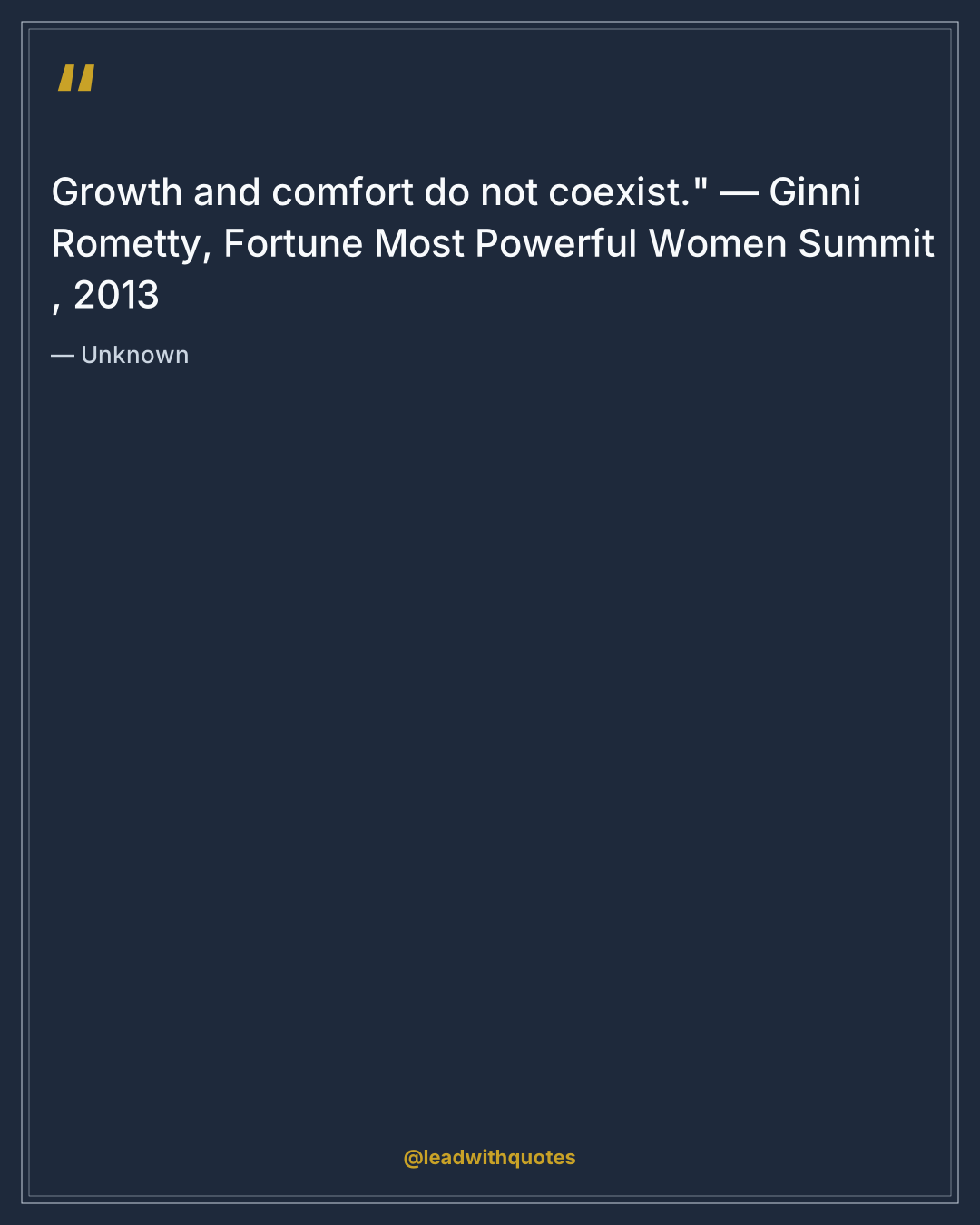
"Growth and comfort do not coexist." — Ginni Rometty, Fortune Most Powerful Women Summit, 2013
This stark observation became a guiding principle for executives navigating digital transformation and corporate restructuring.
"It is past time for women to take their rightful place." — Ruth Bader Ginsburg, Supreme Court Confirmation Hearings, 1993
Ginsburg delivered this calm assertion of equality to the Senate Judiciary Committee, framing parity not as a favor but as an overdue structural correction.
"Speak your mind, even if your voice shakes." — Maggie Kuhn, Gray Panthers Address, 1978
Kuhn organized the Gray Panthers to fight age discrimination, reminding advocates that courage does not require the absence of physical fear.
The Short Version
- Stop apologizing for your presence in spaces where decisions are made.
- Perfectionism is a defensive mechanism that slows down your actual momentum.
- True authority comes from elevating your team, not hoarding operational power.
- Ignorance of traditional methods can be a strategic advantage if you ask the right questions.
- Courage is an action you take while afraid, not a feeling you wait for.
Close your laptop and walk into your next meeting with your shoulders back. Speak your piece clearly, let the silence hang in the air without rushing to fill it, and watch how the room adjusts to your standard.