Desk essay
How Student Council Quotes for Leadership Reveal Our Earliest Conceptions of Power
The slogans teenagers tape to gymnasium walls expose how society actively teaches ambition and authority to its youngest citizens.
By Morgan Ellis
Morgan Ellis

Walking through a humid gymnasium in Austin, Texas, in 2011, I watched a sixteen-year-old tape a borrowed proverb about responsibility to a cinderblock wall. That crude poster board carried a heavy philosophical weight. Adolescents frequently borrow the language of historic figures to try on the mantle of authority before they have any real institutional power. Observers routinely dismiss teenage campaigns as trivial popularity contests. We ignore the reality that these early rhetorical choices establish a baseline for how future executives will eventually govern their peers.
Every generation selects different historical voices to justify their adolescent ambitions. The phrases selected for morning announcements reflect contemporary anxieties far more accurately than adult political speeches. Examining these selections backward through time reveals a shifting cultural consensus on what it actually means to take charge of a community.
2010s: The Era of Collaborative Action
Modern student elections moved away from rigid hierarchical rhetoric toward community-focused activism. Digital platforms amplified voices that emphasized collective movement over solitary executive decision-making. Teenagers running for office began pulling language from contemporary social movements rather than historical military figures.
"One child, one teacher, one book, one pen can change the world." — Malala Yousafzai, United Nations Youth Assembly Address, 2013
This localized focus on basic tools resonated deeply with students trying to articulate how small-scale school initiatives could impact broader cultural issues.
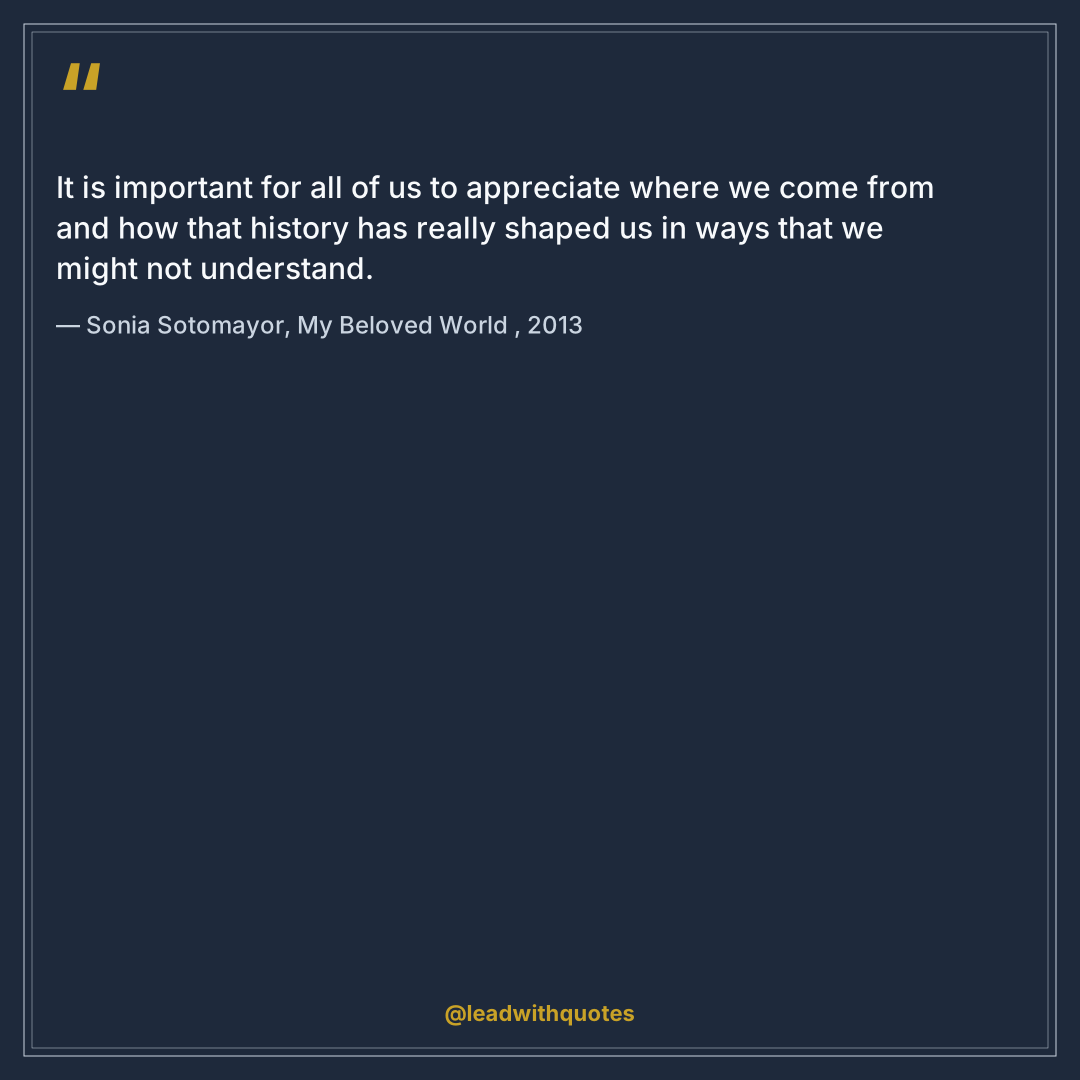
"It is important for all of us to appreciate where we come from and how that history has really shaped us in ways that we might not understand." — Sonia Sotomayor, My Beloved World, 2013
Candidates utilized this reflection to validate diverse student backgrounds during increasingly contested school board debates over curriculum.
1980s and 1990s: The Rise of Organizational Voice
As corporate management theories bled into public education policy during the late twentieth century, student government took on the vocabulary of the boardroom. The brief maxims that define authority shifted toward pragmatism. Effectiveness and visible results became the primary metrics for teenage success.
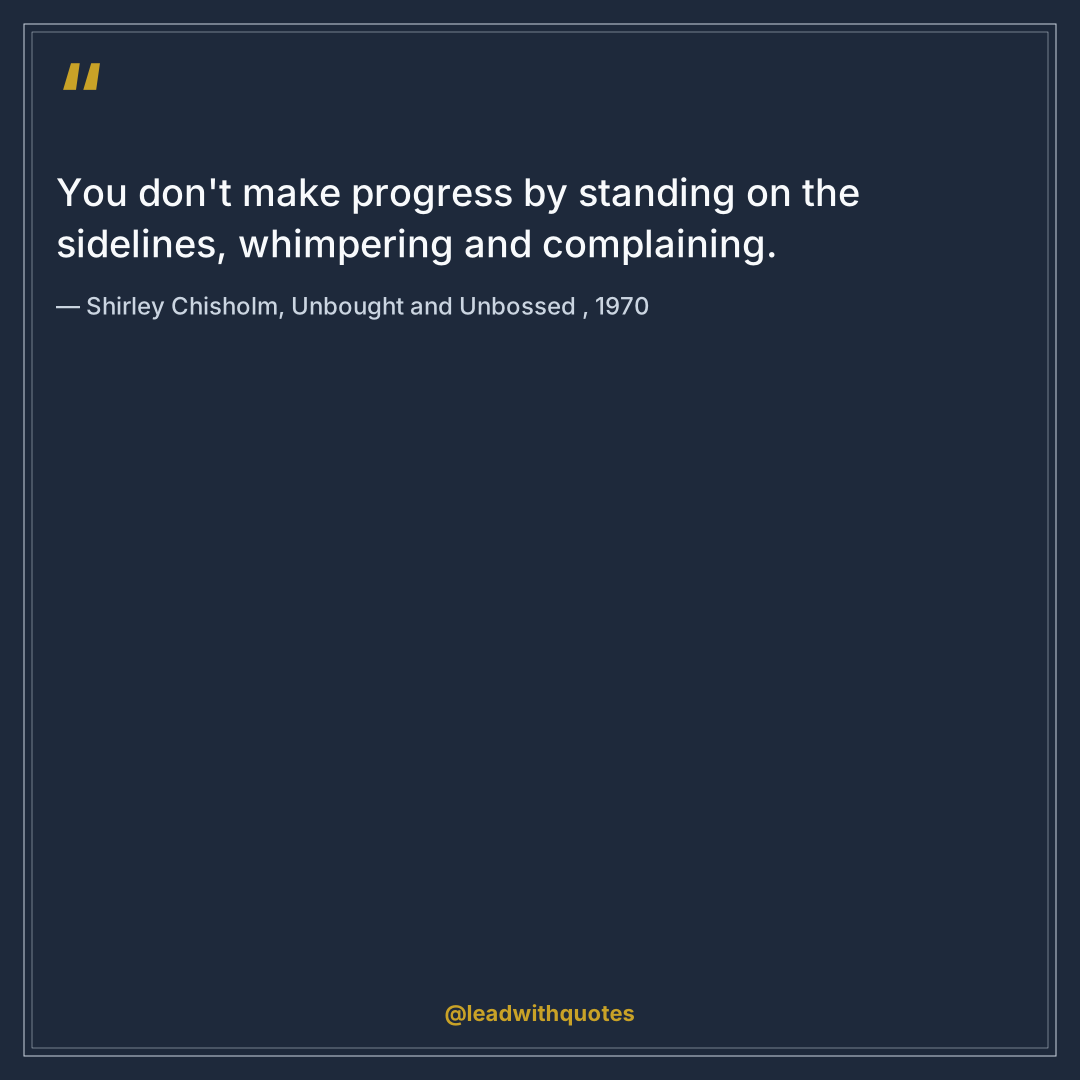
"You don't make progress by standing on the sidelines, whimpering and complaining." — Shirley Chisholm, Unbought and Unbossed, 1970
Her unapologetic demand for active participation became a staple for student presidents urging their peers to join committees instead of merely criticizing the administration.
"Leadership is solving problems." — Colin Powell, My American Journey, 1995
This stripped-down definition appealed to pragmatic treasurers and vice presidents who wanted to focus on fixing immediate logistical issues like cafeteria seating.
Early 20th Century: Duty and Character

Before the digital age fragmented cultural touchstones, schoolhouse authority relied heavily on agrarian and industrial notions of grit. Student leaders during this era framed their roles as moral obligations to their peers. Personal endurance and uncomplaining service dominated the rhetorical landscape.
"Do what you can, with what you have, where you are." — Theodore Roosevelt, Squire Bill Widener Citation, 1913
Frequently deployed during periods of tight school budgets, this practical advice gave student councils permission to scale back grand promises in favor of achievable local repairs.
"Optimism is the faith that leads to achievement." — Helen Keller, Optimism: An Essay, 1903
Yearbook editors and class secretaries leaned heavily on this sentiment to maintain morale during difficult academic terms.
The 19th Century and Antiquity: Foundational Maxims
The oldest recorded wisdom continues to surface in high school elections because human ambition remains structurally unchanged. Ancient philosophers distilled the friction between individual ego and civic duty into phrases that still fit perfectly on a campaign button.
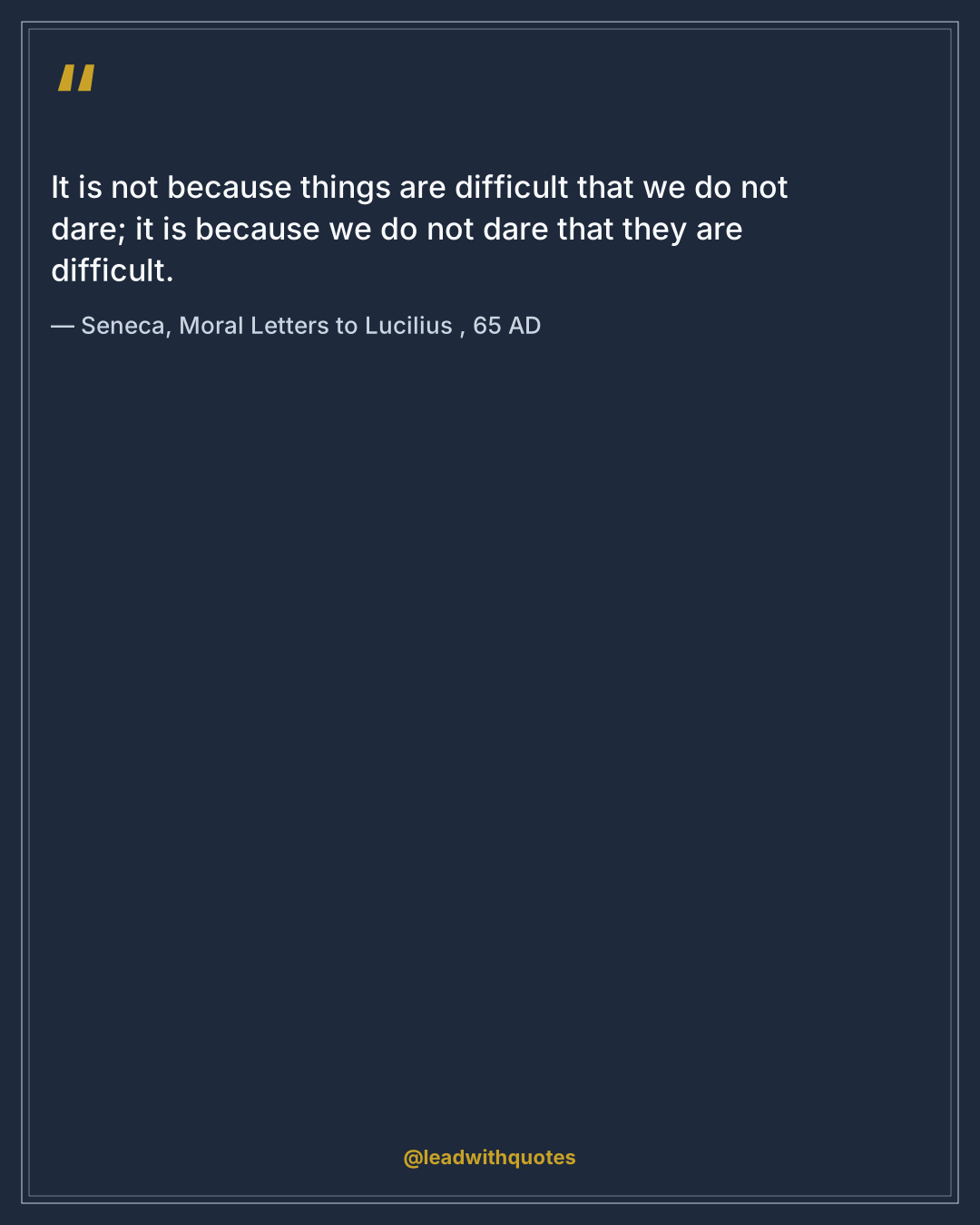
"It is not because things are difficult that we do not dare; it is because we do not dare that they are difficult." — Seneca, Moral Letters to Lucilius, 65 AD
Roman stoicism frequently provides the exact rhetorical armor a nervous teenager needs before stepping up to a microphone in an echoing auditorium.
"Do not go where the path may lead, go instead where there is no path and leave a trail." — Inspired by Ralph Waldo Emerson, Mid-19th Century Lectures
Though often loosely paraphrased in modern yearbooks, the underlying transcendentalist urge to break away from institutional conformity remains a powerful draw for youth candidates.
The words we ask children to memorize eventually become the standards by which they govern us. Tracing these borrowed phrases from modern assembly halls back to Roman antiquity proves that the fundamental anxieties of taking charge have never truly shifted.
A Few Honest Corrections
Popular reading: Teenagers only quote historical figures to sound impressive to teachers.
On closer look: Most adolescent candidates select phrases that genuinely reflect their internal anxieties about peer judgment. The quotes serve as psychological armor rather than mere academic pandering.
Popular reading: Student council rhetoric has no bearing on adult management styles.
On closer look: The vocabulary a person adopts during their first encounter with institutional authority often permanently shapes their baseline communication habits in future corporate or political environments.
Popular reading: Modern students only use quotes they find on social media algorithms.
On closer look: While discovery mechanisms have changed, yearbooks and campaign posters still heavily favor mid-century political memoirs and ancient stoic philosophy over contemporary internet slang.
Further reading
- Explore how adolescents first confront institutional boundaries in modern classrooms.
- Examine the ways educators mold early ambition through selective historic texts.
- Review early reflections from teenage activists who disrupted traditional school governance.
- Consider practical frameworks that adult supervisors utilize when translating these early lessons to the office.
- Browse our broader collection of foundational thoughts on guiding communities through periods of transition.