Desk essay
How Do We Guide Tomorrow's Captains? 15 Positive Leadership Quotes for Students
Early responsibility shapes the character of young adults long before they enter the professional world.
By Morgan Ellis
Morgan Ellis

"The mind is not a vessel to be filled, but a fire to be kindled." — Plutarch. Sitting on the bleachers at a high school gymnasium in Portland, Oregon, 2014, I watched a quiet sophomore organize a chaotic equipment room without being asked. That silent initiative defines early responsibility. Students step into authority long before they hold formal titles, often learning the weight of their choices through small, uncelebrated actions that benefit their peers.
Another perspective on this dynamic lives in our look at how early minds process taking charge.
2000s–2020s: The Modern Voice
The digital age shifted the focus from rigid command to empathy and visibility. Young leaders today navigate public platforms and rapid social change, requiring a delicate balance of confidence and vulnerability that previous generations rarely had to demonstrate in real time. They lead out loud.
"I raise up my voice—not so I can shout, but so that those without a voice can be heard." — Malala Yousafzai, United Nations Youth Assembly Address, 2013
This sentiment reframes public speaking as an act of service rather than ego.
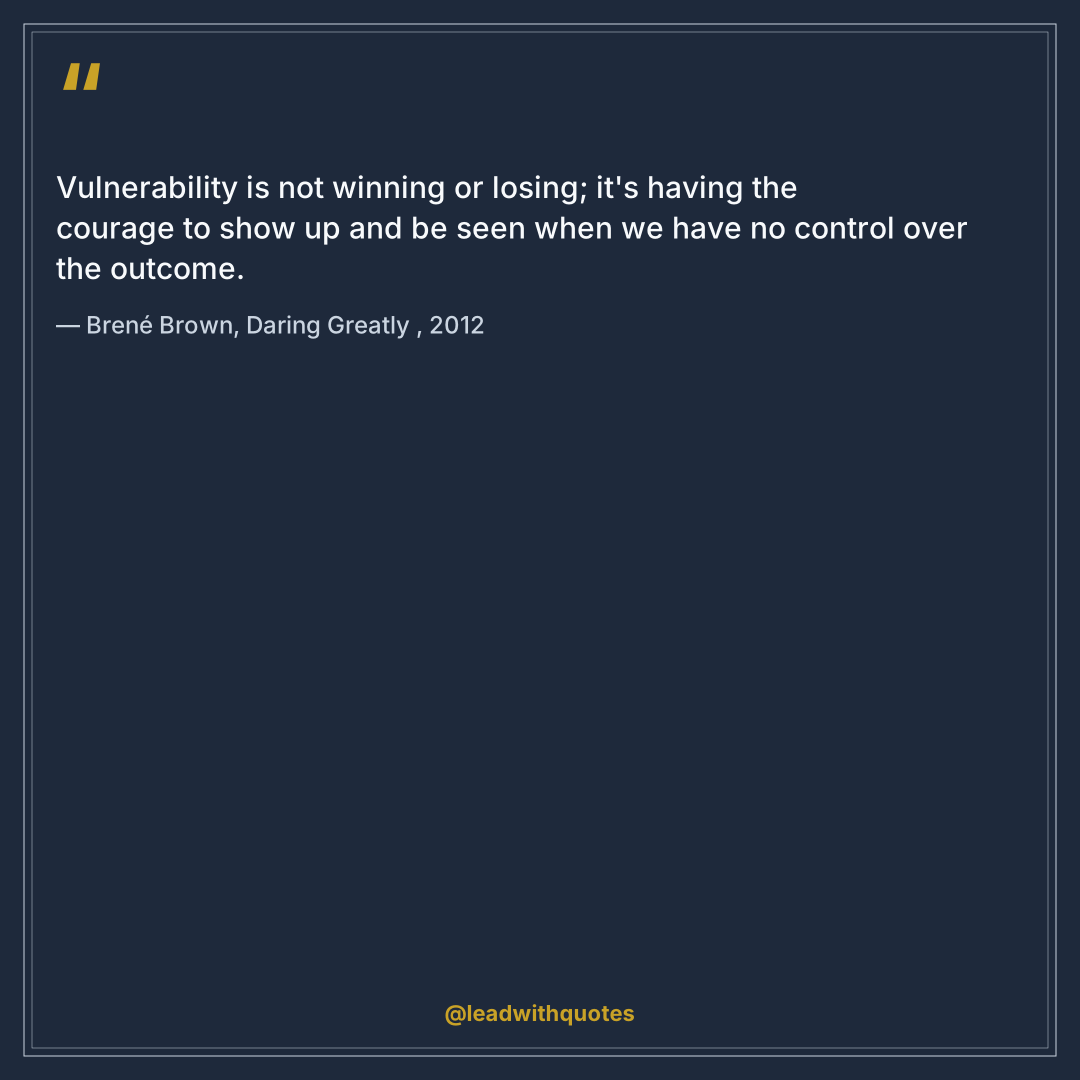
"Vulnerability is not winning or losing; it's having the courage to show up and be seen when we have no control over the outcome." — Brené Brown, Daring Greatly, 2012
Modern classrooms increasingly recognize emotional honesty as a core component of effective collaboration.
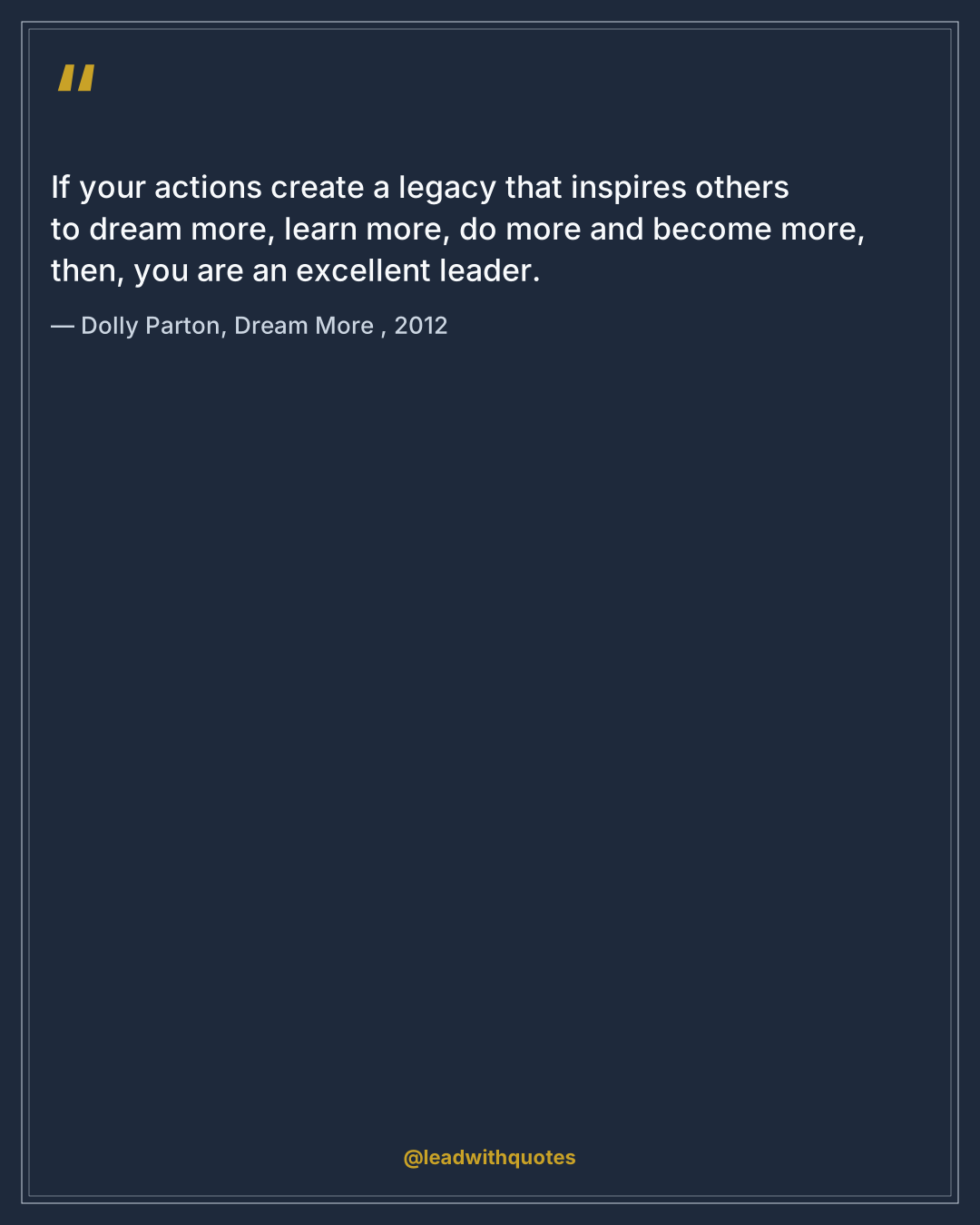
"If your actions create a legacy that inspires others to dream more, learn more, do more and become more, then, you are an excellent leader." — Dolly Parton, Dream More, 2012
A simple metric for evaluating one's daily impact on a peer group.
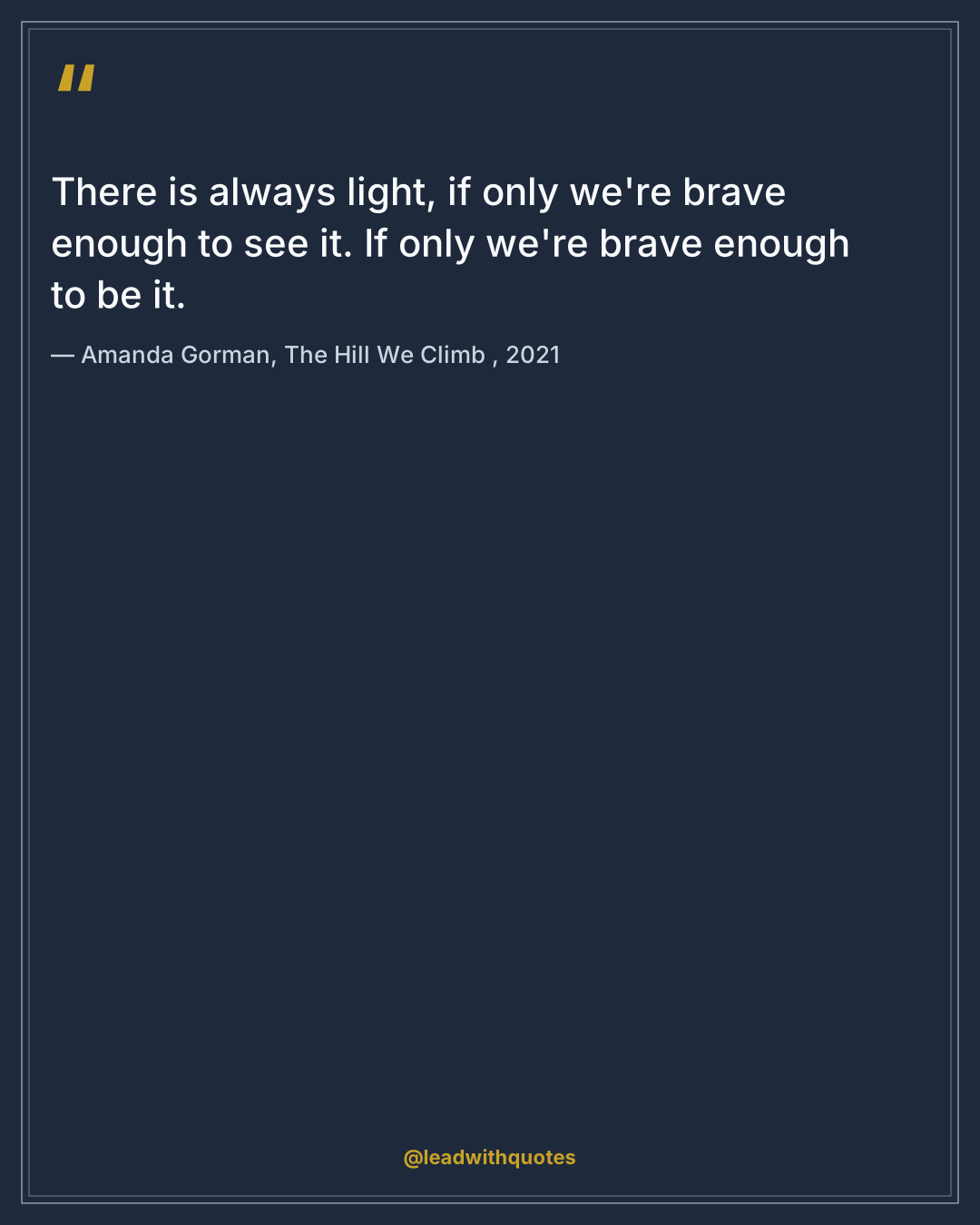
"There is always light, if only we're brave enough to see it. If only we're brave enough to be it." — Amanda Gorman, The Hill We Climb, 2021
Written for a presidential inauguration, these lines challenge young adults to embody the optimism they seek.
A deeper dive into this era can be found in our collection of how young activists historically claimed space.
1980s–1990s: The Era of Empowerment
Global communication expanded rapidly during these decades, pushing leadership models toward education and emotional intelligence. The emphasis shifted toward lifting others up rather than simply directing them from above. Mentorship became paramount.
"Education is the most powerful weapon which you can use to change the world." — Nelson Mandela, Speech at Madison Park High School, 1990
Speaking directly to students in Boston, Mandela positioned learning as the ultimate tool for systemic reform.
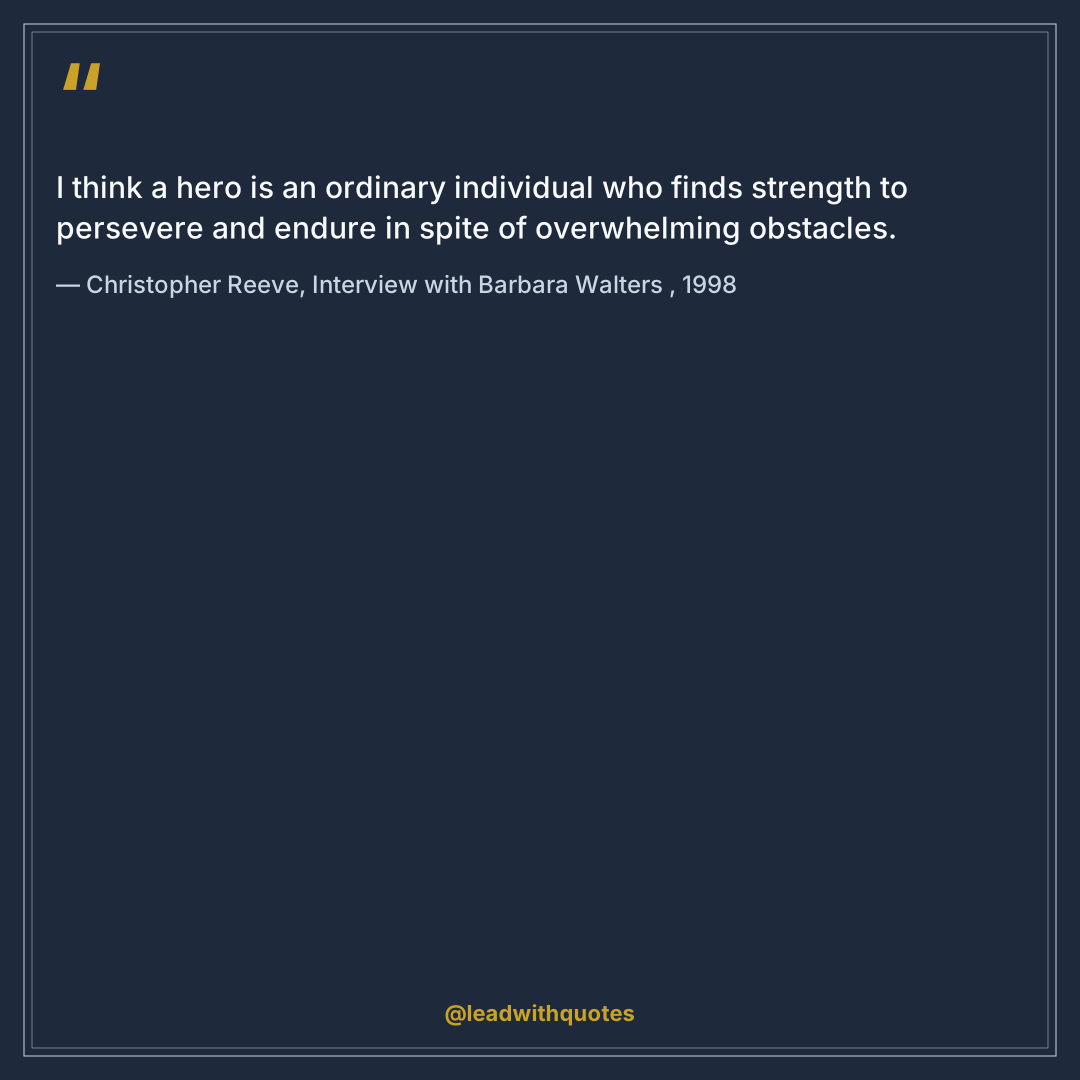
"I think a hero is an ordinary individual who finds strength to persevere and endure in spite of overwhelming obstacles." — Christopher Reeve, Interview with Barbara Walters, 1998
This redefinition strips away the myth of invincibility, offering a more accessible standard for courage.
"You manage things; you lead people." — Grace Hopper, Interview in Washington D.C., 1982
The pioneering computer scientist drew a sharp, necessary line between administrative tasks and human connection.
"I've learned that people will forget what you said, people will forget what you did, but people will never forget how you made them feel." — Maya Angelou, Various Interviews, 1990s
Though the exact origin is sometimes debated, this phrasing became a cornerstone of relational leadership during the late twentieth century.
For a broader view of these concepts, review these broader frameworks for motivating teams.
Early to Mid-20th Century: Resilience and Action
Two world wars and sweeping civil rights movements forged a generation that viewed leadership as a moral obligation. Action took precedence over rhetoric, and young people were frequently called upon to rebuild fractured institutions. They answered the call.
"To handle yourself, use your head; to handle others, use your heart." — Eleanor Roosevelt, Newspaper Column, 1954
The former First Lady consistently advocated for a balanced approach to interpersonal conflicts.
"Leadership and learning are indispensable to each other." — John F. Kennedy, Prepared Speech for the Dallas Trade Mart, 1963
Written for the day of his assassination, this text remains a definitive statement on the necessity of continuous education.
"Never doubt that a small group of thoughtful, committed citizens can change the world; indeed, it's the only thing that ever has." — Margaret Mead, Earth Day Address, 1970
This anthropological observation validates the power of small student organizations and local clubs.
"Optimism is the faith that leads to achievement. Nothing can be done without hope and confidence." — Helen Keller, Optimism: An Essay, 1903
Keller framed a positive outlook not as naive cheerfulness, but as a practical requirement for overcoming barriers.
This historical context connects directly to what school elections teach about governance.
Ancient World: The Foundations of Character
Long before modern management theories emerged, classical philosophers framed leadership entirely around personal virtue. Character was the only currency that mattered in the public square. These ancient thinkers viewed self-mastery as the prerequisite for guiding others.
"What you leave behind is not what is engraved in stone monuments, but what is woven into the lives of others." — Pericles, Funeral Oration, 431 BC
Recorded by Thucydides, this speech challenged Athenian citizens to measure their worth by their communal impact.
"The foundation of every state is the education of its youth." — Diogenes, Lives of Eminent Philosophers, 3rd Century AD
This stark assessment places the entire burden of a society's future on its classrooms and teachers.
"Waste no more time arguing about what a good man should be. Be one." — Marcus Aurelius, Meditations, 167 AD
The Roman emperor wrote these words as a private reminder to stop theorizing and start acting with integrity.
You can find more concise historical maxims in our section on brief maxims for daily motivation.
The oldest wisdom still governs the modern classroom, proving that human nature rarely shifts. Character outlasts technology, and the quiet responsibility taken by a student in an empty hallway matters just as much as a public speech. These historical voices continue to offer a reliable compass for those stepping into authority for the very first time.
Questions Readers Send In
How do students benefit from reading historical leadership quotes?
Encountering the thoughts of past leaders provides young adults with a broader perspective on their current challenges. It demonstrates that feelings of doubt and the burden of responsibility are universal experiences, shared by historical figures across centuries.
Can quiet students be effective leaders?
Absolutely, as leadership frequently manifests through diligent organization and empathetic listening rather than loud public speaking. Many of the most impactful historical figures led by setting a quiet, consistent example that others naturally wanted to follow.
Why is emotional intelligence emphasized in modern quotes?
Contemporary environments require high levels of collaboration and adaptability, making the ability to understand and manage emotions crucial. Modern thinkers recognize that technical skills alone cannot sustain a healthy, productive team dynamic over the long term.